
Page contents
About
Gallery
Parking
Poo bins?
Self-guided walk
About
The historic village of Ripley has existed since Norman times and was first recorded in documents of around 1200. It developed with the establishment of Newark Priory (see Walks with Rena post here). During the Tudor period, Ripley became very prosperous as a place to stop on the (now A3) road between London and the rapidly growing naval town of Portsmouth, which is one reason the pubs here have nautical names: The Ship, The Anchor, The Jovial Sailor. A popular staging post/coaching inn was The Talbot Inn, where even Admiral Nelson stayed.
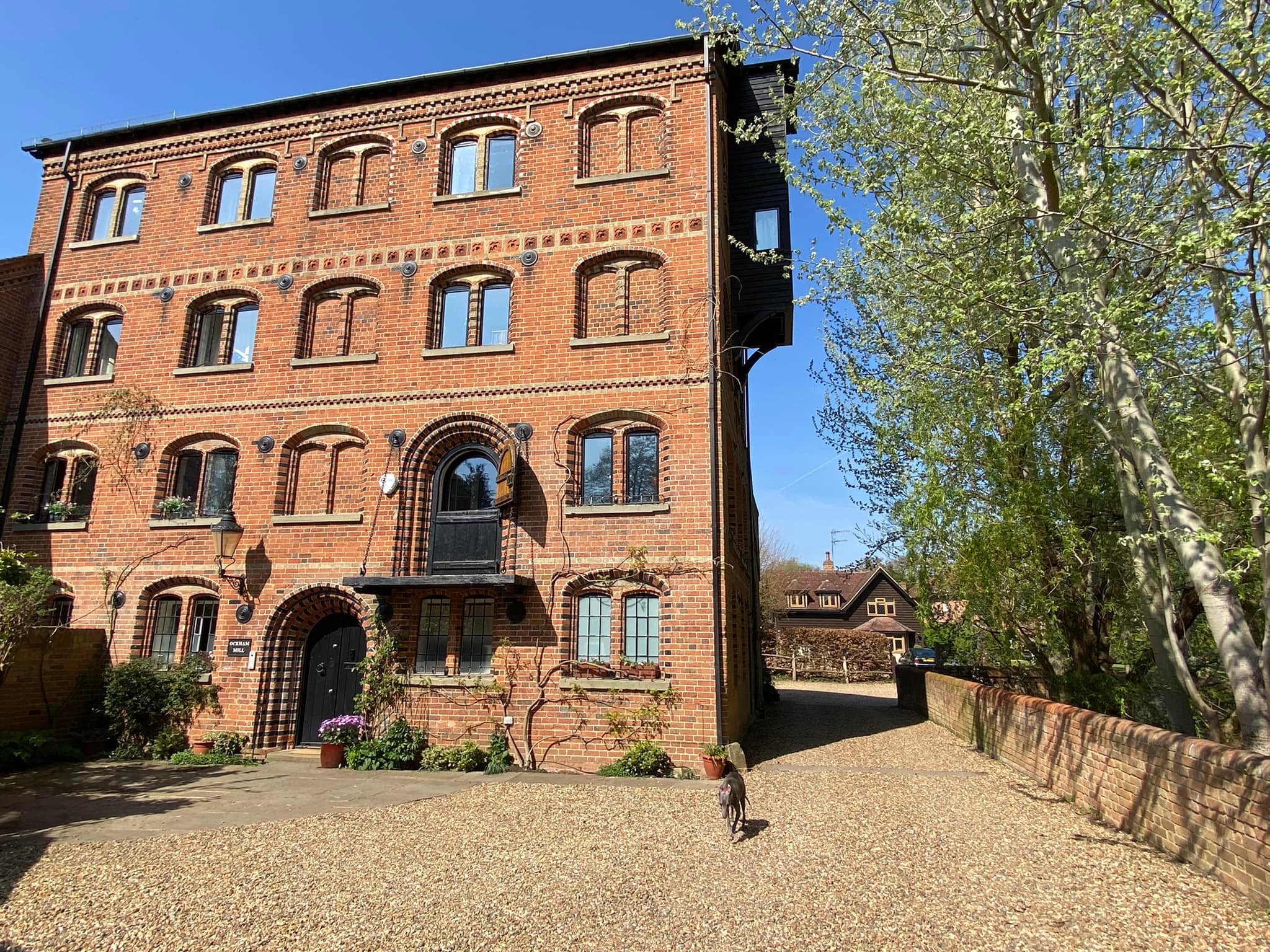
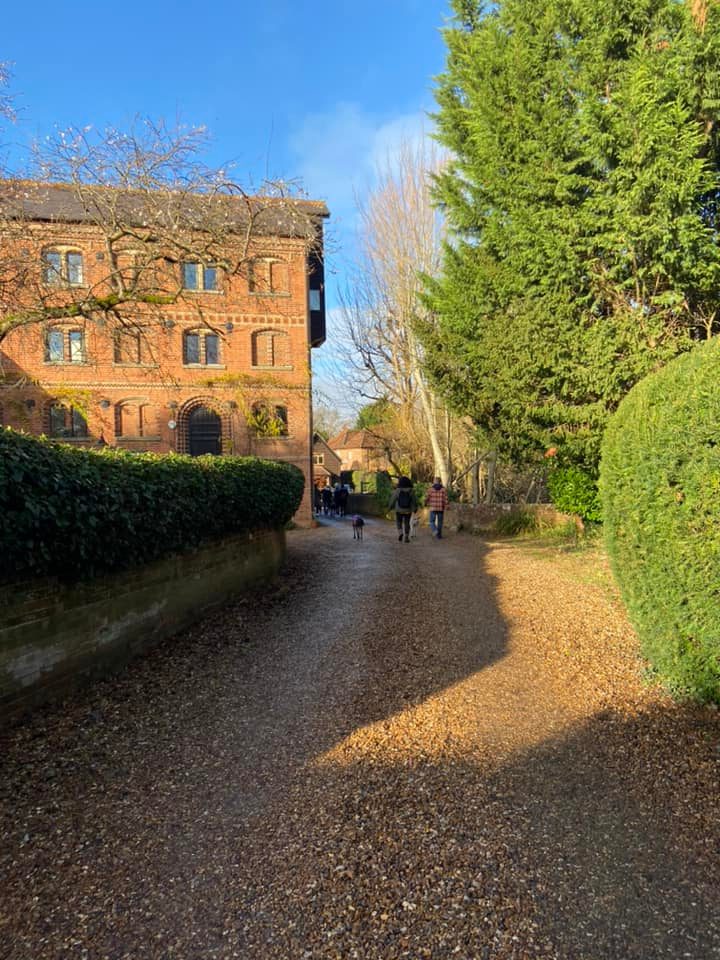
Ockham Mill is a Grade II listed mill and one of the largest former mill houses on the River Wey. It was built in 1862 by Lord Lovelace (yes, he of the Lovelace Bridges – see Walks with Rena post here), when it was part of the Ockham Estate, which he inherited in 1833. The mill house was, for a while, home to Lovelace and his wife Ada Byron, the only legitimate child of the poet Lord Byron. It continued to operate until the 1920s.
Today, Ockham Mill is now a private home, and was last put up for sale for a cool £3.5m in February 2021. It retains many of its original features including a working water wheel, and its grounds feature a large lake and five mini-islands.
On the popular culture front, Eric Clapton was born in Ripley. He lived overlooking the Green and attended Ripley Scouts. Paul Weller lives in the village.
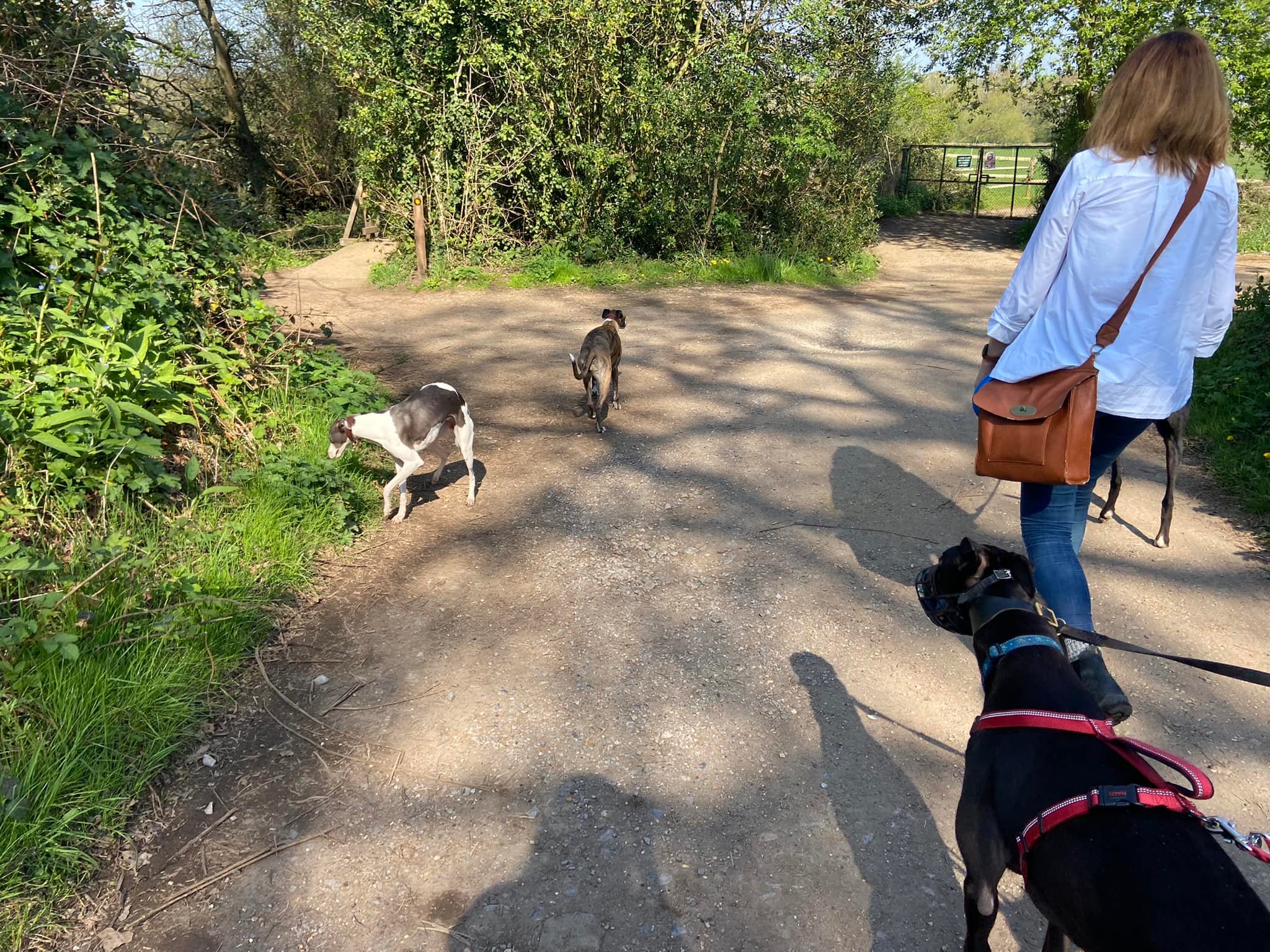
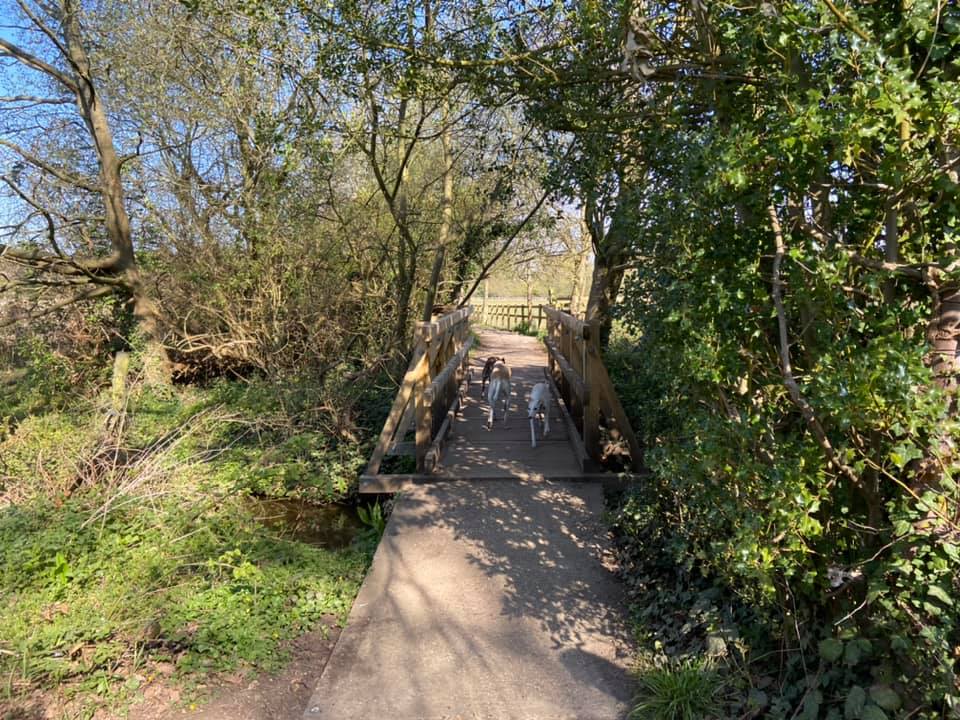
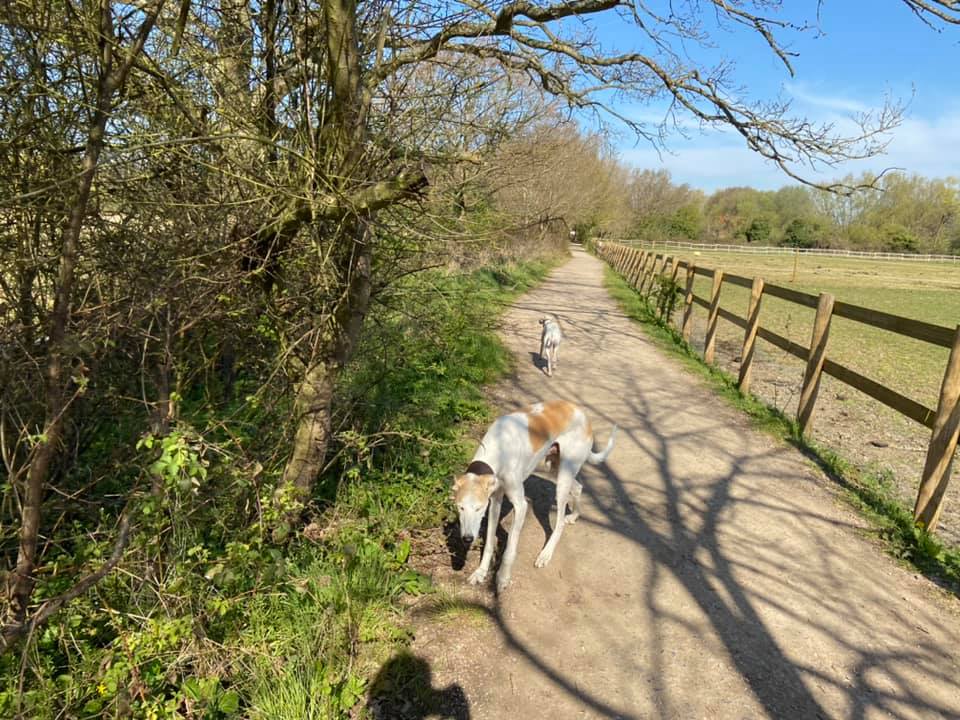
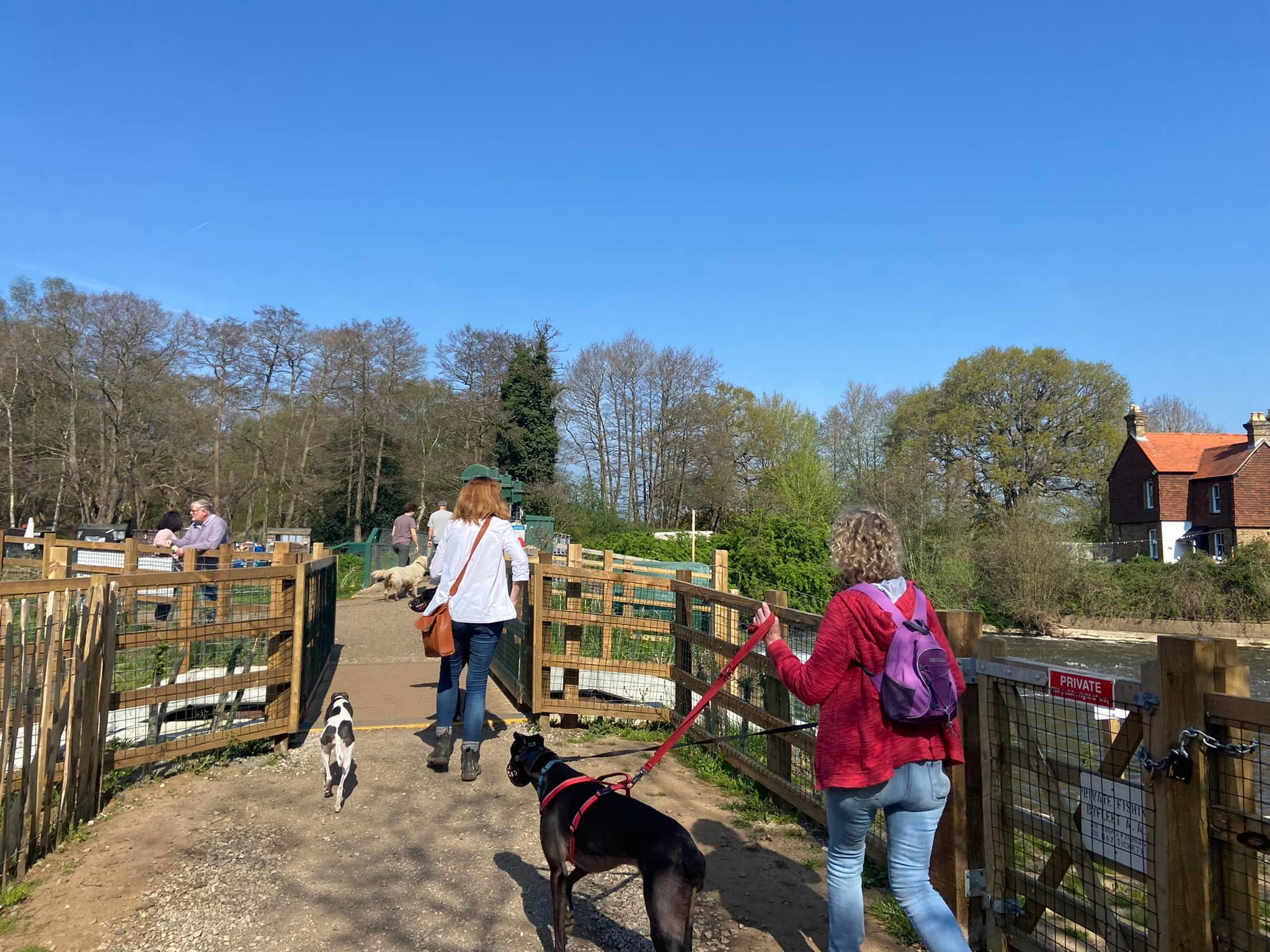
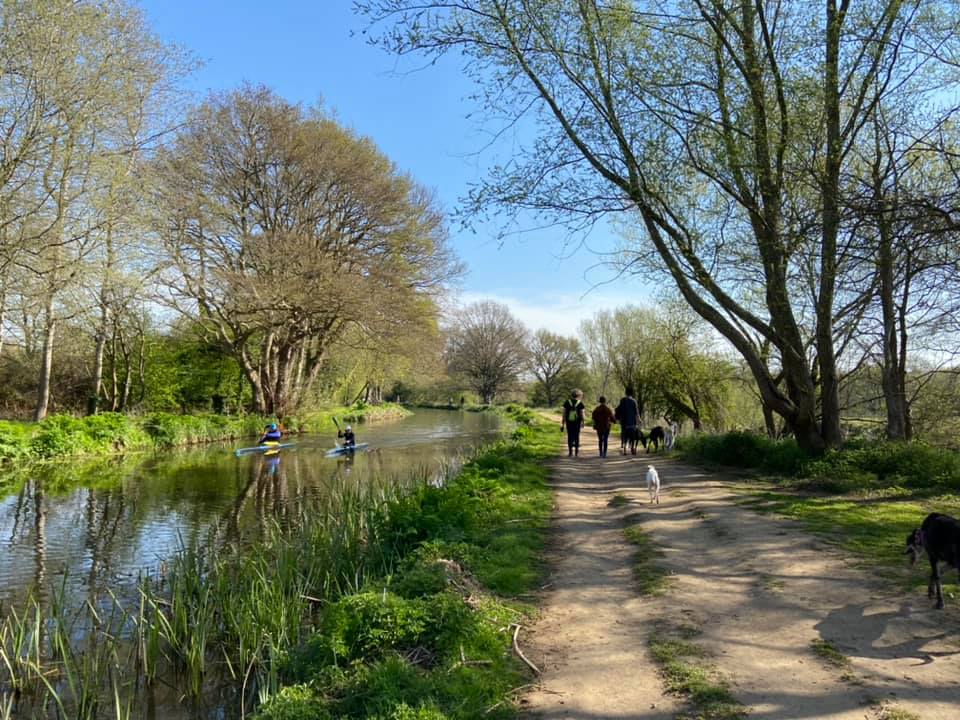
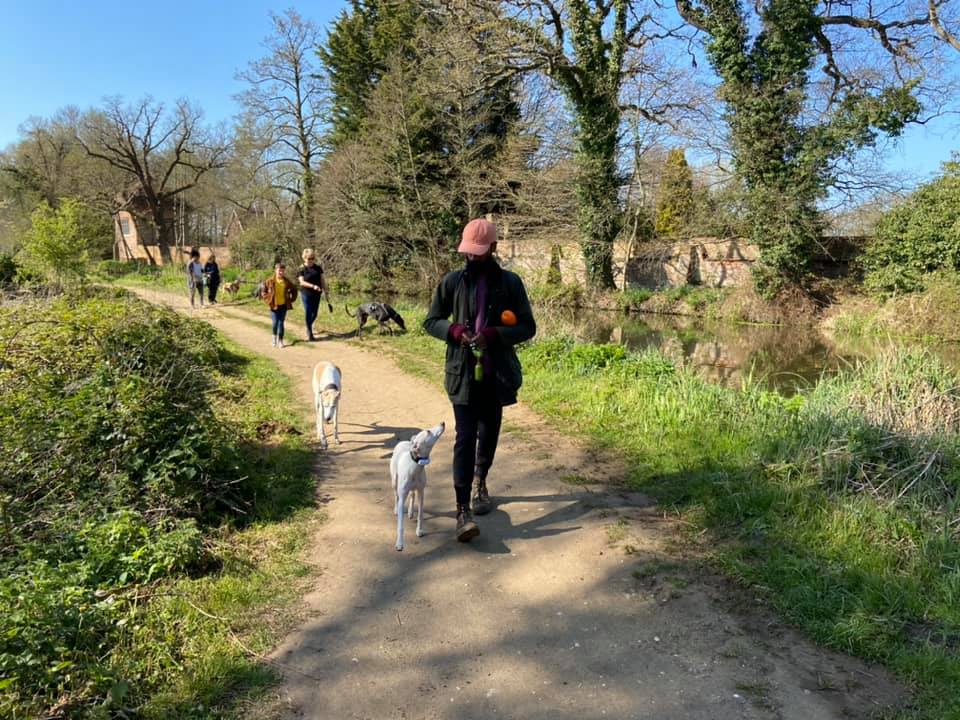
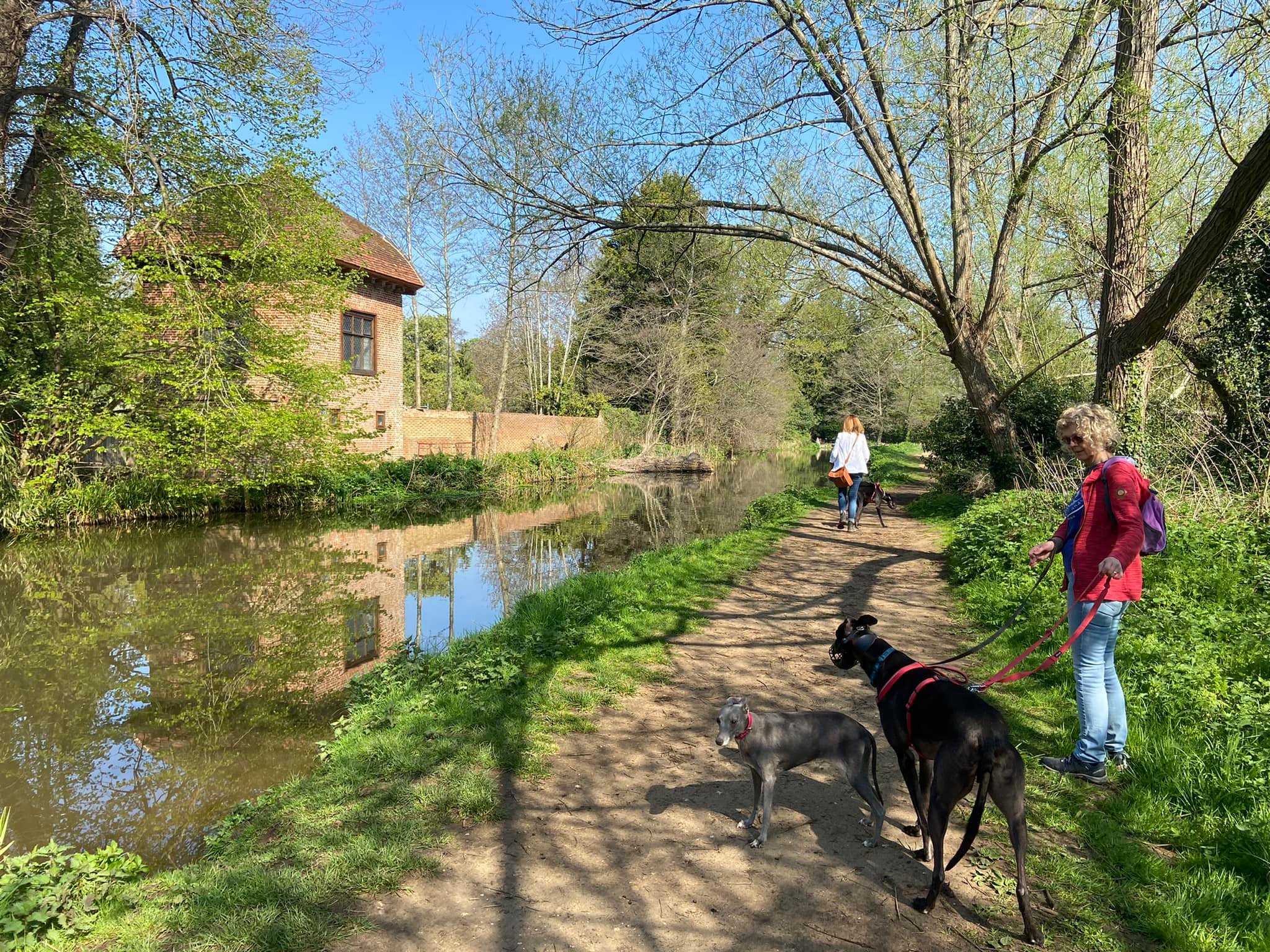
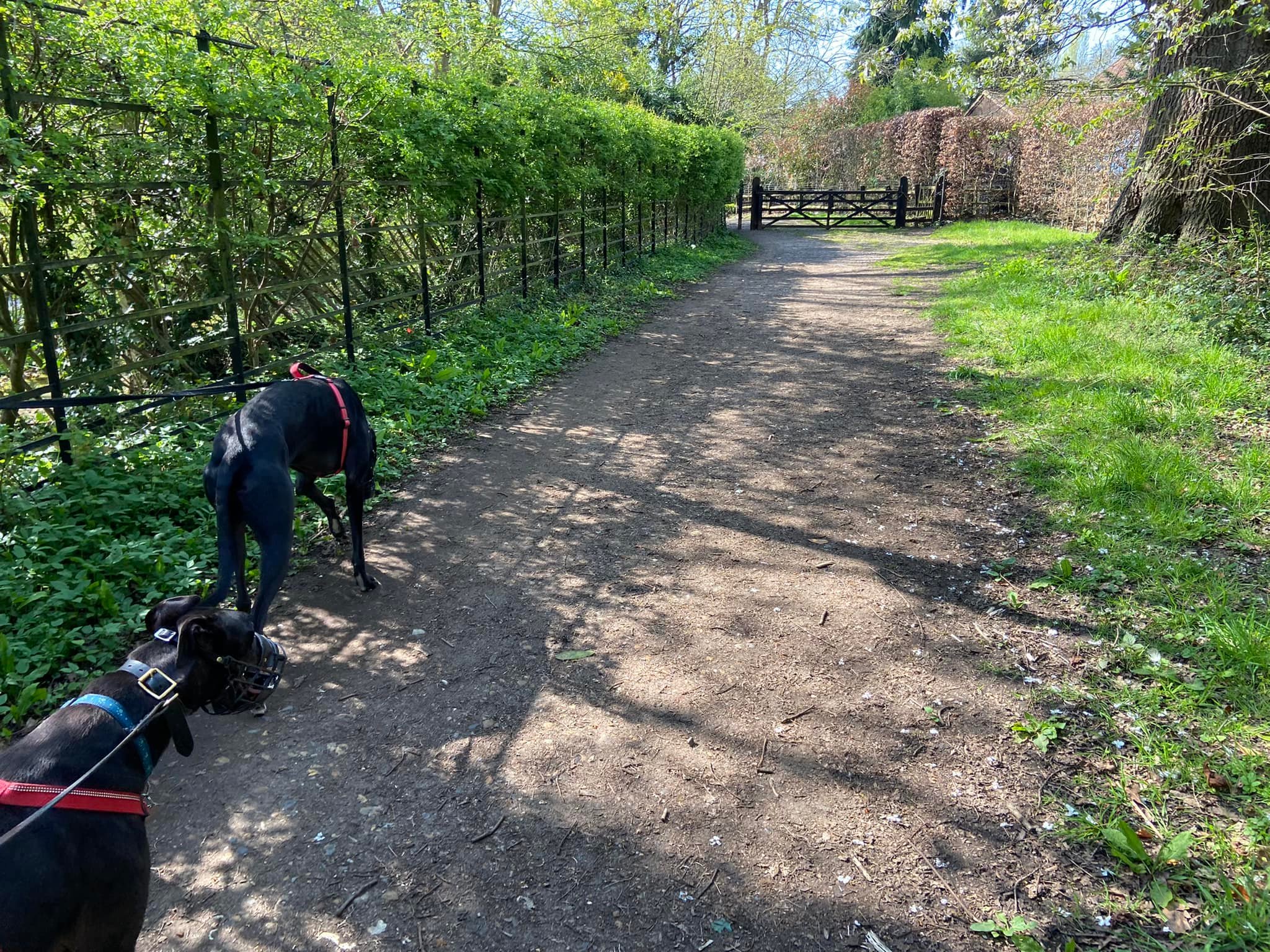
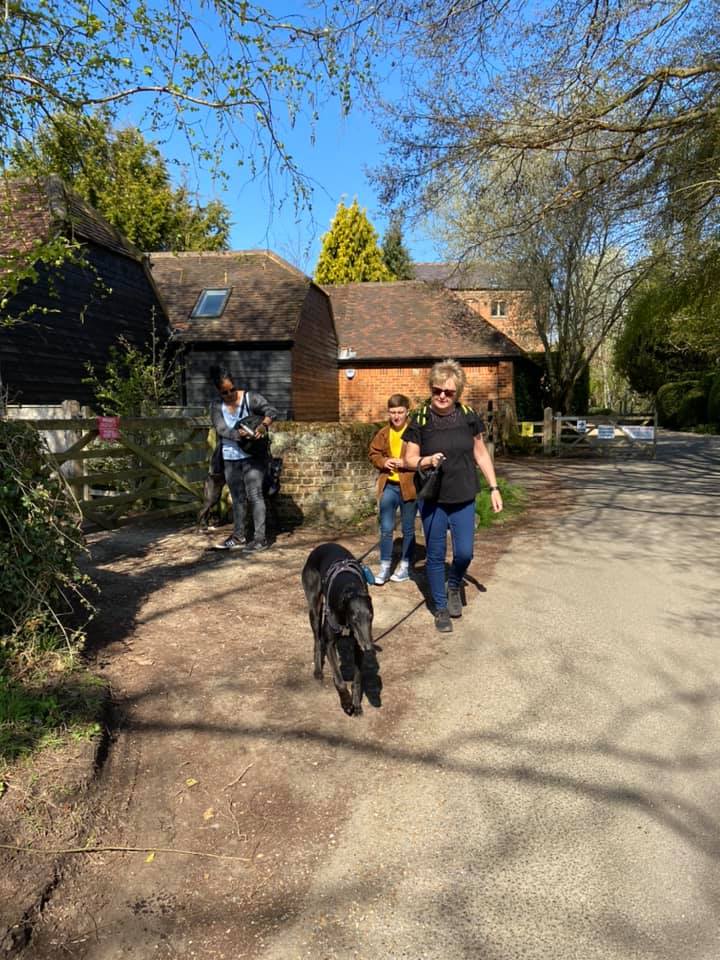
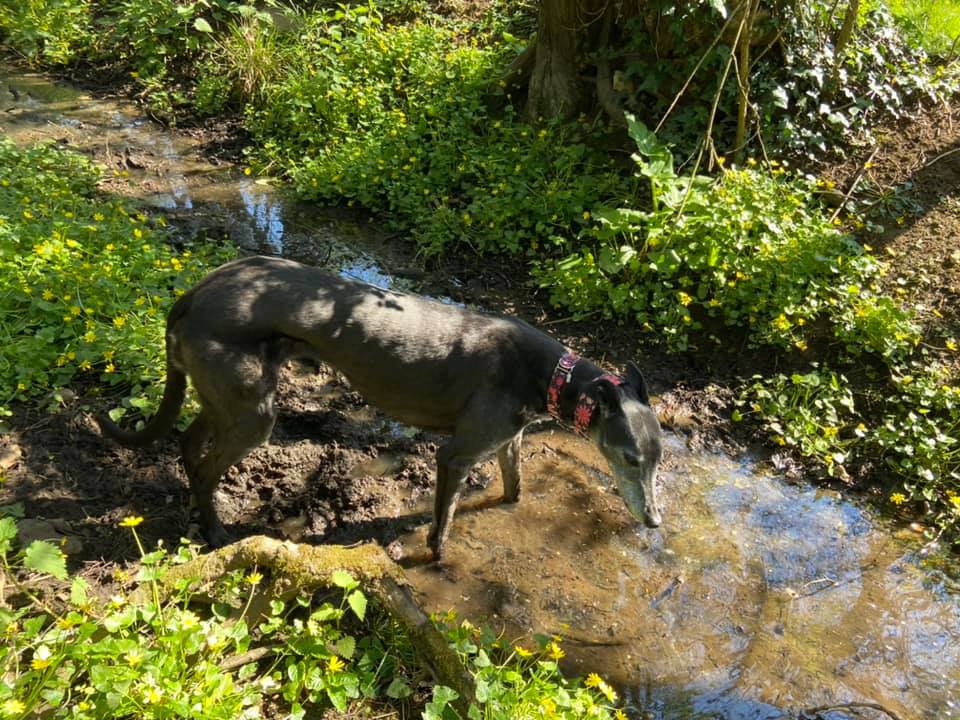
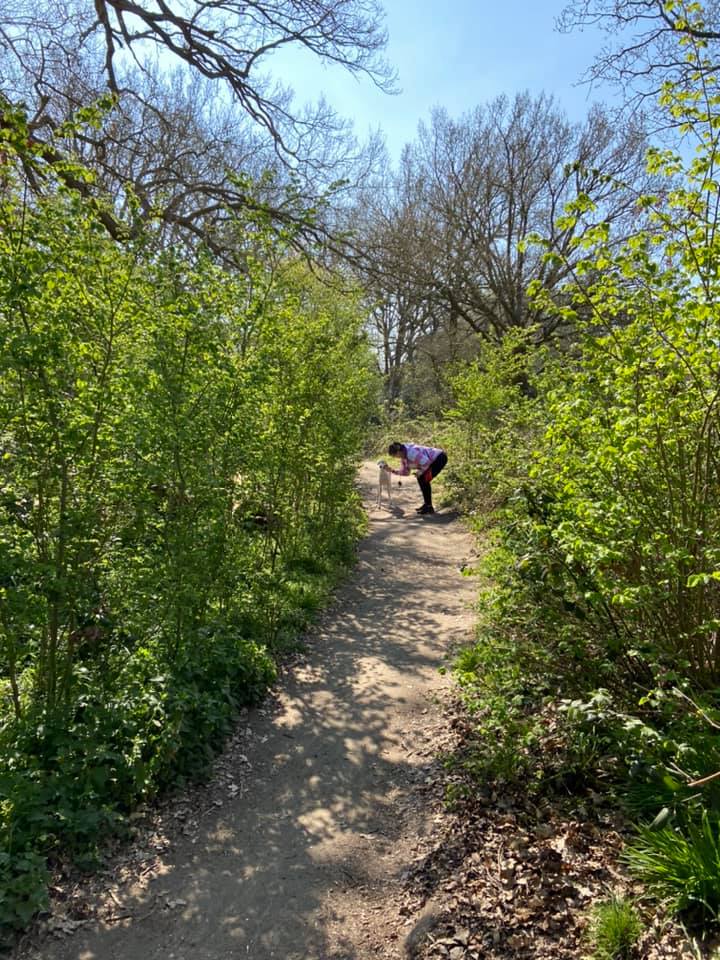
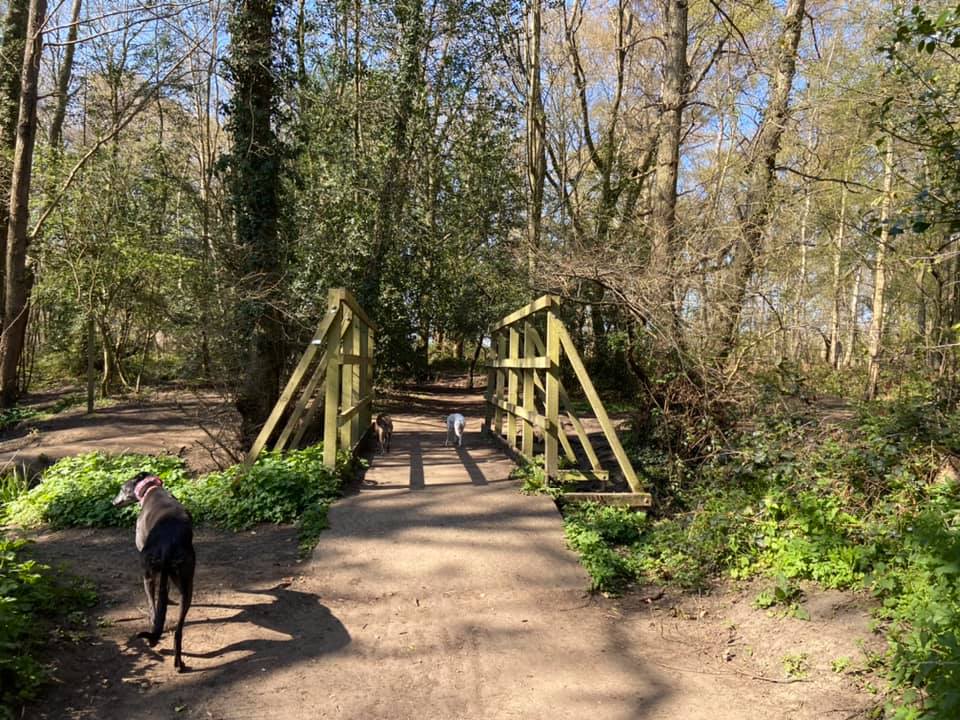
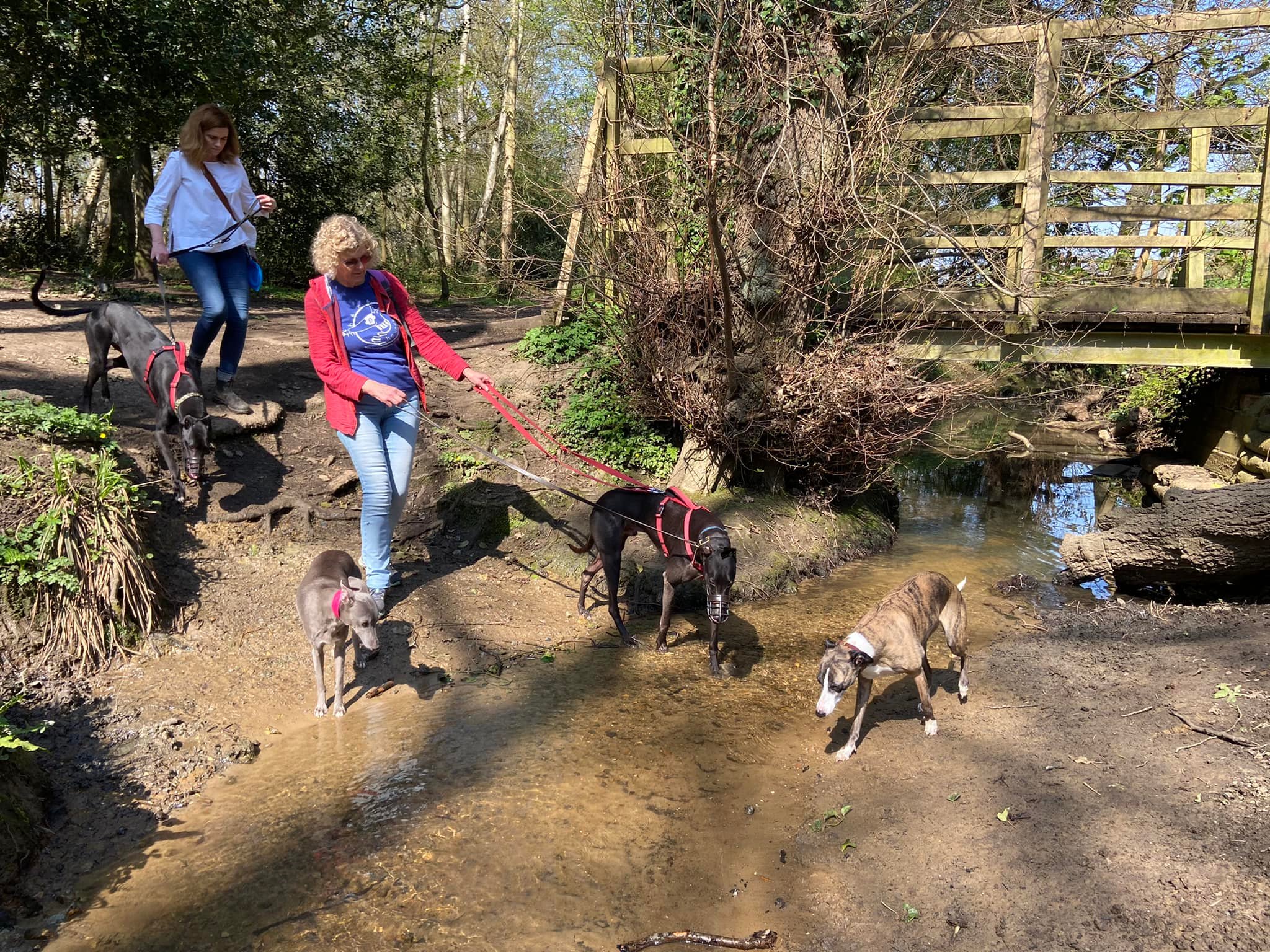
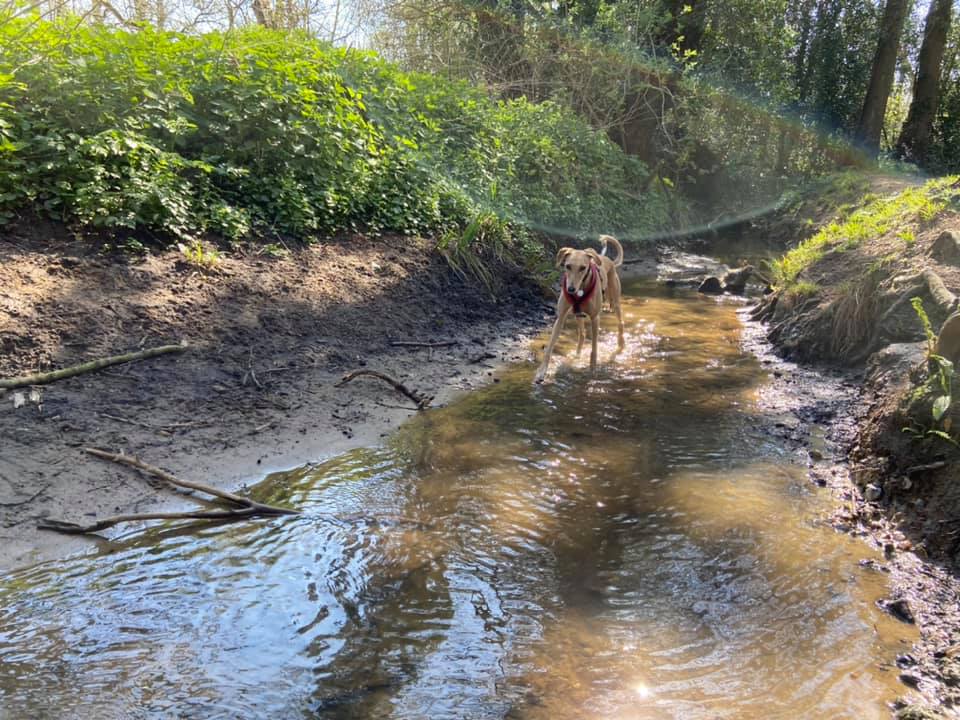
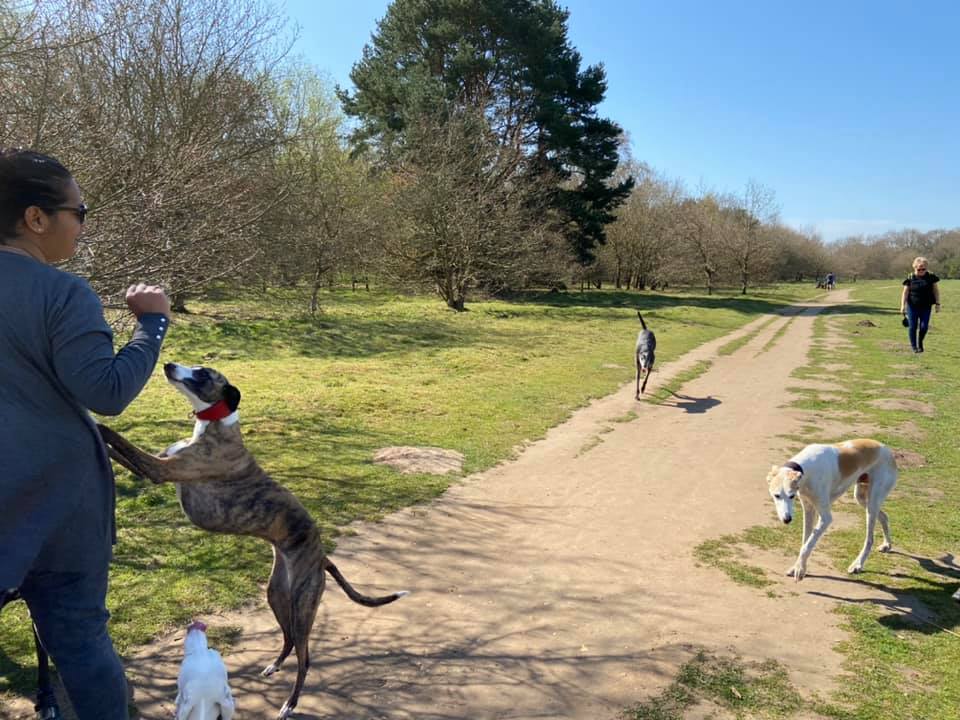
Gallery: What’s it like here?





Parking
Park in the Ripley Green car park behind the village High Street and opposite the cricket pitch.
Poo bins?
At the car park.
Self-guided walk
Here is a Footpath app route from the Ripley Green car park. Also on AllTrails. It takes you through Ripley Common, on to the River Wey Navigation and over Ripley Weir, then along the tow path, before turning away from the water to use the bridge in Wisley Golf Course grounds. You pass Ockham Mill and then go through Ripley Common to return to the car park
Length: approximately 2.2 miles/3.5 km
Terrain: Mainly on mud footpaths but with a couple of extremely short sections on quiet lanes. There can be some muddy parts in winter.
Stiles/kissing gates? No stiles, no kissing gates

With the parked cars to your left and the cricket pitch over to the right, walk down the tarmac of Dunsborough Park. Turn right at the path that goes through the gap by the green bin and red poo bin and walk past the bench and between the trees to Ripley Common.
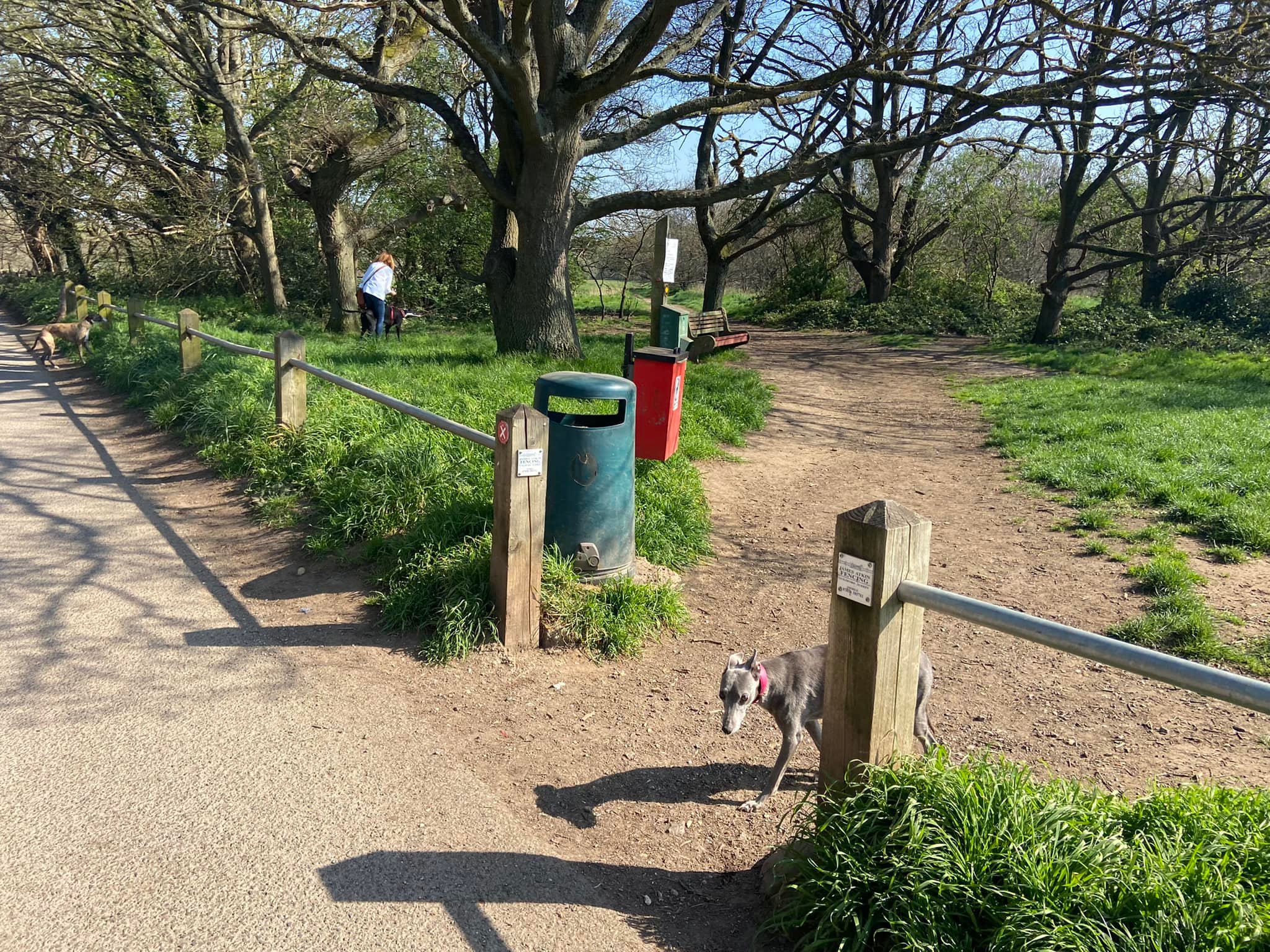
Walk along the right-hand side of the grassy area (passing two benches) until you get to the cross paths, where the path to the right heads into the trees and by a broken bench. Turn left and walk straight through the middle of Ripley Common to the other side, where you’ll come out at the lane. Continue straight ahead here, down the side of the house and garage (on the left) and ignoring the metal vehicle gate to the right.
Cross the brick bridge and continue past Millstream Cottage. Bear left after the houses and cross the little wooden bridge, then the path goes between fields with hedges on the left and a wooden fence on the right.
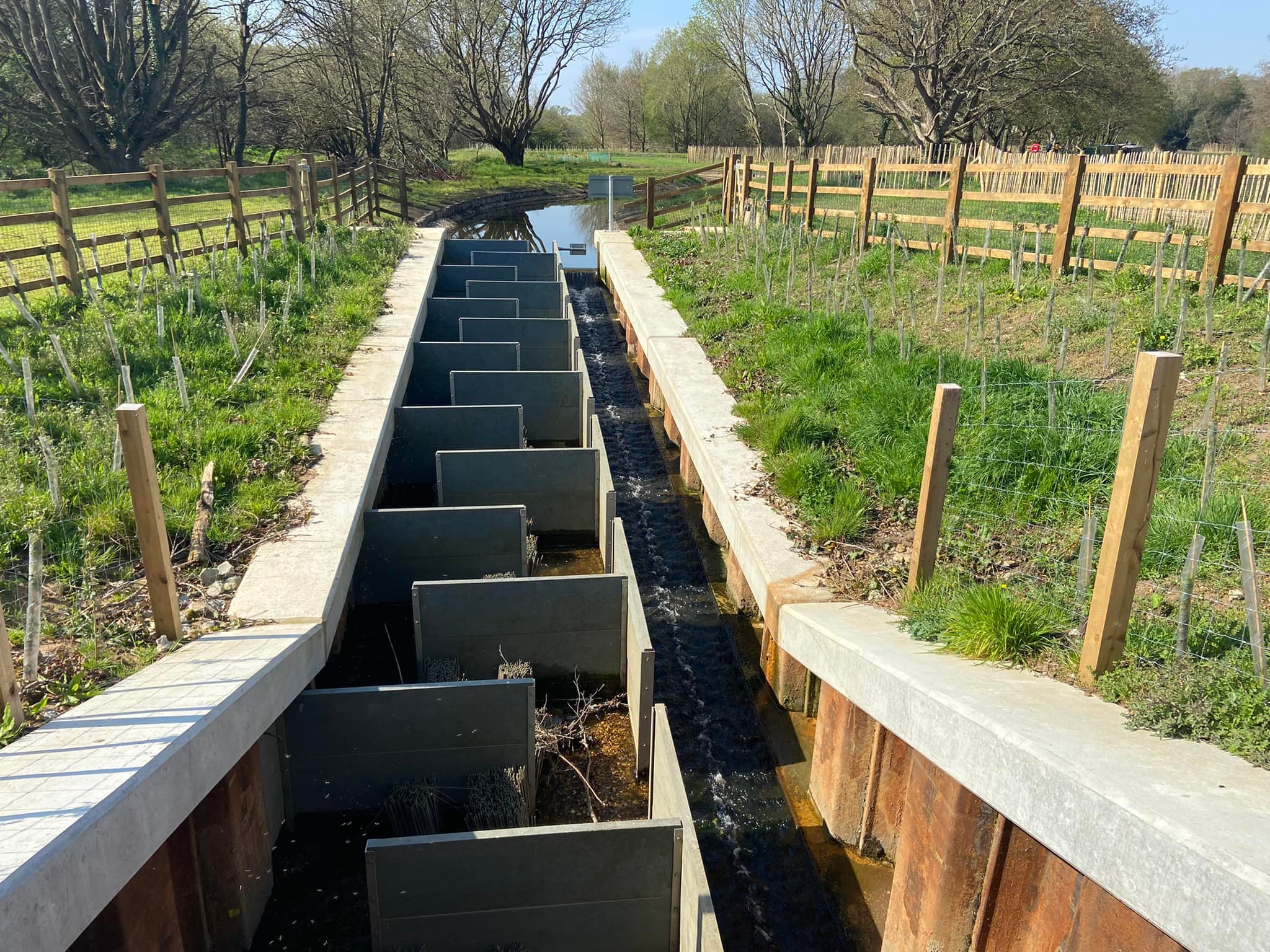
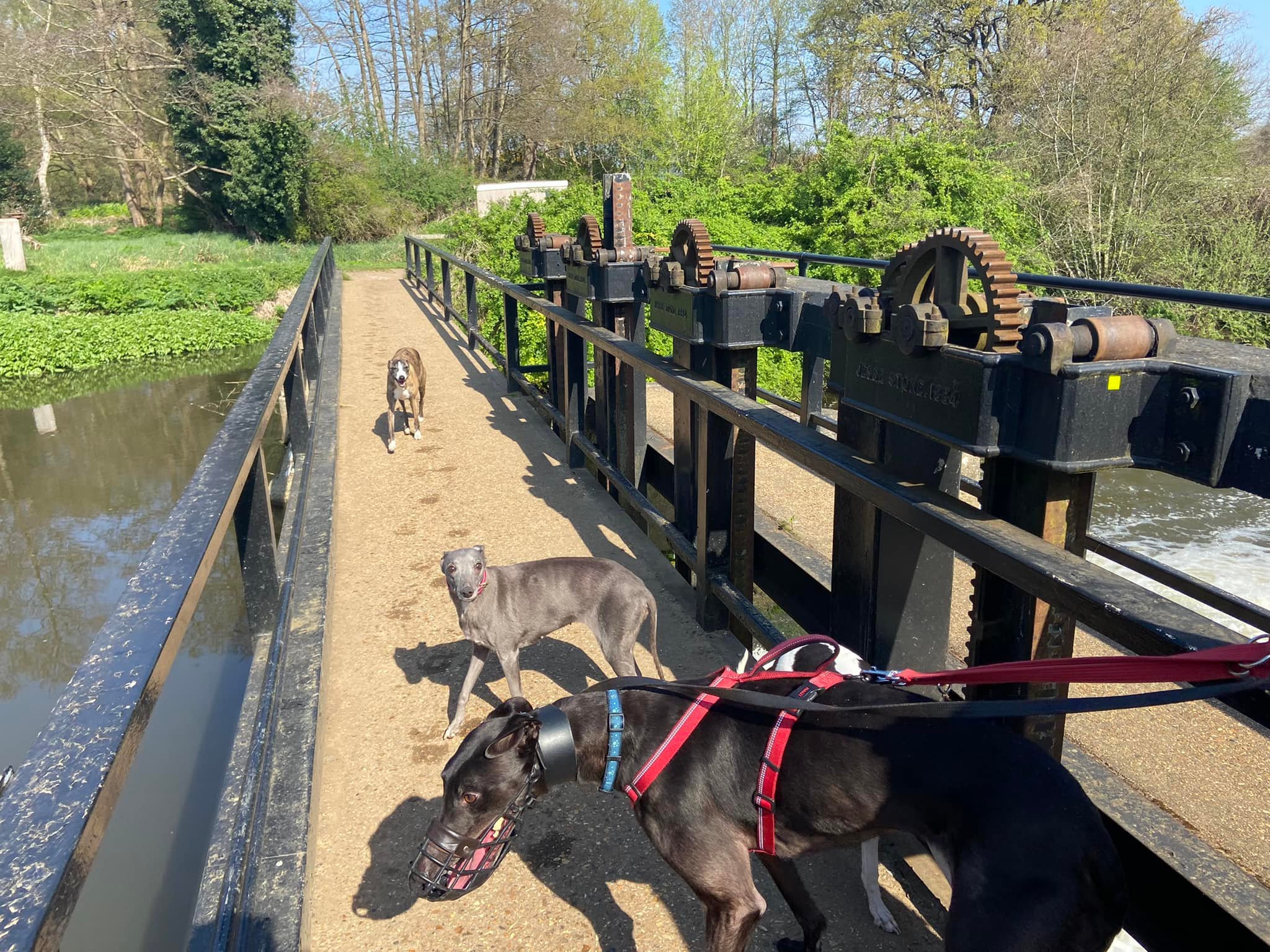
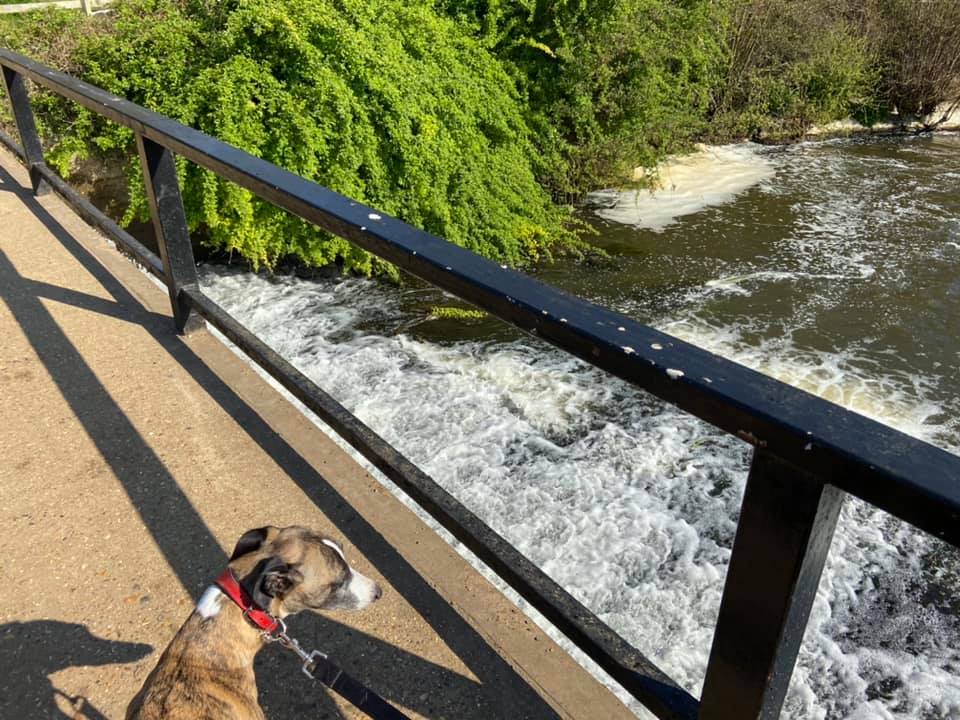
At the end of the fields, cross the wooden bridge then continue ahead to Ripley Weir. Cross over the fish pass, which is a newly-built channel that is part of a chain to allow fish and eels to migrate from the River Thames to find new feeding and breeding areas. This will improve populations of fish such as salmon and trout. Continue ahead and over the weir and then follow the path around to the right.
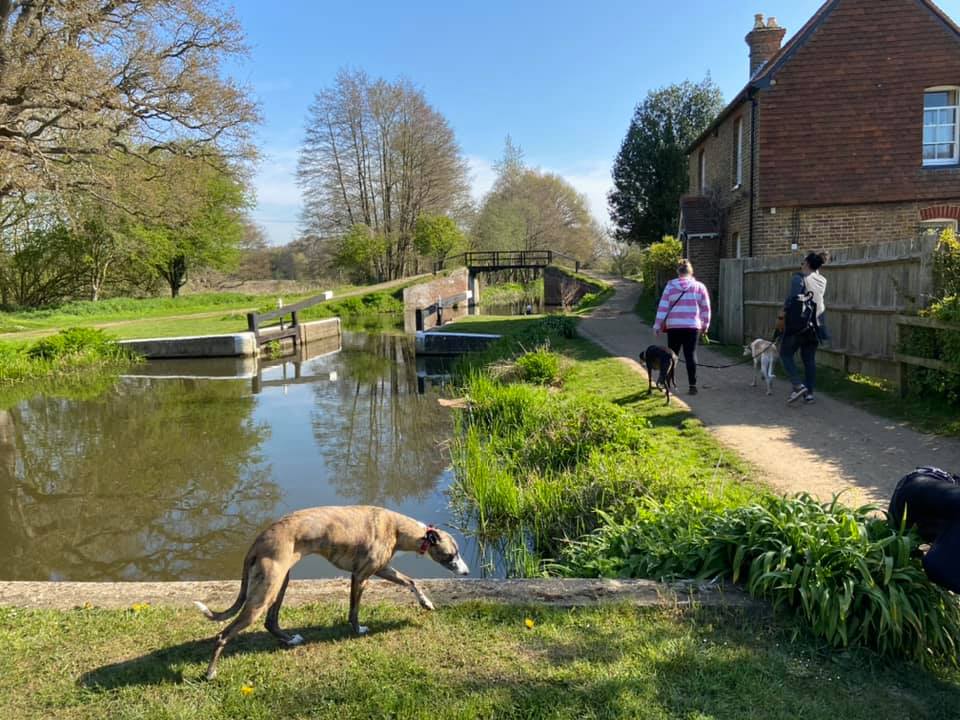
Pass the lock keeper’s cottage and Walsham Gates, a lock which is left open at both ends apart from in times of flood, and continue straight ahead on the tow path.
To your right is the River Wey, which you can see has strong currents. Small paths wind down to it so you can get nearer if you want to, but if you’re going to do this, put your dog on lead as you don’t want them falling into this fast-flowing water body.
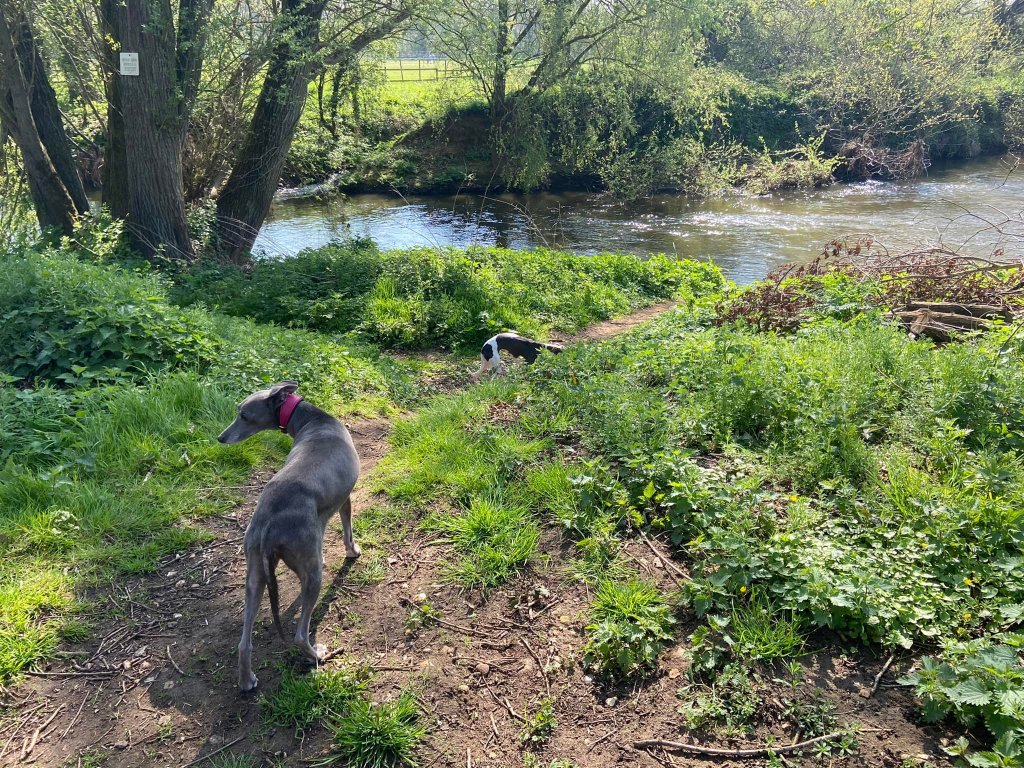
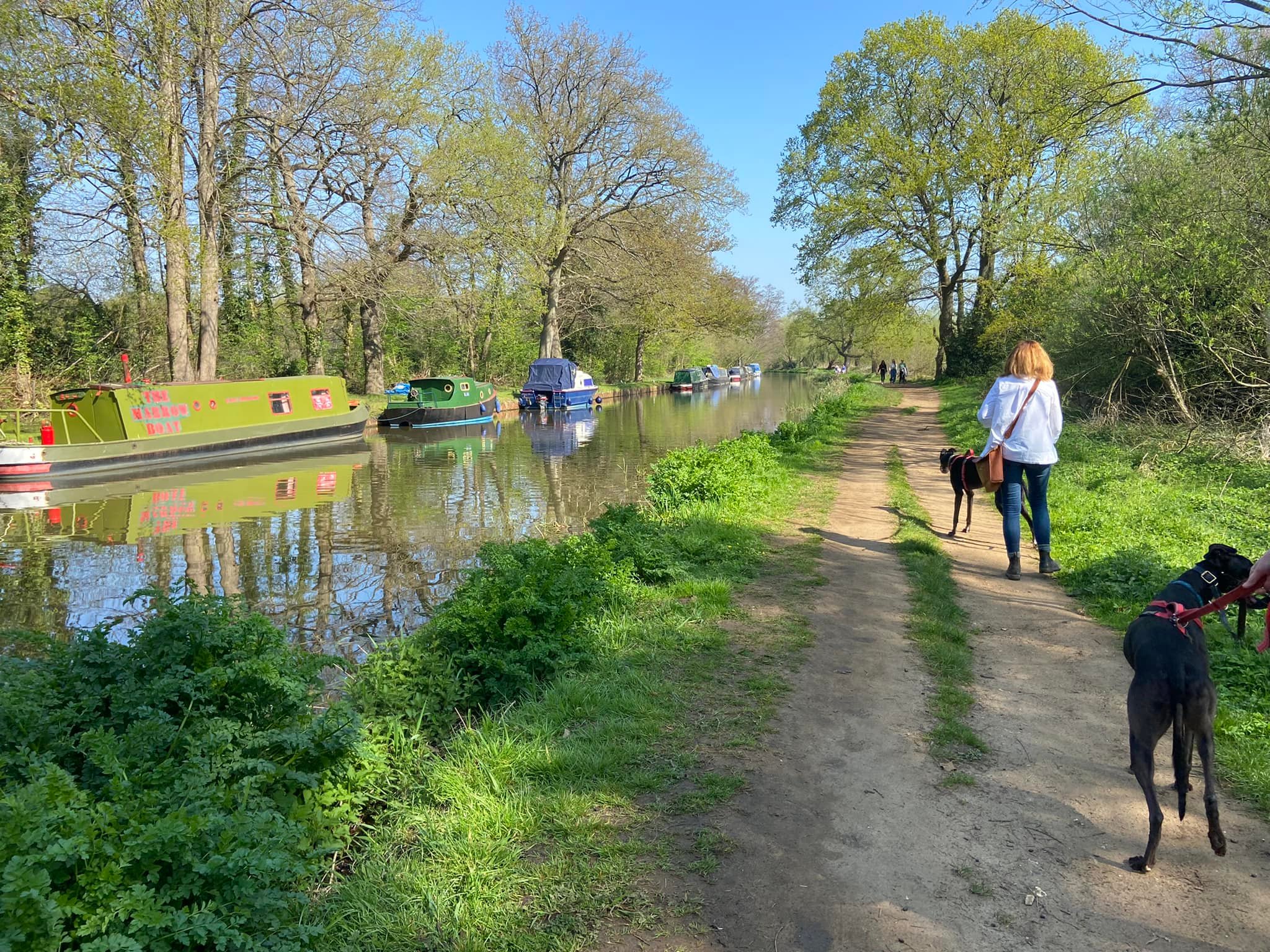
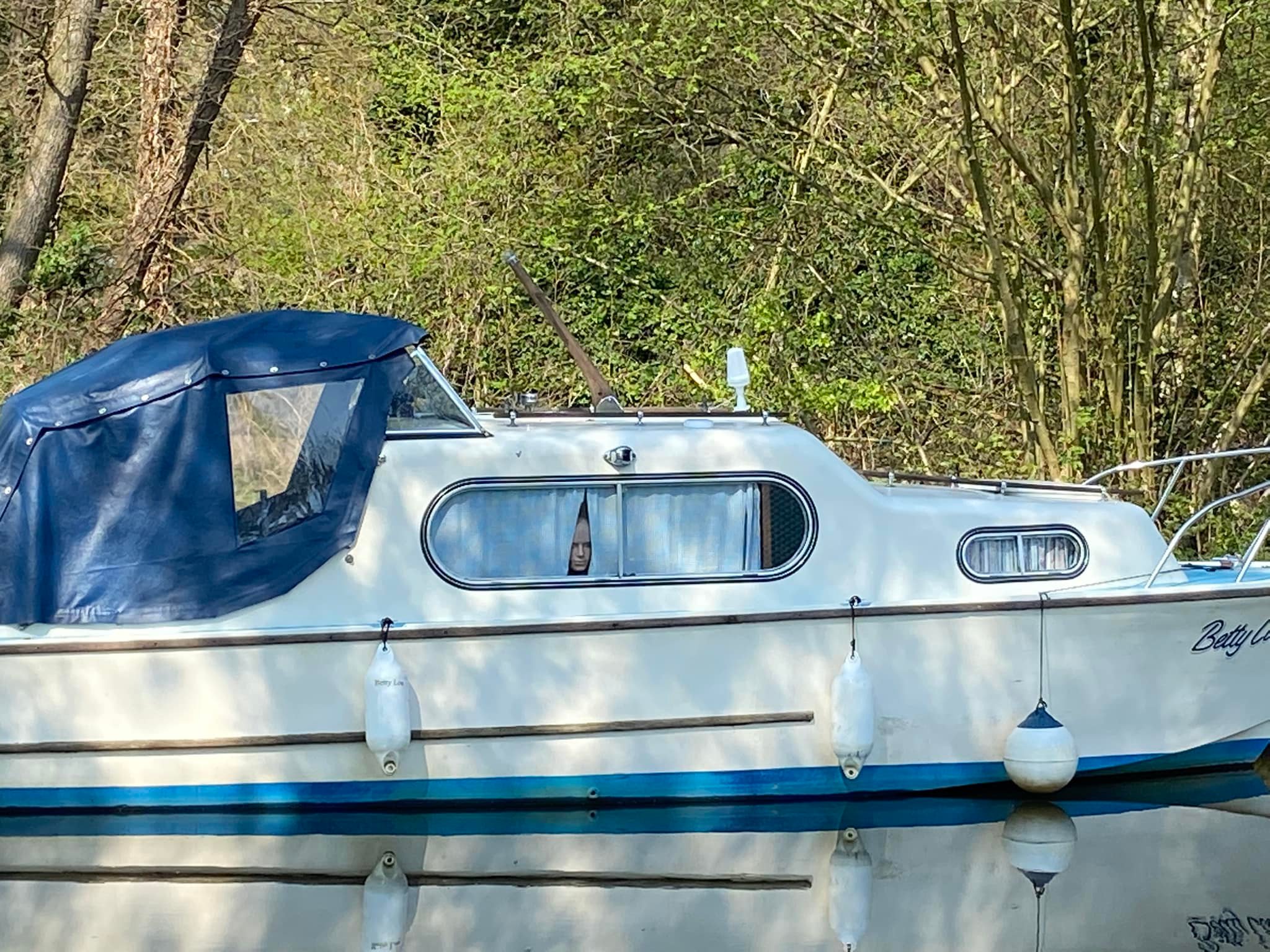
As you stroll along, keep an eye out for The Marrowboat, which is owned by Beryl the Whippet, whose human slave is a member of the SSWG Facebook group.
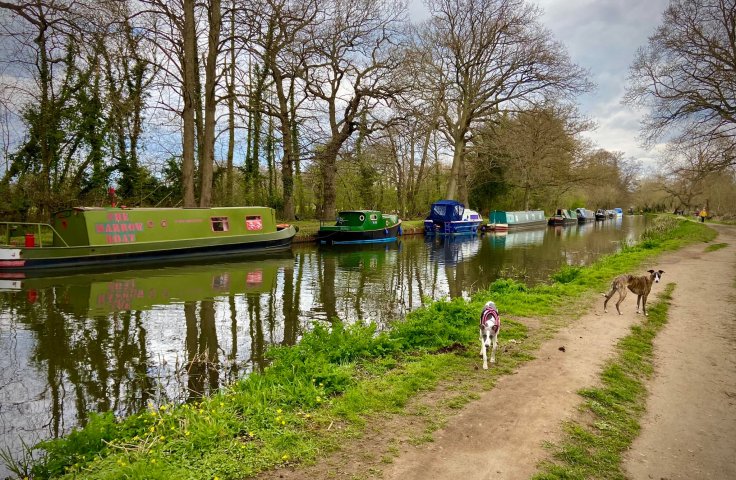
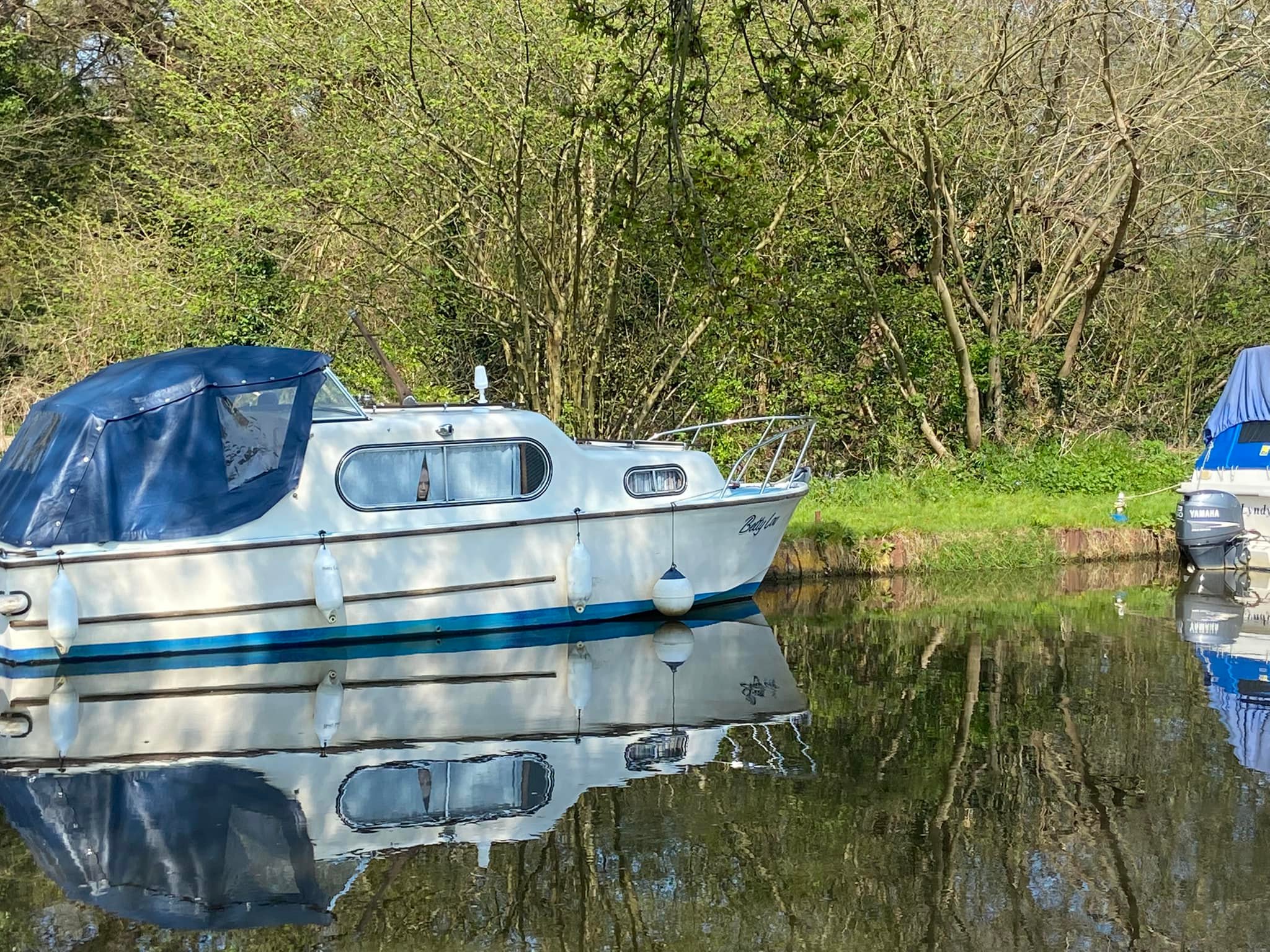
And just after that, there’s this…
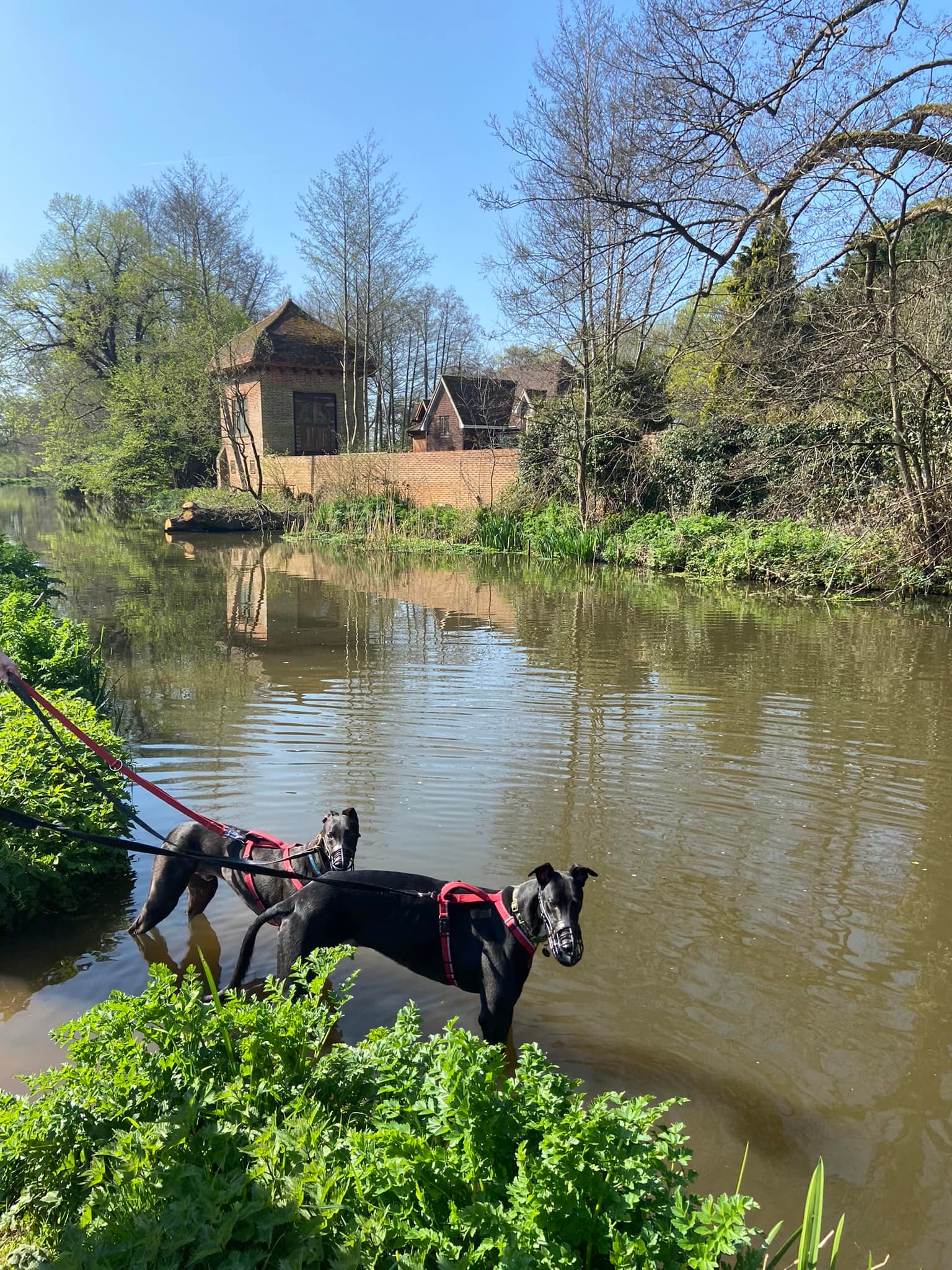
Some way after The Marrowboat, you’ll come to a small brick tower, known as John Donne’s Summer House. The Summer House is in the grounds of a residential property called Pyrford Place, and the setting for quite a story. I do love stories.
John Donne was the Dean of St Paul’s Cathedral from 1621 until his death in 1631. However, long before then – way back when he was merely a secretary to Sir Thomas Egerton – he fell in love with Anne More, Egerton’s niece and the daughter of St George More of Loseley Park. The Mores were way above Donne in the social hierarchy of the time and there was no way that Anne and John could be together without seriously arched eyebrows all round. In 1601, when Anne was 17 (Donne, as seems to always be the way of these things, was a fair bit older than her), the pair ran away together, causing a massive scandal and prompting a thorough manhunt. Unfortunately, they were discovered and love did not conquer all at all as Donne was thrown in prison, along with the priest who conducted the marriage. When things calmed down a bit, he was released and husband and wife moved into Pyrford Place, which was owned by Anne’s cousin, Sir Francis Wolley. They lived there for a few years before moving into their own home in 1606, in Mitcham (of all places).
Anne spent pretty much her entire adult life pregnant, giving birth to 12 children, the first while living at Pyrford Place. She died on 15 August 1617, just five days after welcoming their twelfth child into the world. That’s all that there is about her online, sadly, but it is claimed that John never got over her death and he vowed to never marry again (how terribly big of him). In his grief, he turned to God and became a highly respected preacher, a favourite of Kings James I and Charles I. Upon his death, he was buried in St Paul’s Cathedral in London, where there is a memorial statue of him, one of only a few in the cathedral to survive the Great Fire of London in 1666.
So, while there is a blue plaque on the Summer House that claims the ‘Poet and Dean of St Paul’s lived here between 1600-1604’, historians agree that he probably didn’t actually ever live in that building – in fact, some of them think it may not even have been built while the Donnes lived at Pyrford Place at all but later in the century.
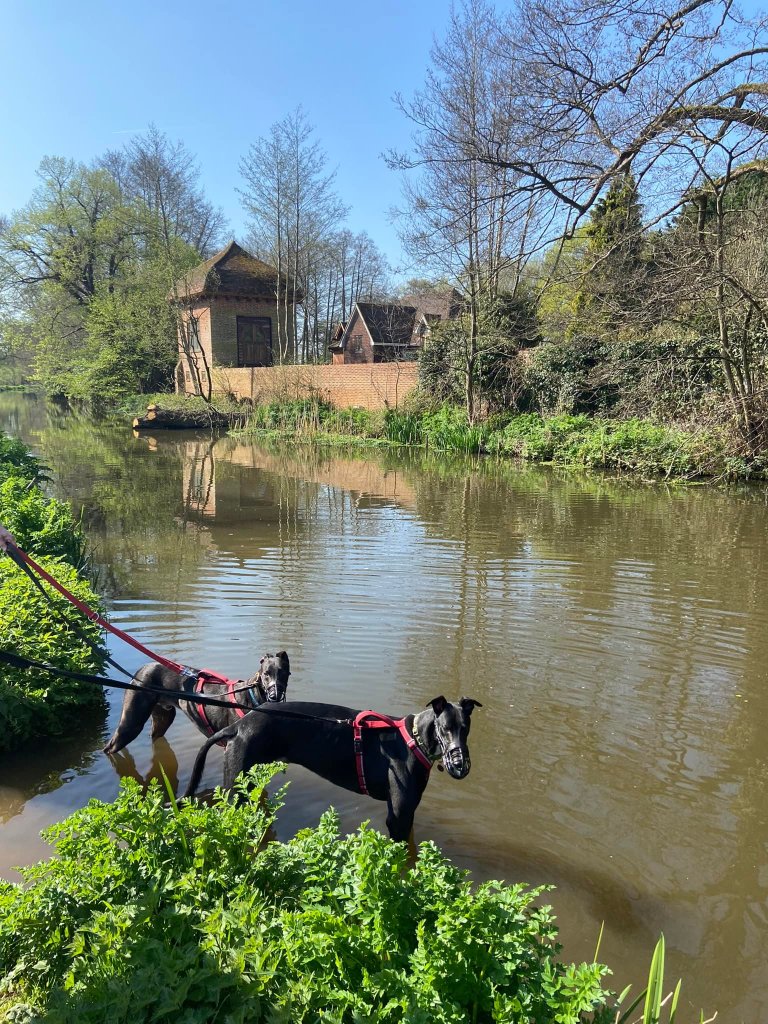
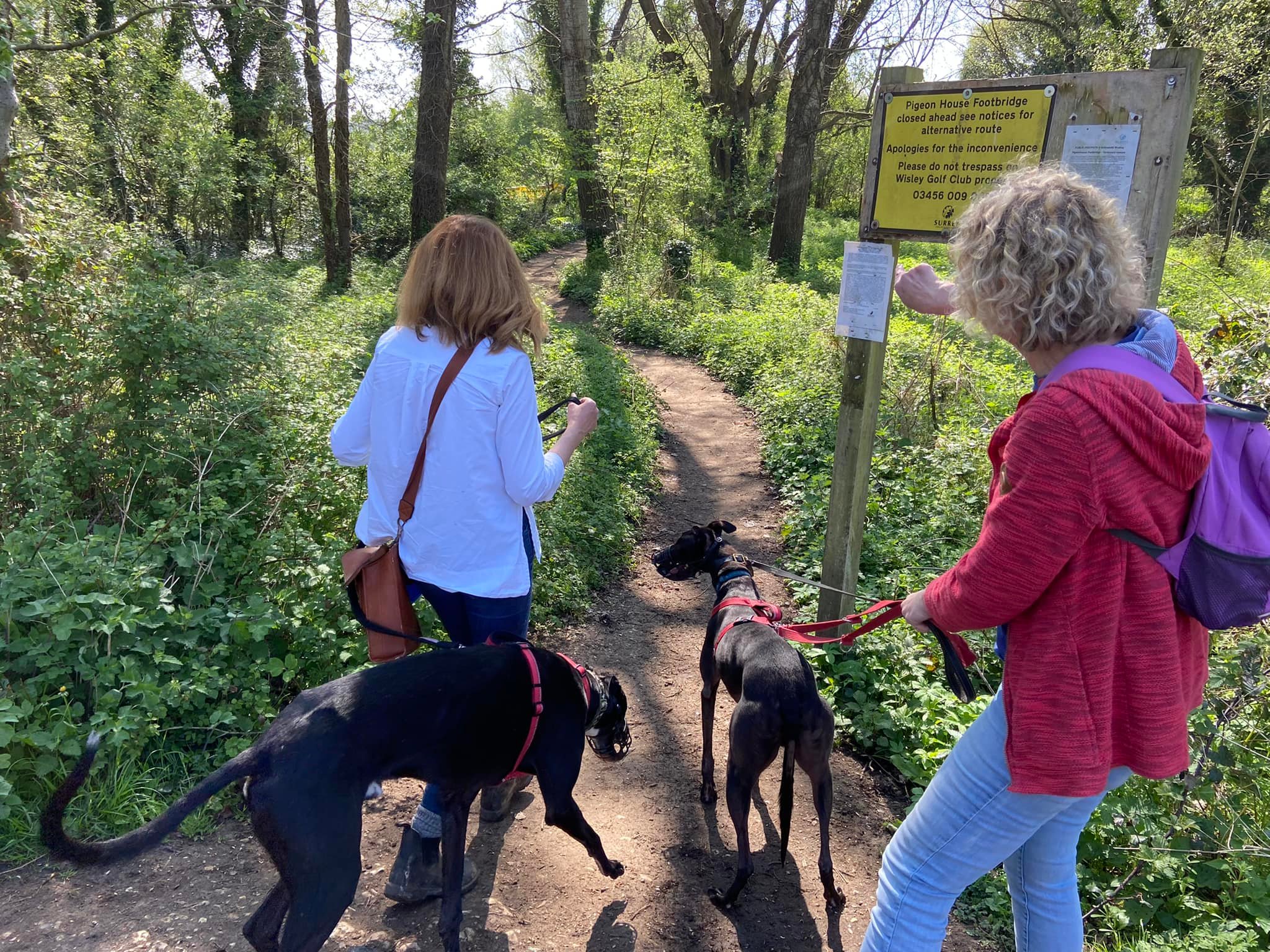
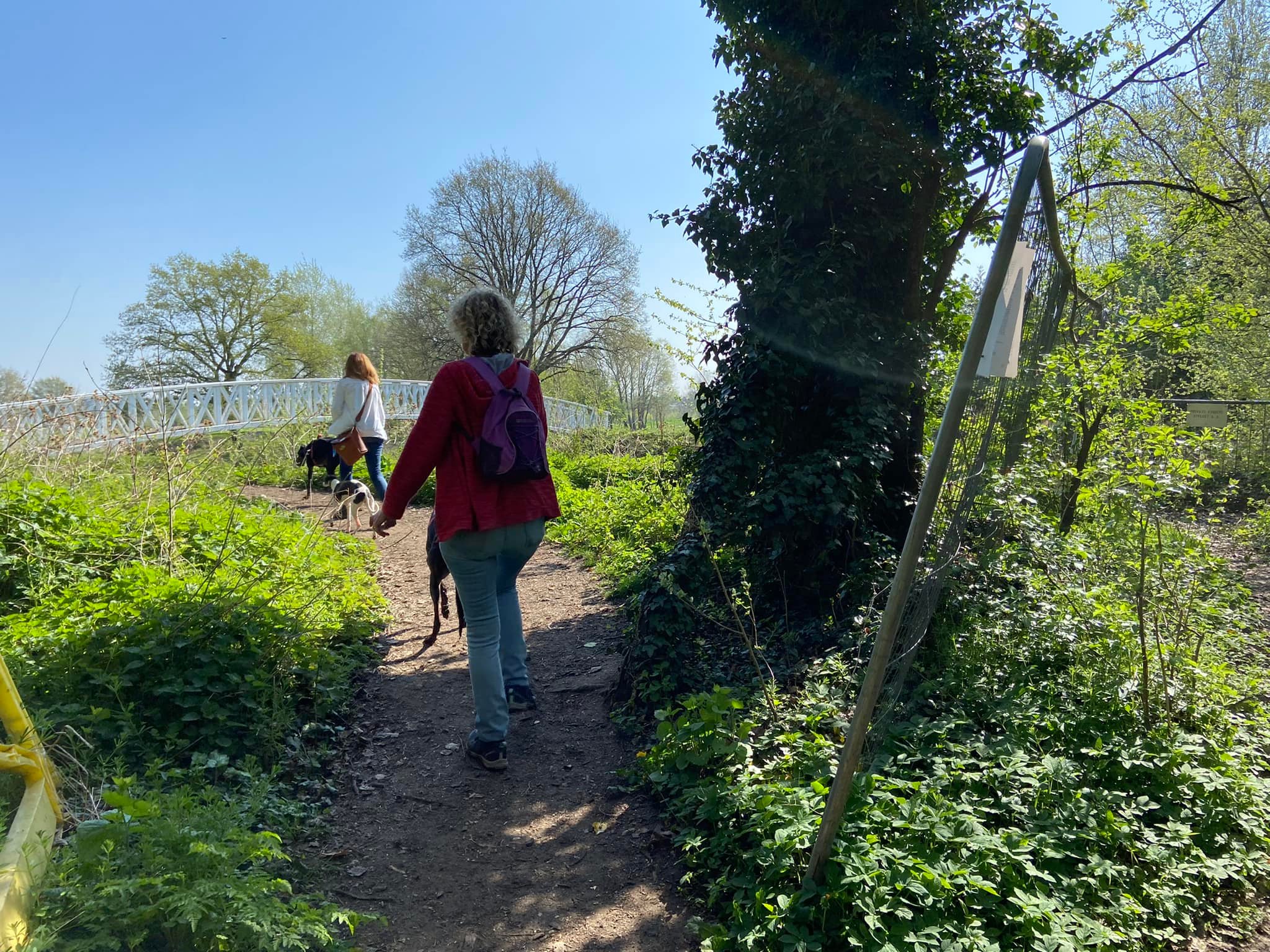
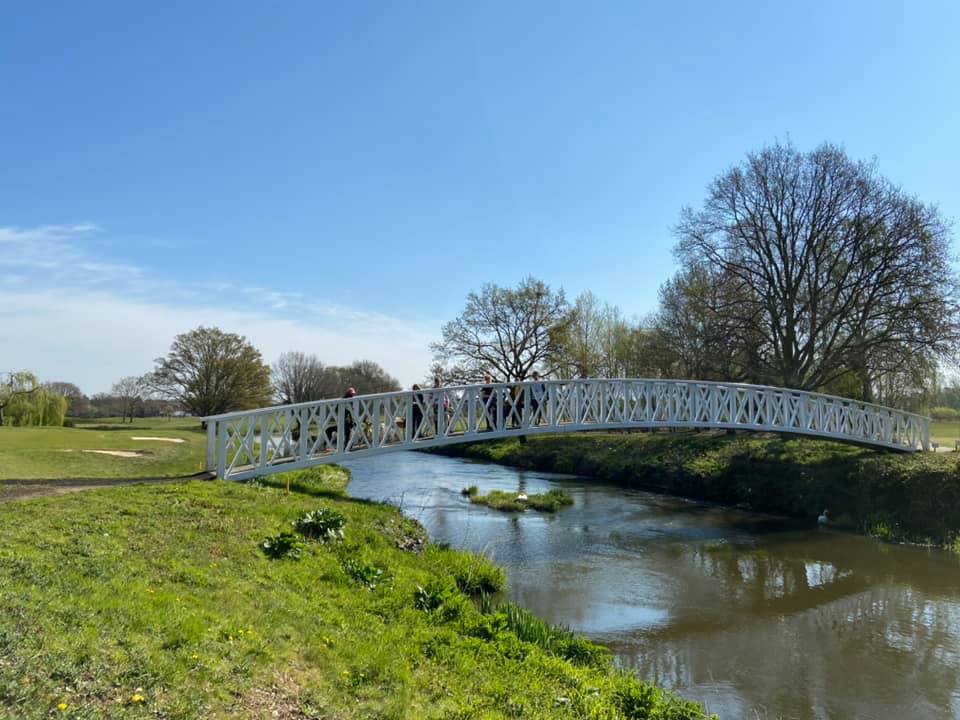
Anyway, back to our walk. Turn right at the next path that heads away from the tow path, passing a yellow sign about Pigeon House footbridge being closed. Follow the little path down and to left to the golf course and go over the white bridge. Immediately after the bridge, turn right and skirt the green then go through the trees to exit the course and turn left.
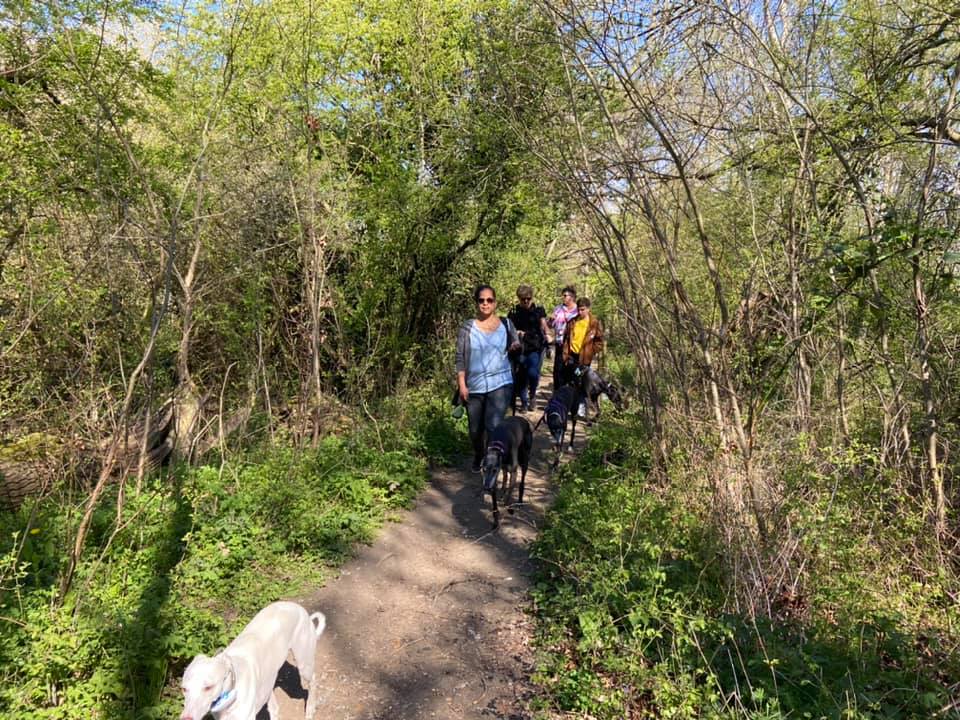
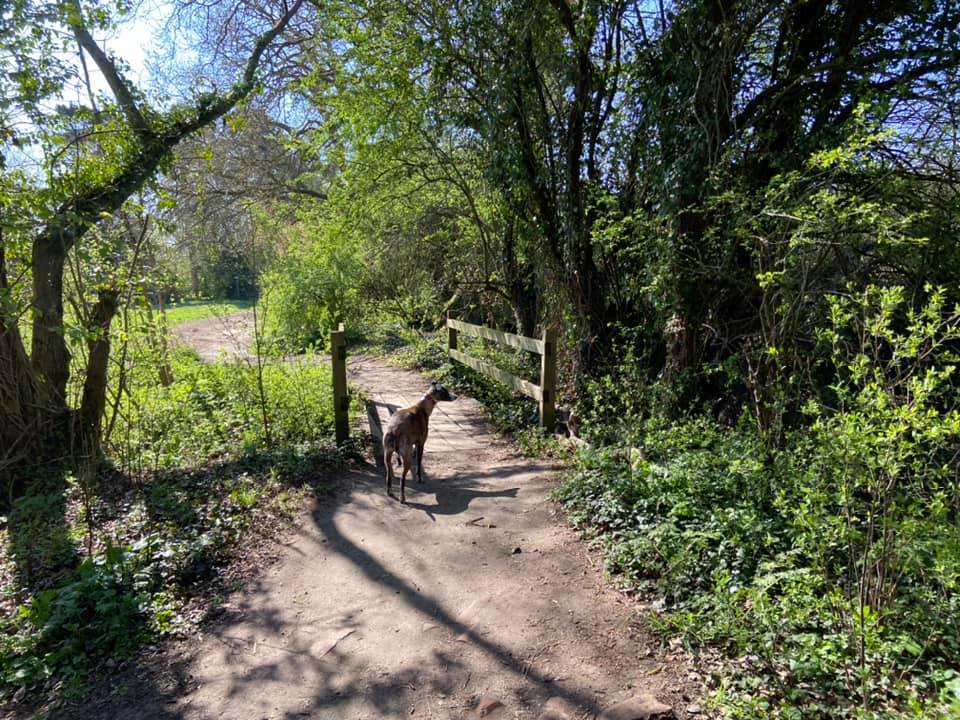
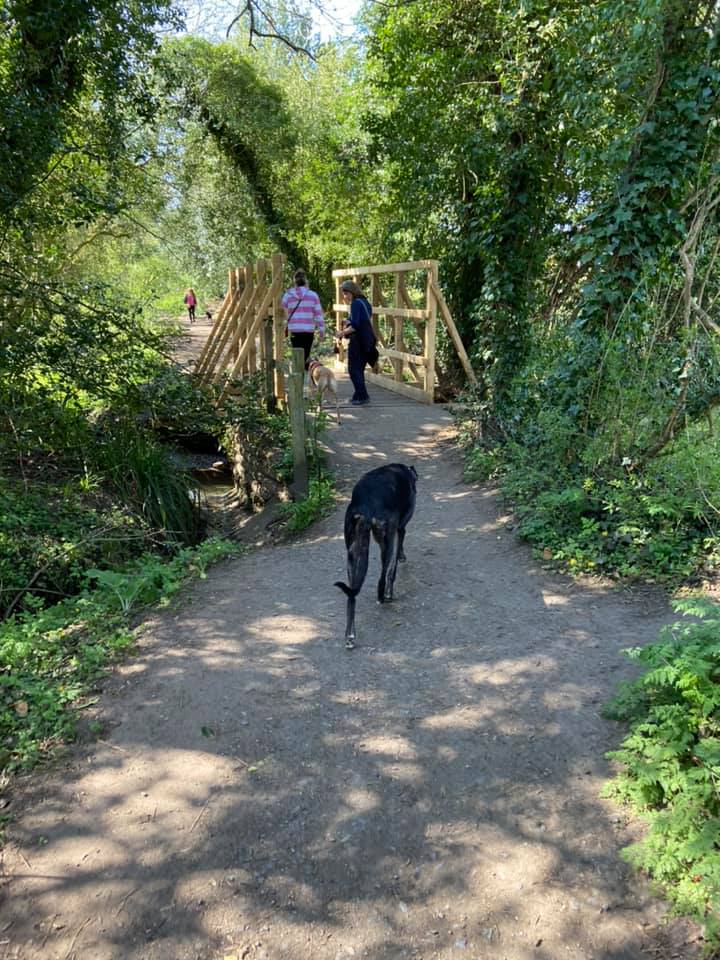
Follow this long, sheltered path, crossing a couple of wooden bridges, and then coming down to a double gates and a pointless stile. Go through the gap to the left of the gates and follow the tarmac drive ahead.
The drive will then go round to the left, passing Ockham Mill on your right. Be sure to turn back after you pass it so you can see its glorious frontage.
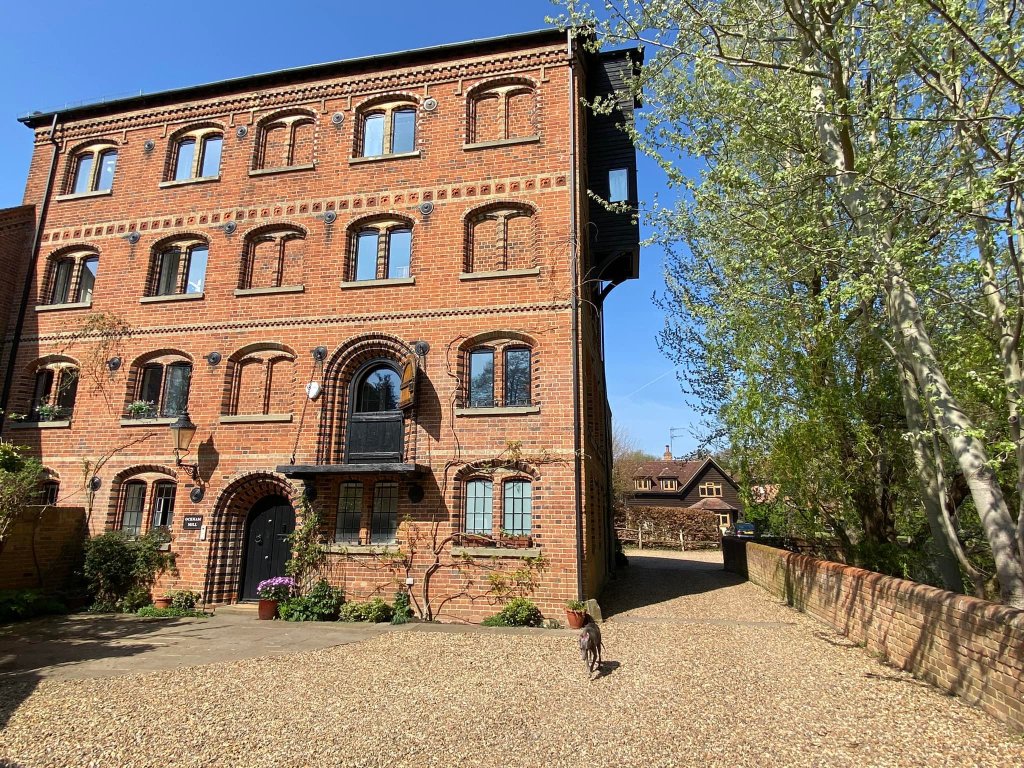
After the mill, there is usually a vehicle gate blocking half of the lane ahead – walk through the gap and along the lane, passing a small red post box on the right and some chopped up pieces of log. There’ll be a small layby on the right and a narrow footpath off to the right marked by a finger post. Turn right and go down it.
Follow this footpath as it winds through the trees, crossing over two foot bridges (at the second, it’s quite nice to stop and have a paddle) and it will bring you through trees to Ripley Common.

Continue straight along the left-hand edge of Ripley Common, with the grass to your right and the tree line to your left. At the end of the grassy area, pass between the trees and you’ll be back at the car park.
 Walks with Rena


Leave a comment