Page contents
About
Gallery
Parking
Poo bins?
Self-guided walks
About
Gatton Park is a private country estate near Reigate. Now owned by The Royal Alexandra and Albert School, it comprises 250 acres (1.0 sq km) of manor and parkland. The property is Grade II listed on the Register of Historic Parks and Gardens and the site is in part looked after by the National Trust. Most of the parkland is closed to the public, but there are some public rights of way crossing the site that the walks on this page make use of.
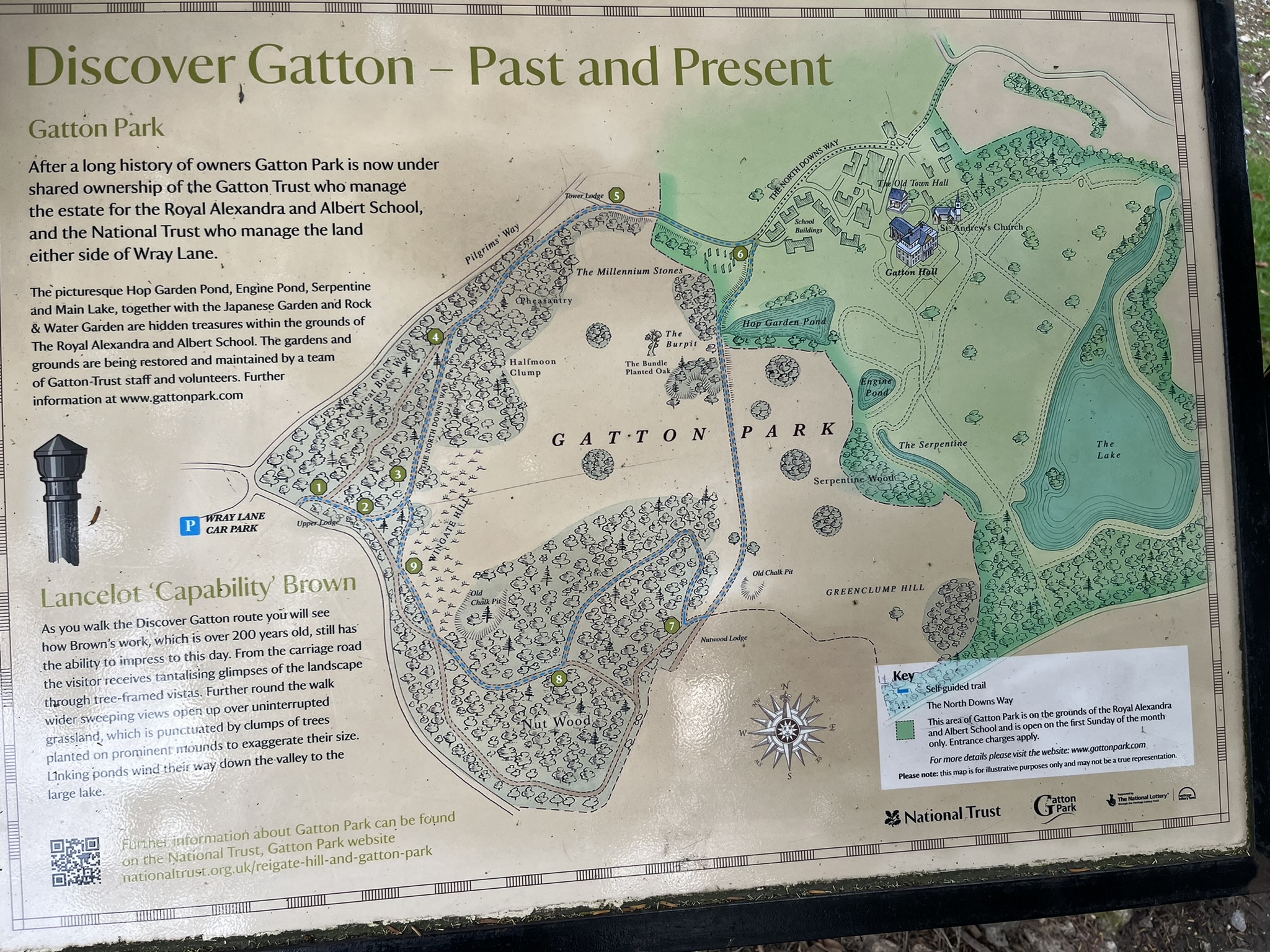
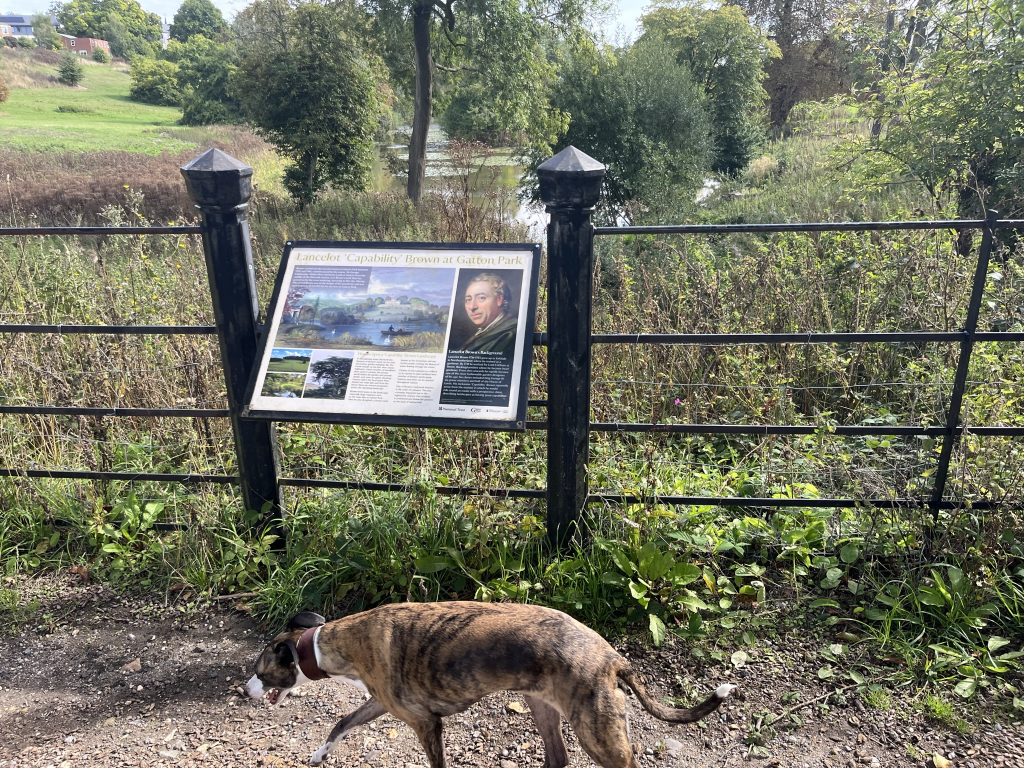
Gatton Park was created in the 1760s by Lancelot ‘Capability’ Brown. Brown’s work is distinctive for its sweeping views, lakes, ponds and mounds planted with clumps of trees. He is, according to his Wikipedia entry, apparently the most famous figure in the history of the English landscape garden style and remembered as “the last of the great English 18th-century artists to be accorded his due” and “England’s greatest gardener”.
The manor of Gatton Park can be traced to the Domesday Book of 1086. It was a “rotten borough” (which immediately makes me think of Blackadder and the quote “Colin is a dog, sir”) that had the privilege of having sending two members to Parliament from 1451 until the Parliamentary reform of 1832.
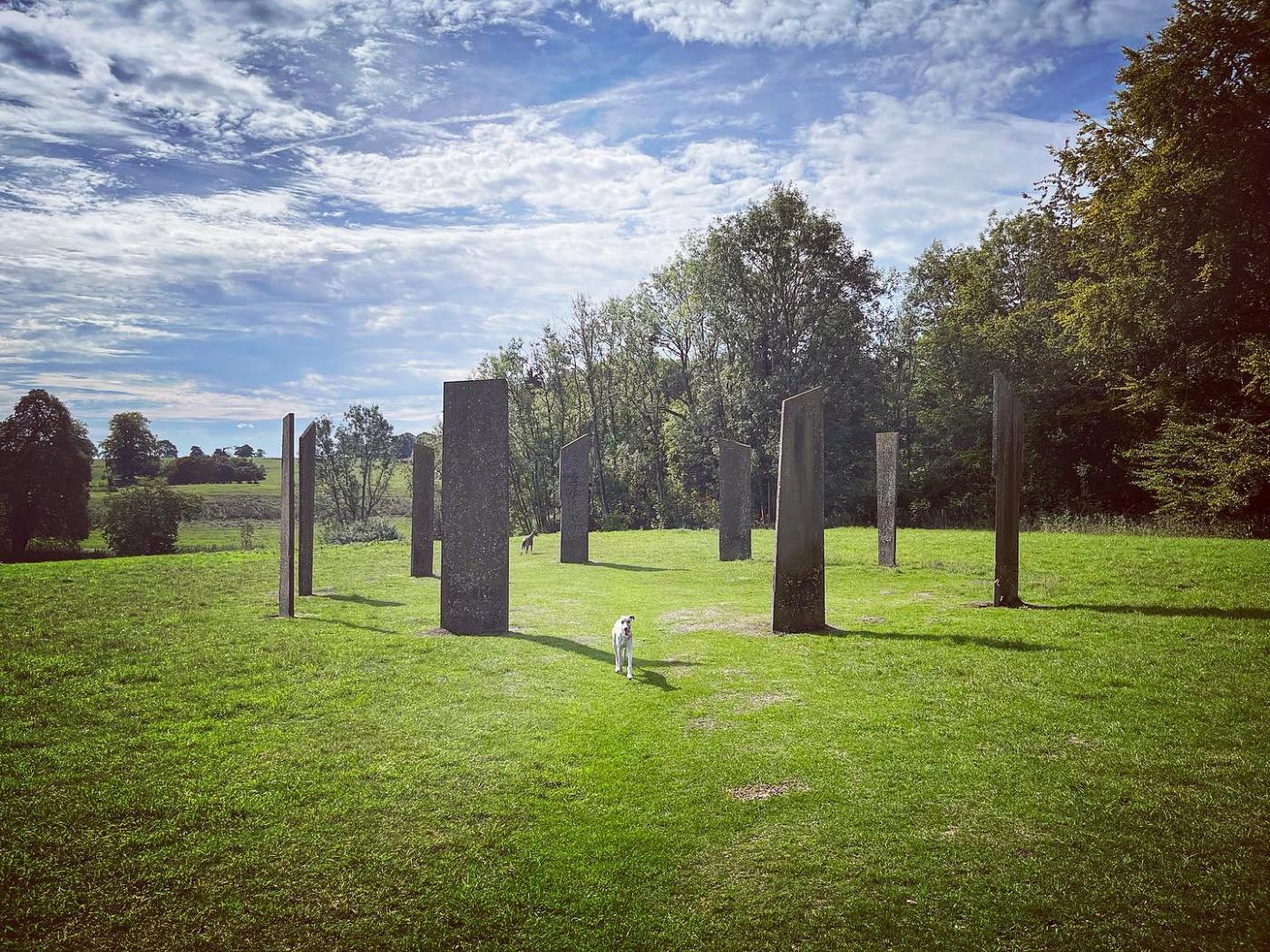
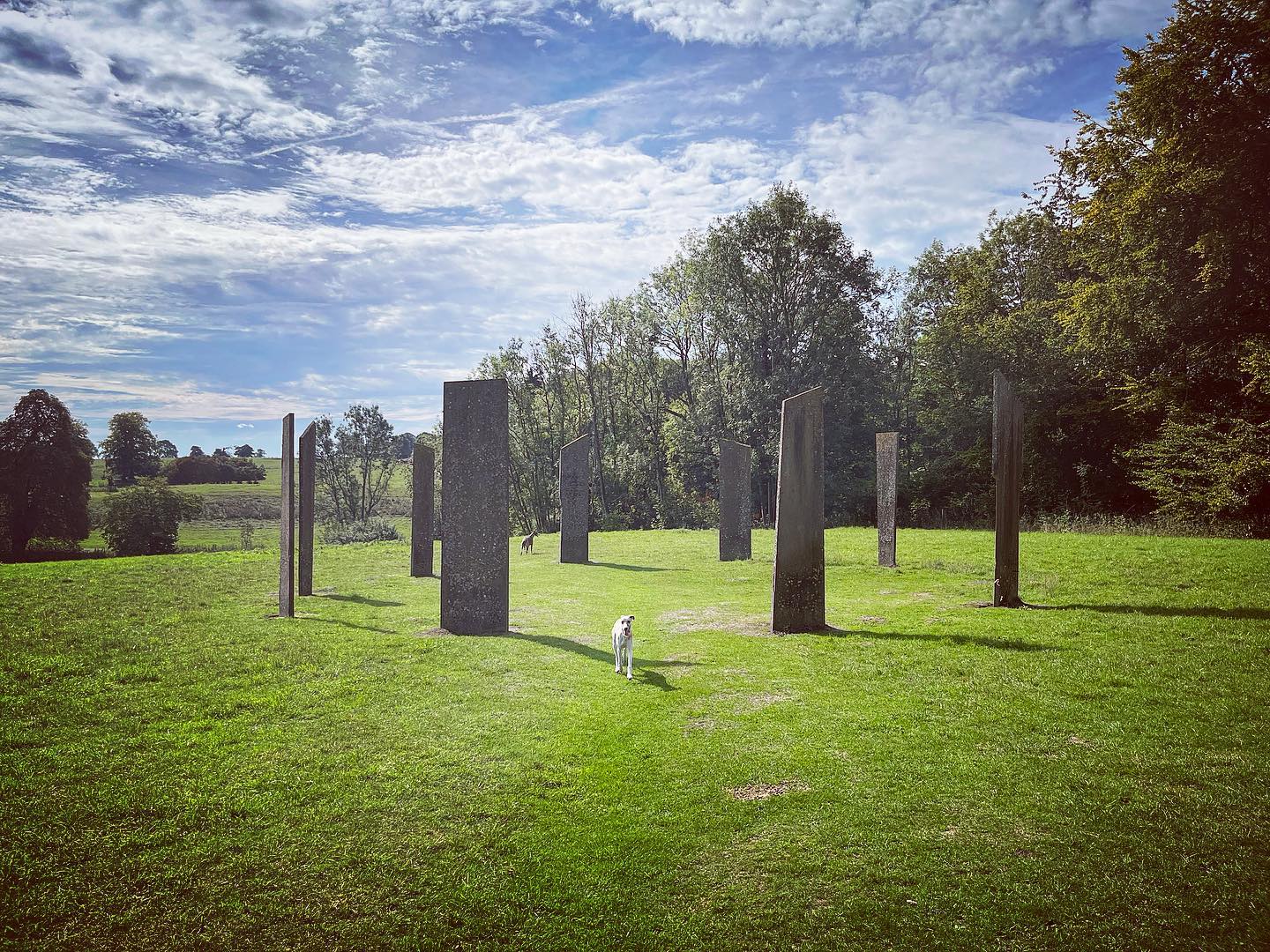
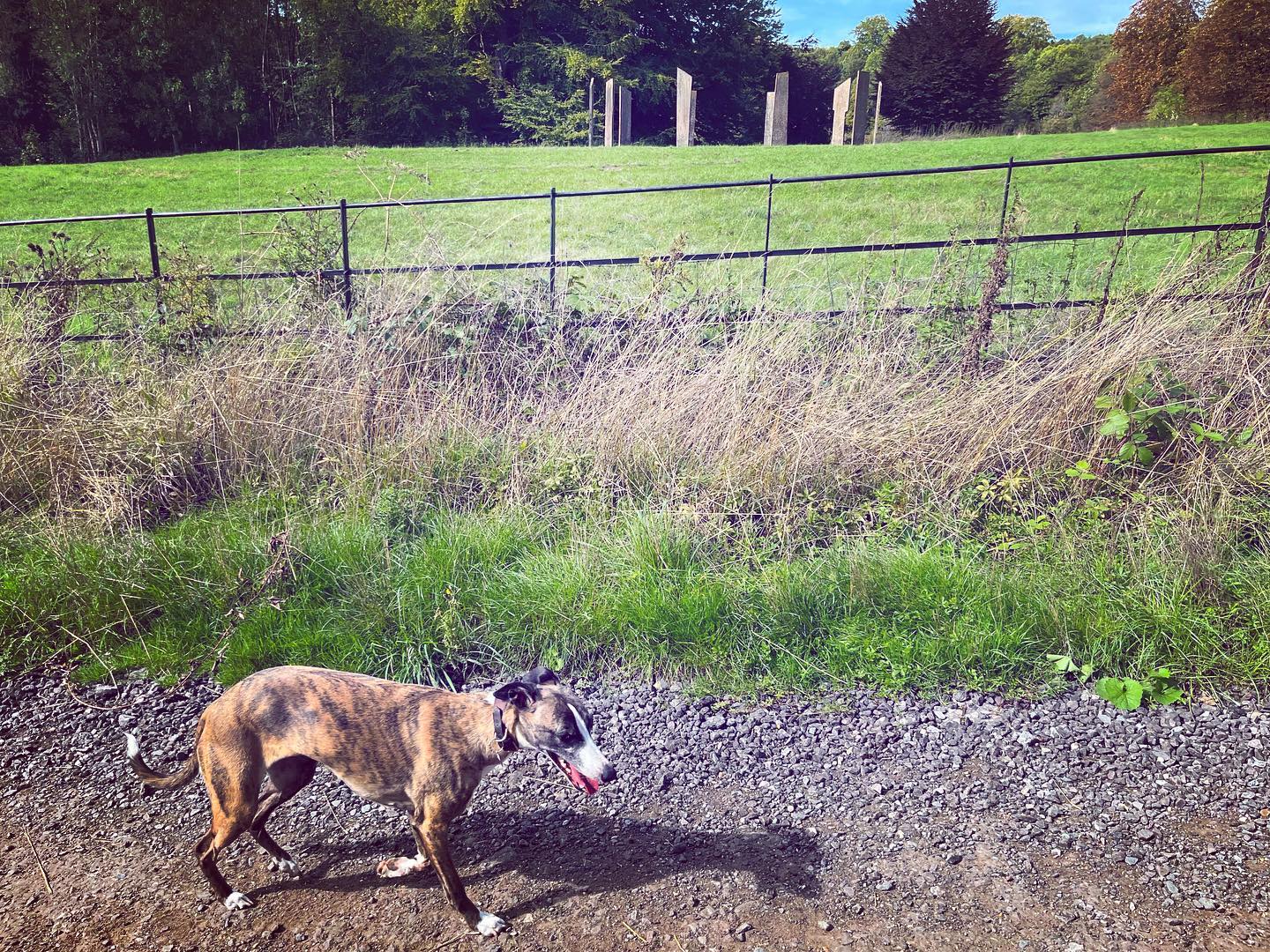
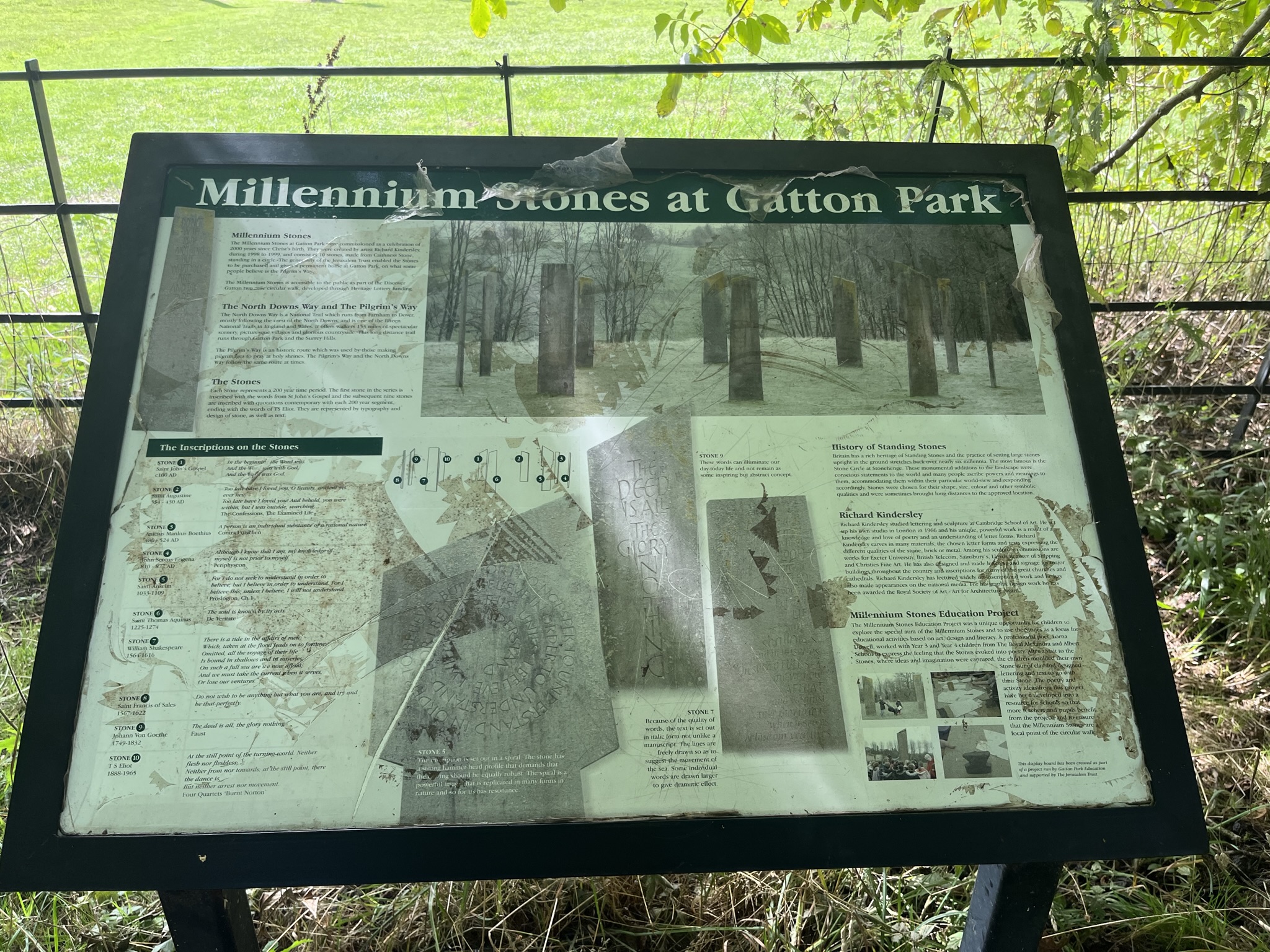
The park is home to a stone circle called The Millennium Stones, which was created between 1998 and 1999 by the sculptor Richard Kindersley to mark the double millennium in 2000. It is made from flat Caithness flagstones quarried in the far north of Scotland near Thurso. The first stone in the series is inscribed with the words from St John’s Gospel, “in the beginning the word was”. The other nine stones are carved with quotations contemporary with each 200 year segment of the 2000 year period, ending with the words of T.S. Eliot: “At the still point of the turning world. Neither flesh nor fleshless; Neither from nor towards; at the still point, there the dance is, But neither arrest nor movement.”
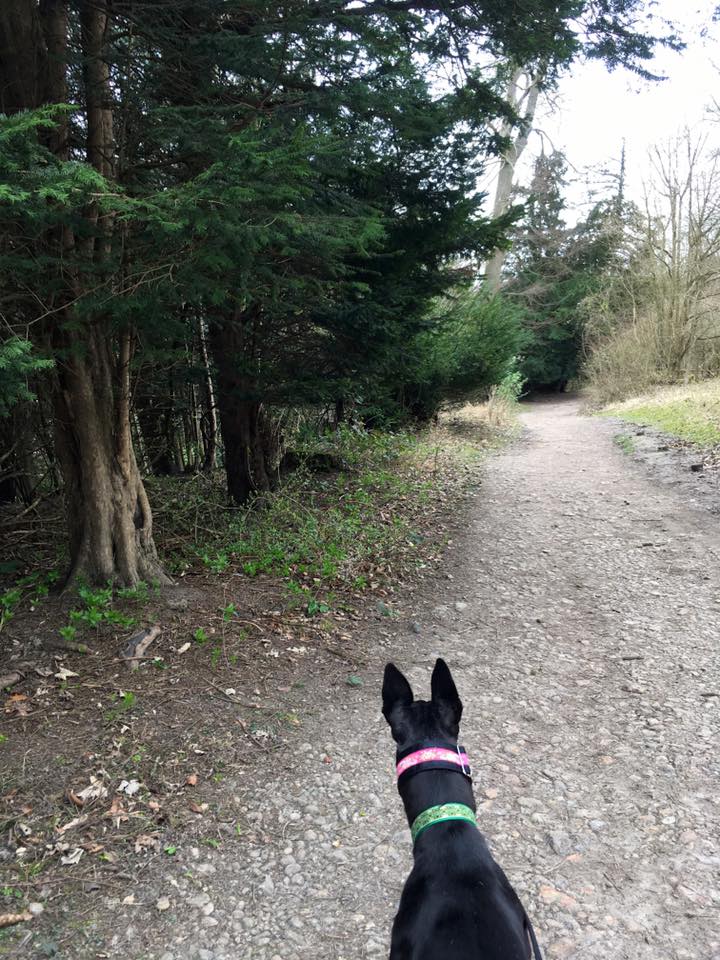
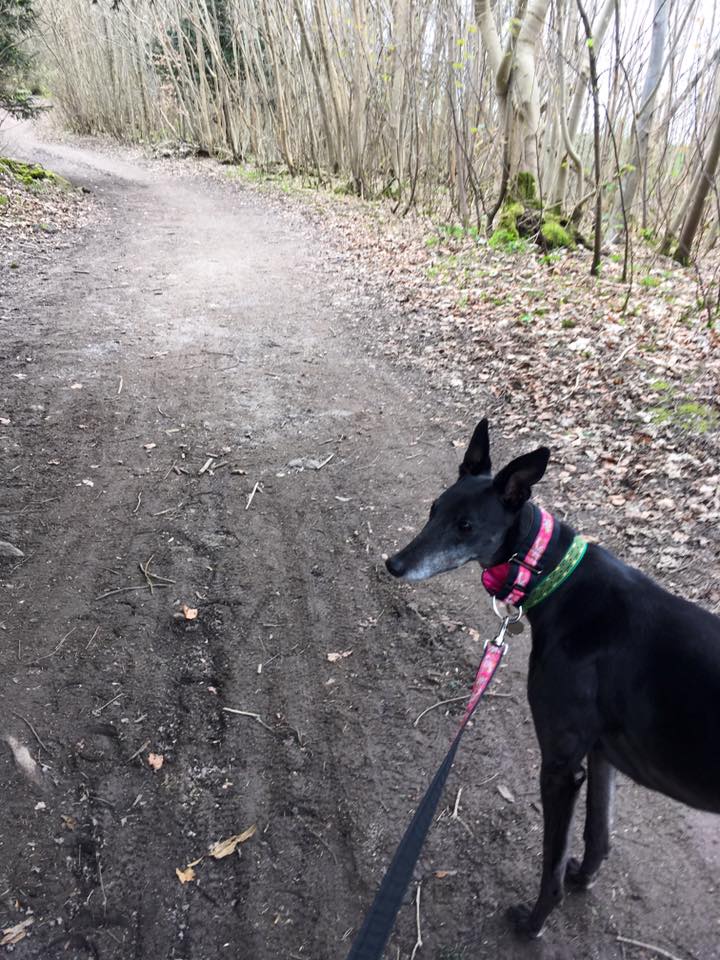
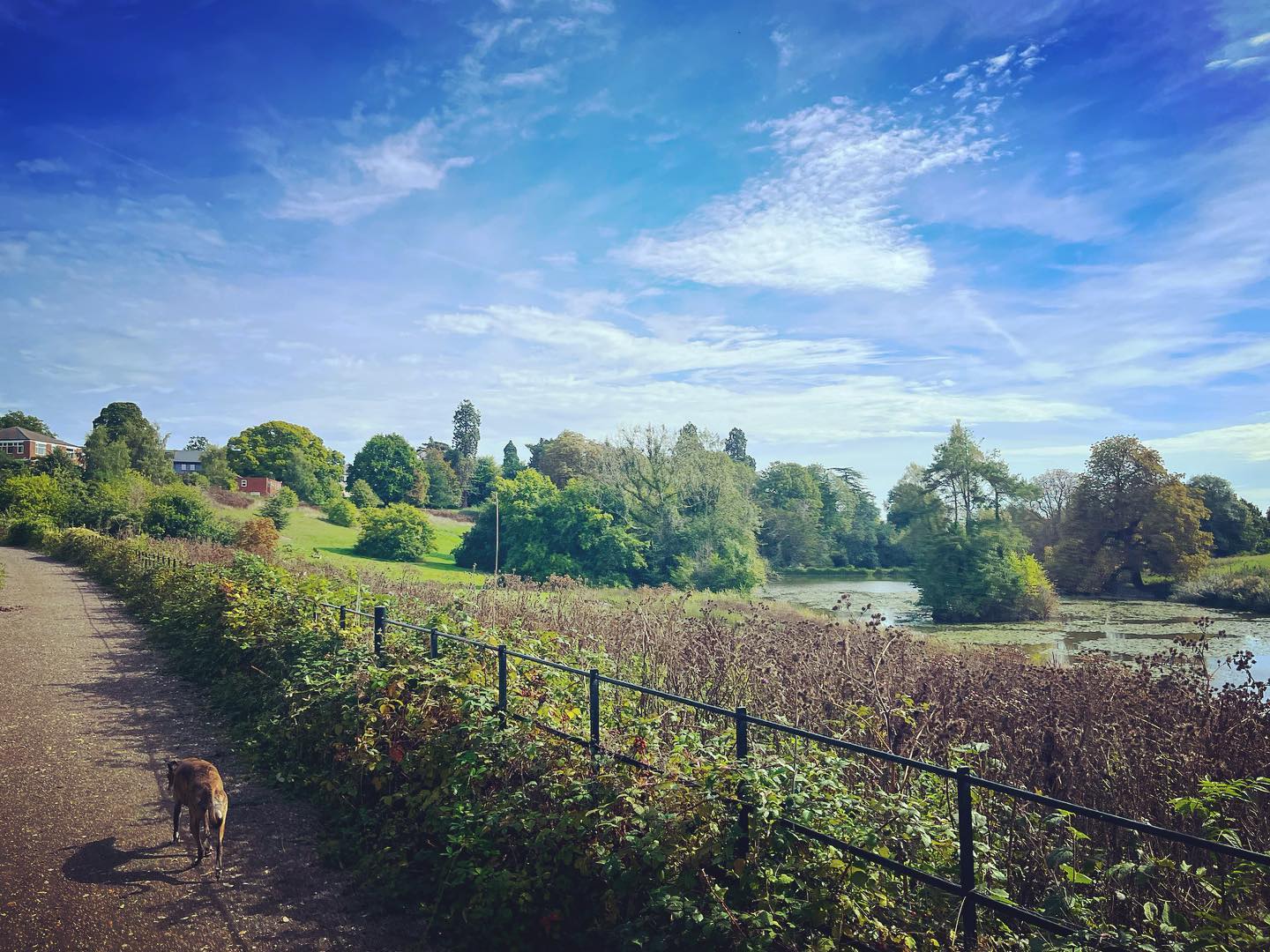
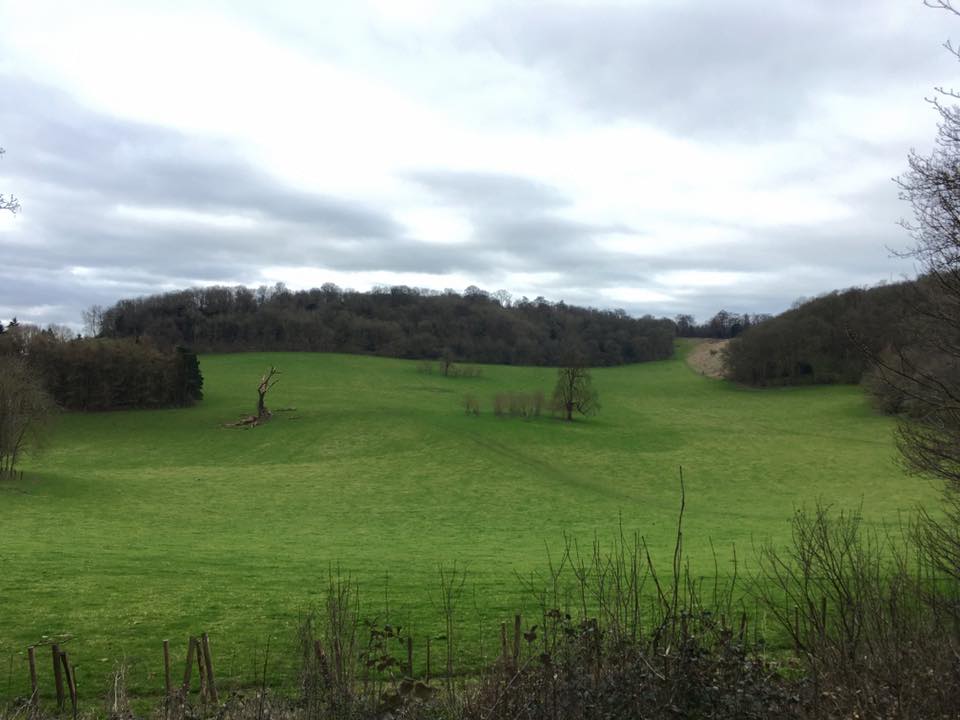
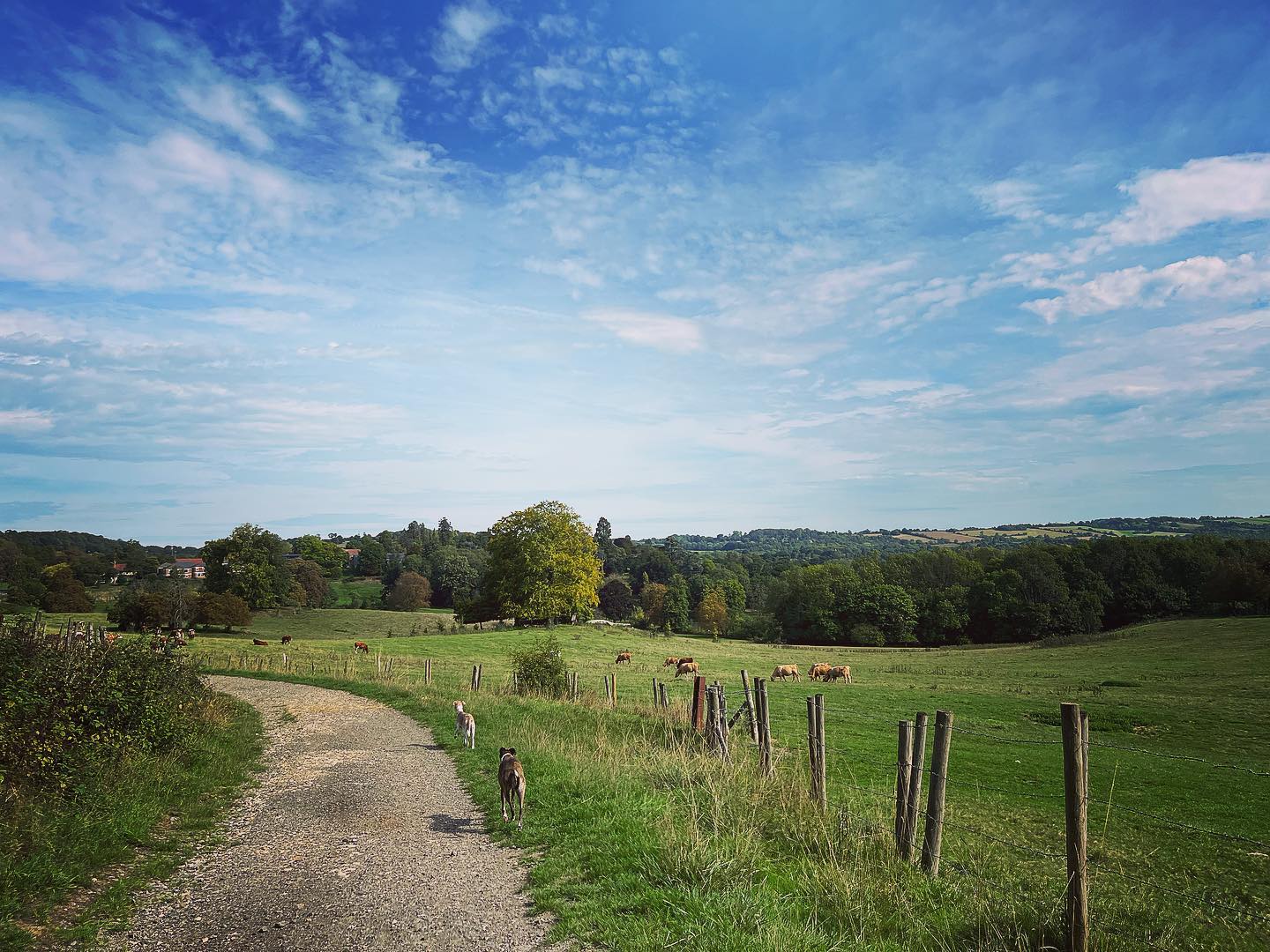
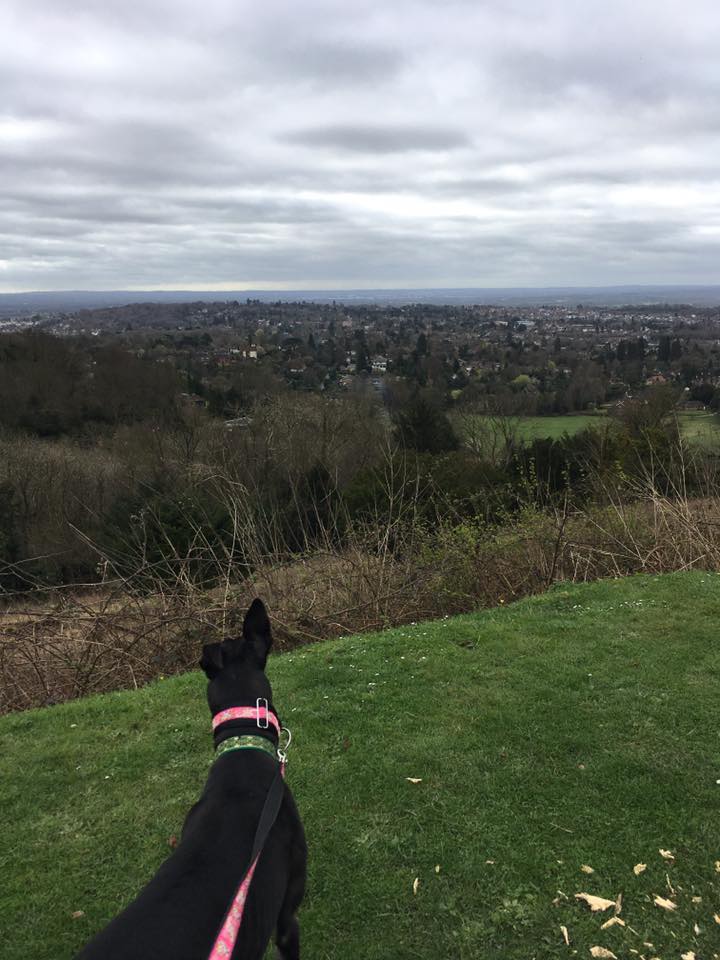
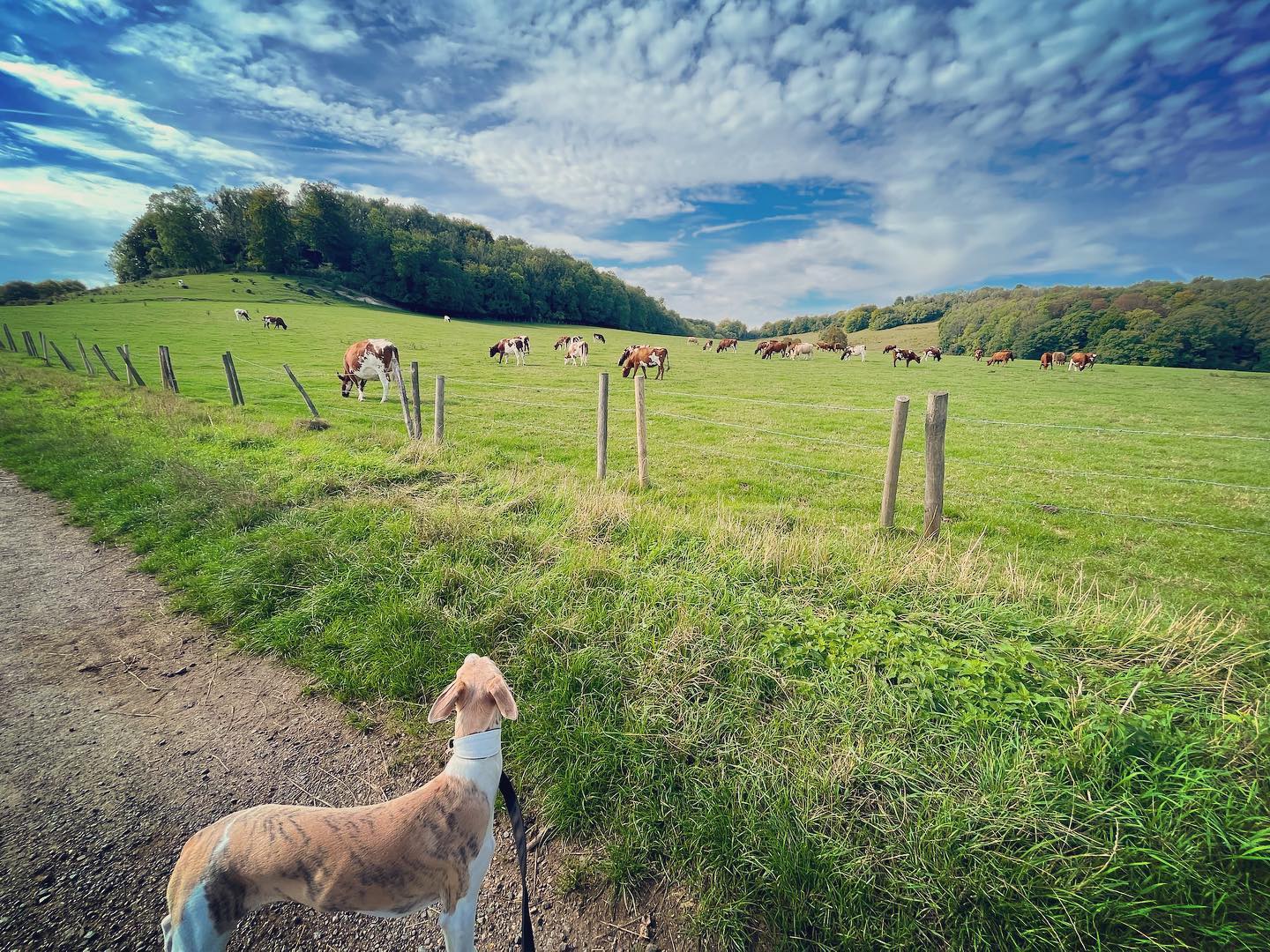
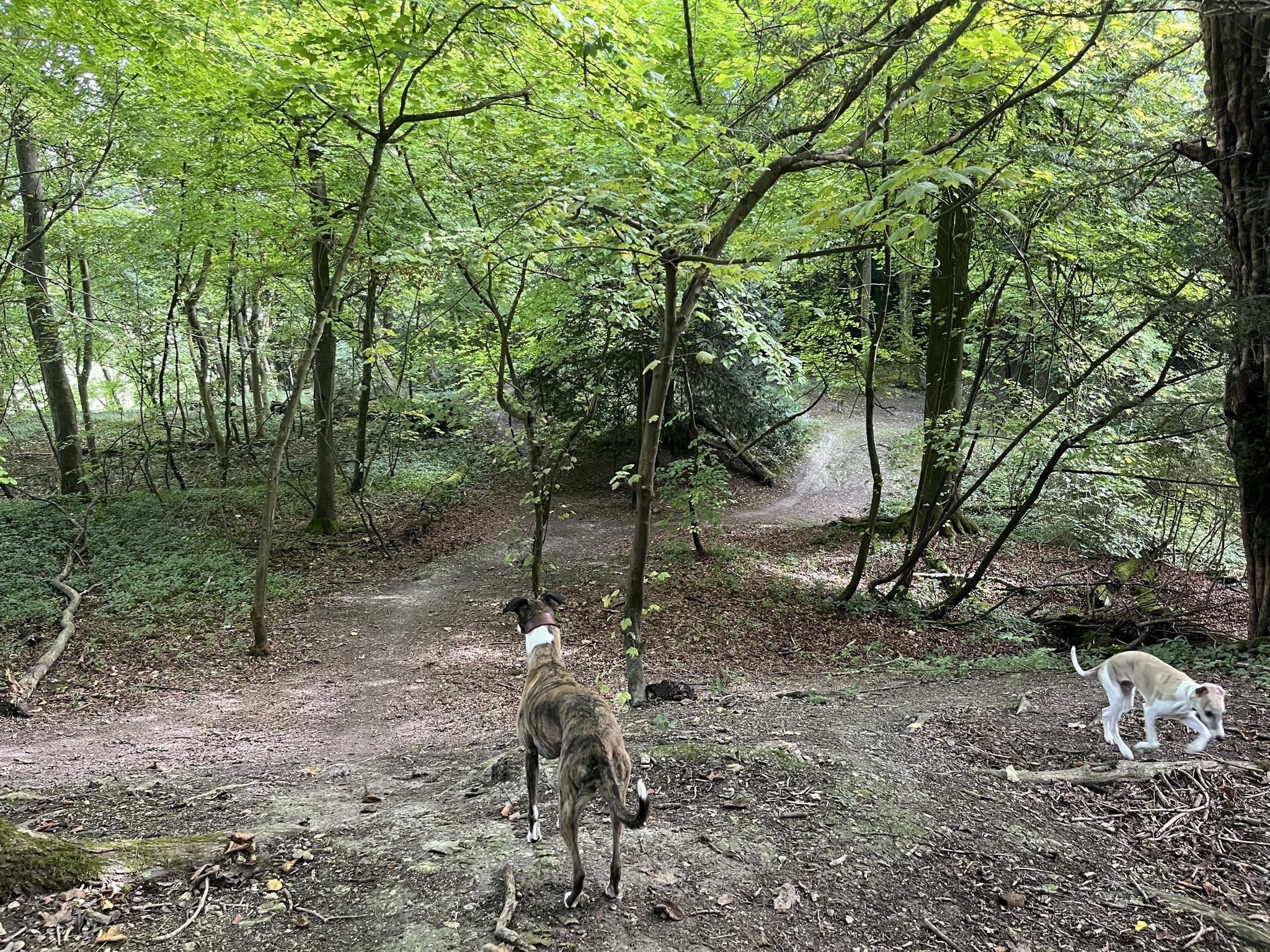
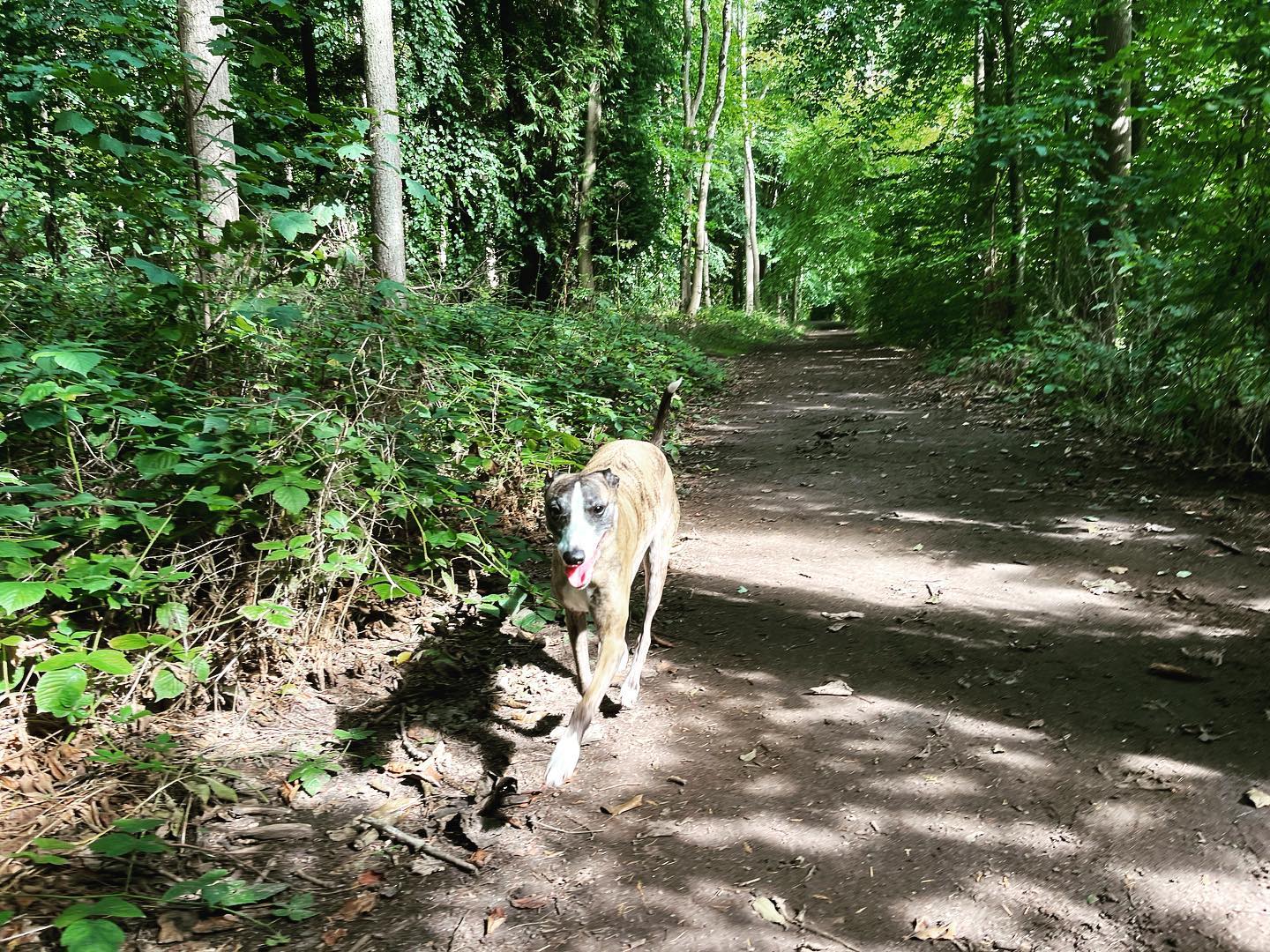
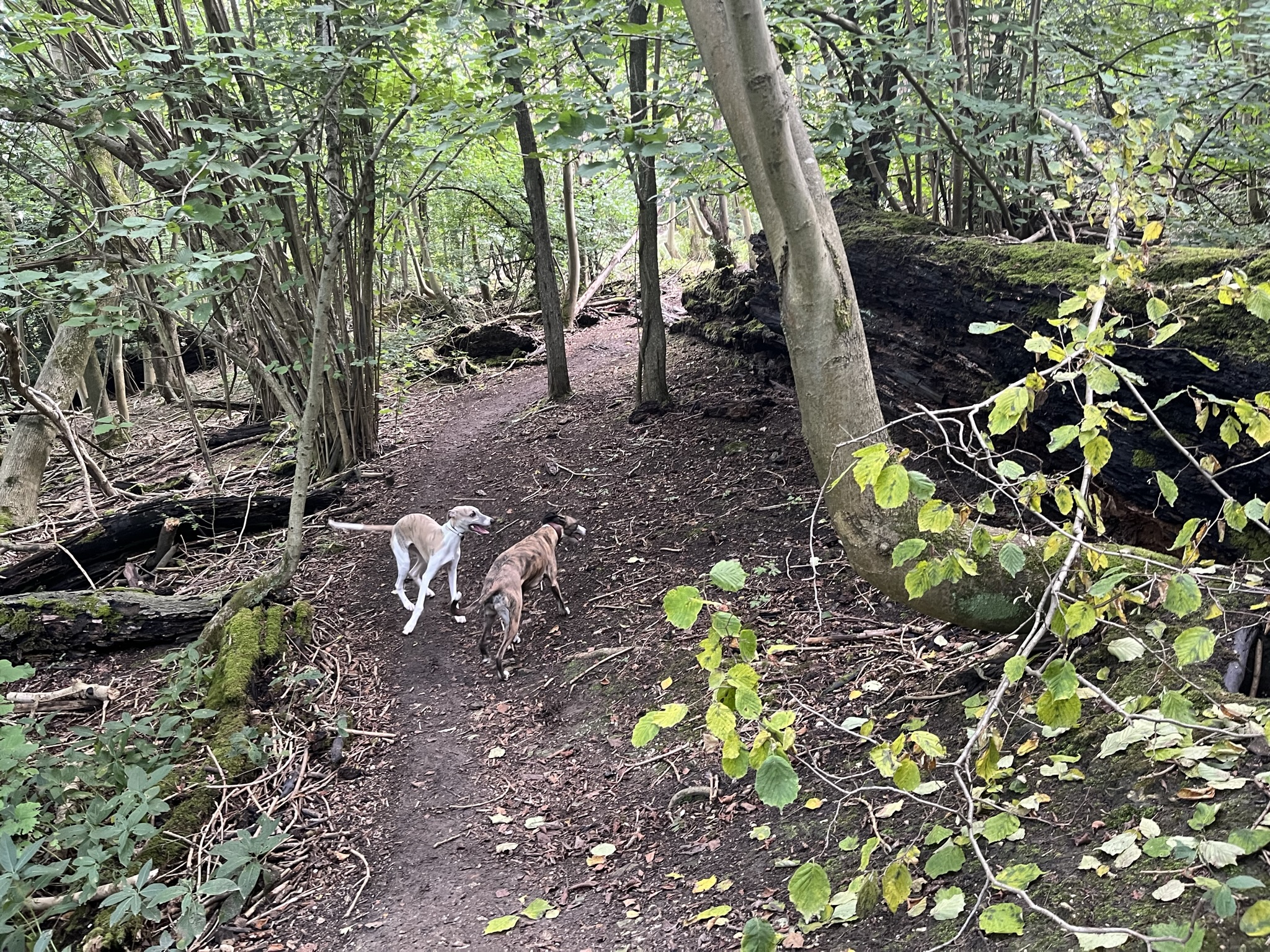
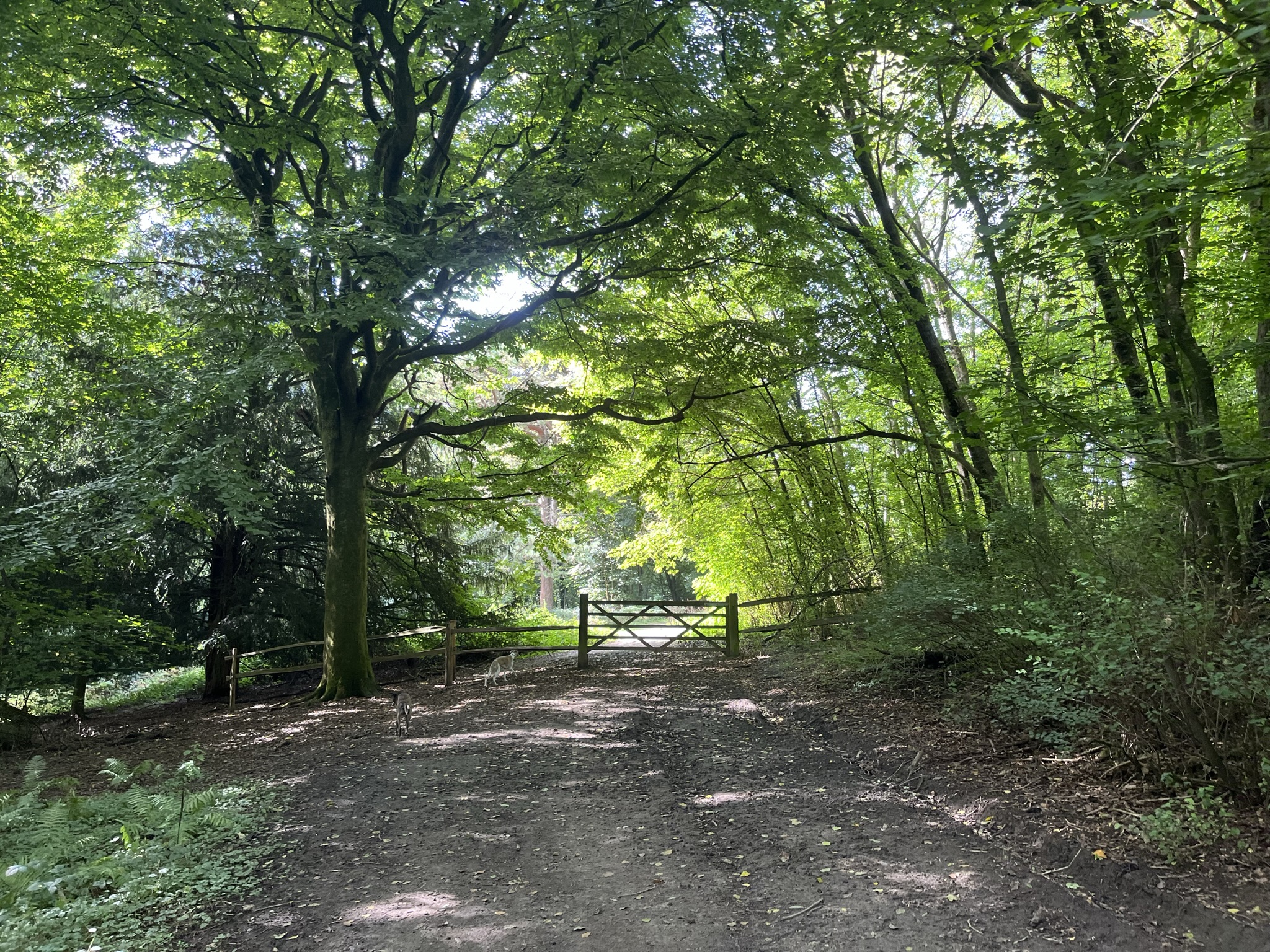
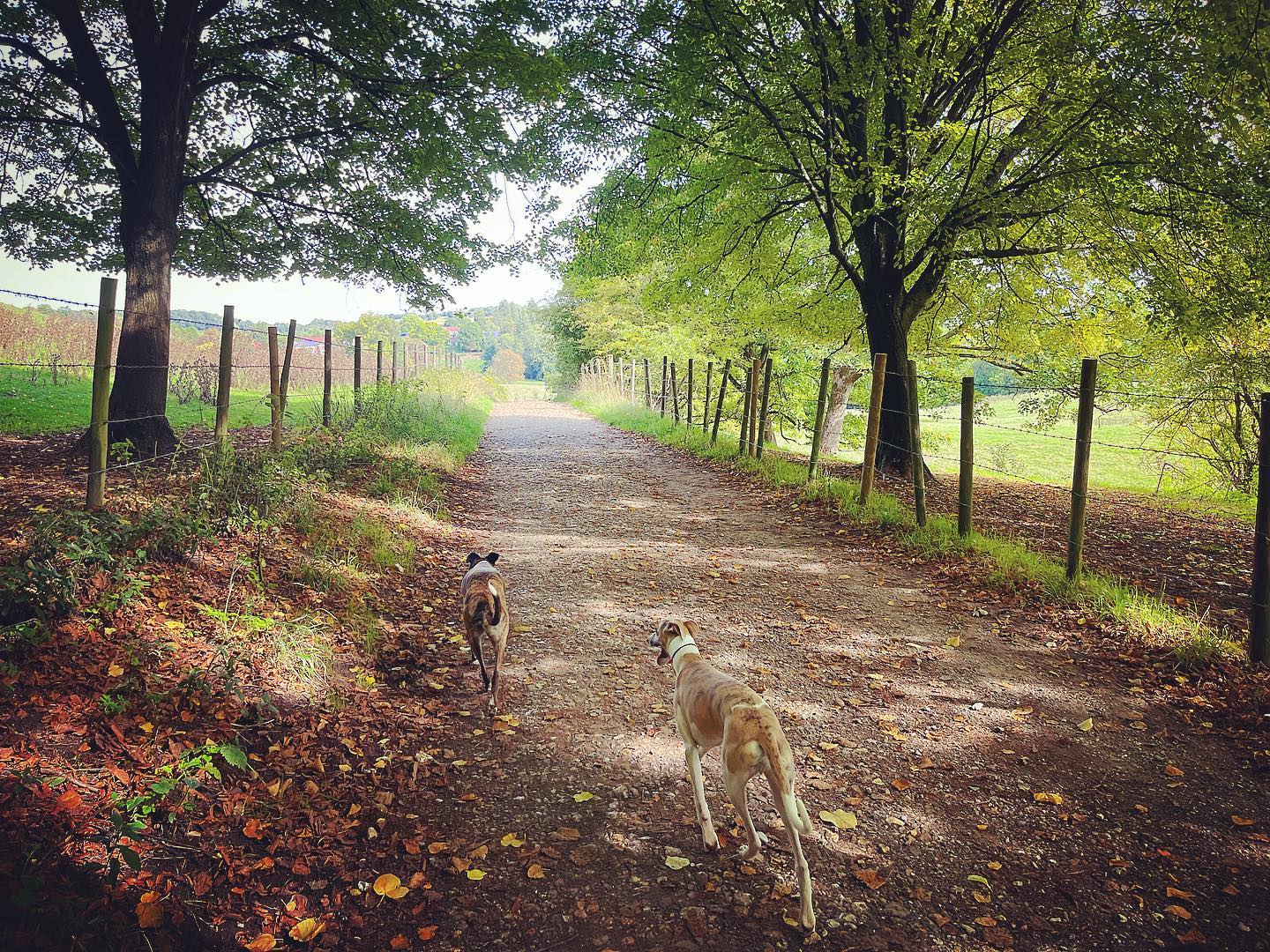
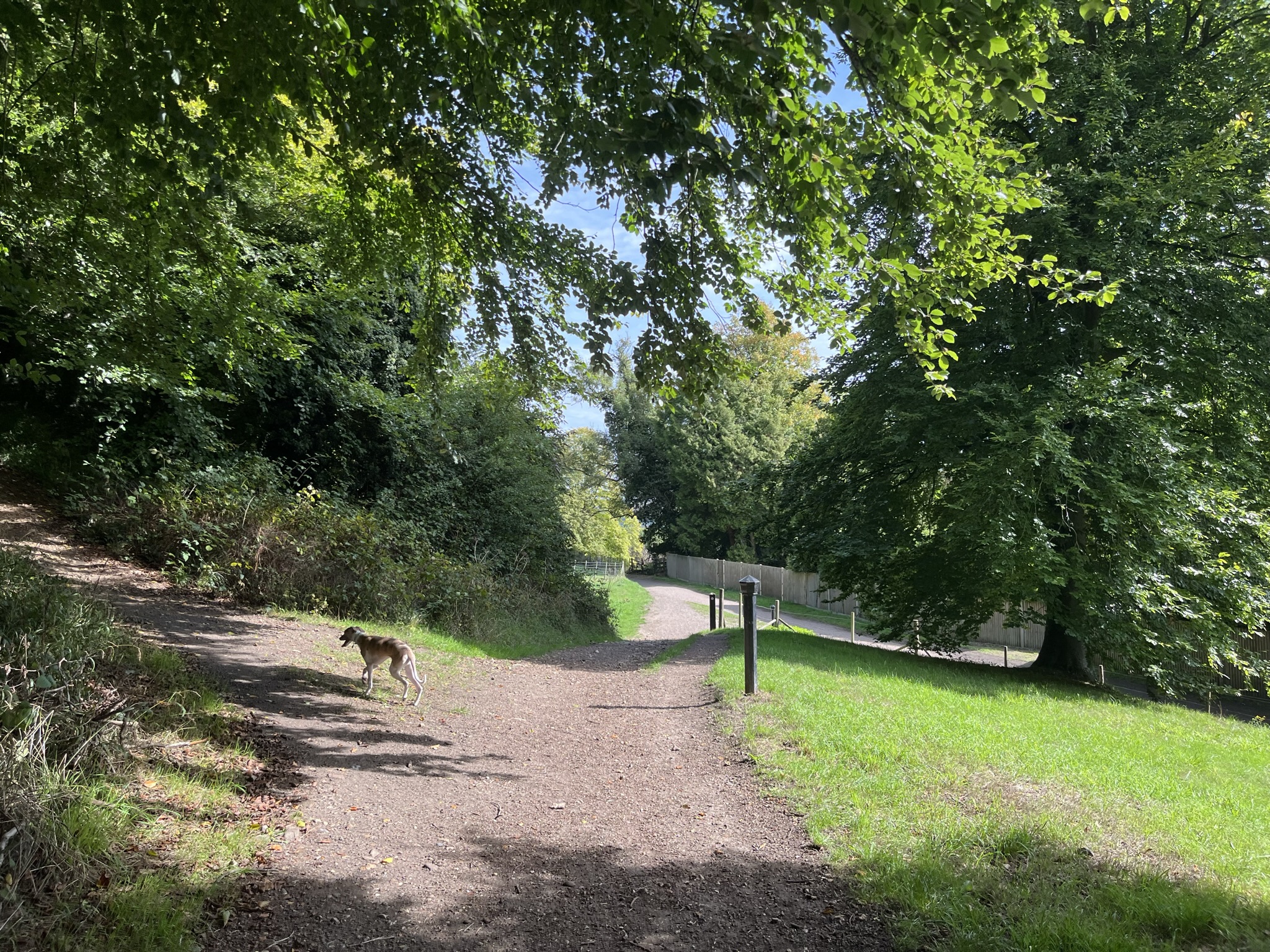
Gallery: What’s it like here?



Parking
Park at at the free National Trust Reigate Hill and Gatton Park car park on Wray Lane. It’s quite a large car park but does get busy. There’s a cafe in the grounds and a picnic area.
Poo bins?
At the car park.
Self-guided walks
There are two self-guided walks on this page, both starting at the Wray Lane car park. The first route is my (IMHO easier) variation of a National Trust walk.
Keep scrolling down the page (or click here to jump down) to get to the second route, which is slightly longer and diverts off the main paths to wind through the woods on quite small paths with lots of ups and downs and tree roots to navigate.
Walk 1: Gatton Park: Past and present walk
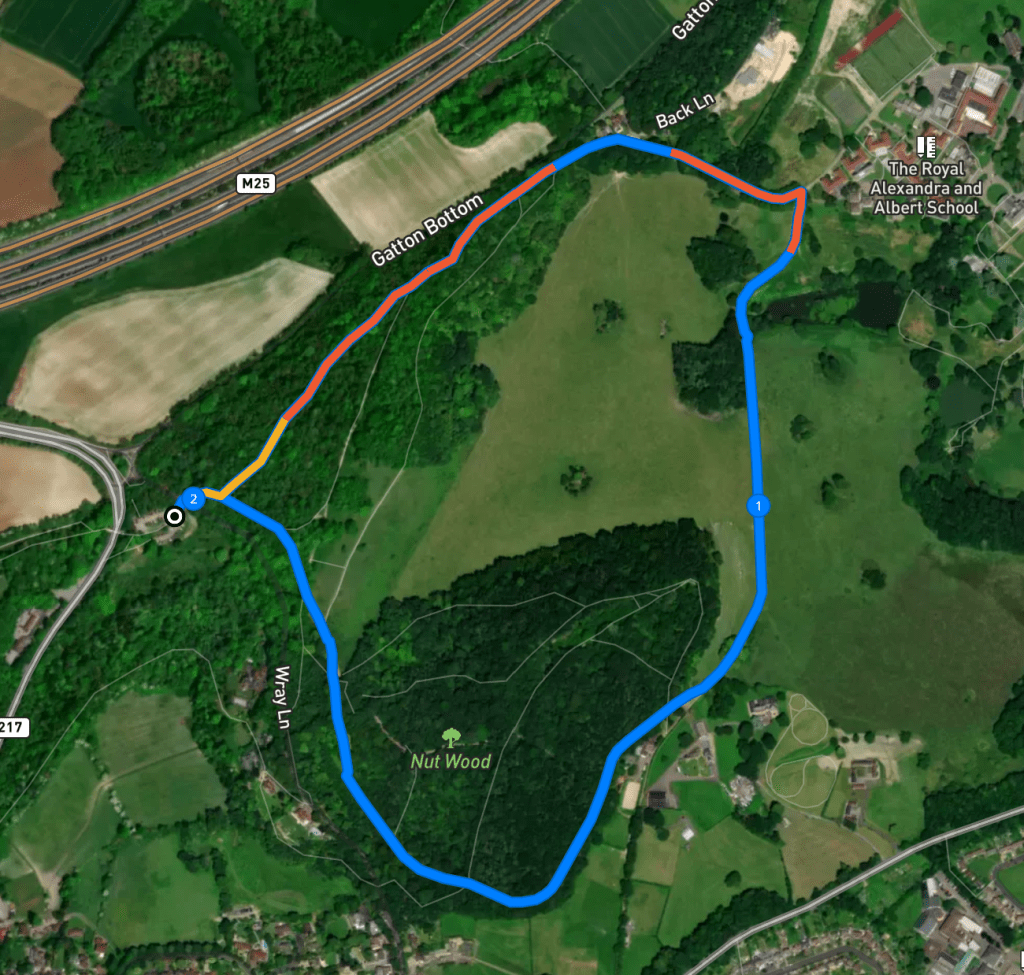
Here is a Footpath app route that I have adapted from the National Trust ‘Reigate Hill: Gatton Park in our past and present’ walk. My variation on this popular route takes a different path at the Nut Wood hill – with mine, you go around the contour of the hill rather than right over its summit. It also follows a different path on the final ascent, where the NT route continues on the North Downs Way – both paths are quite steep slopes, but my route cuts out the final very steep rise at the very end of the NT route. My route is also on AllTrails.
Length: approximately 2 miles/3.3km
Terrain: Wide paths, many of which have gravel/stones embedded in them. There are some fairly long and quite steep slopes.
Stiles/kissing gates? No stiles, no kissing gates.
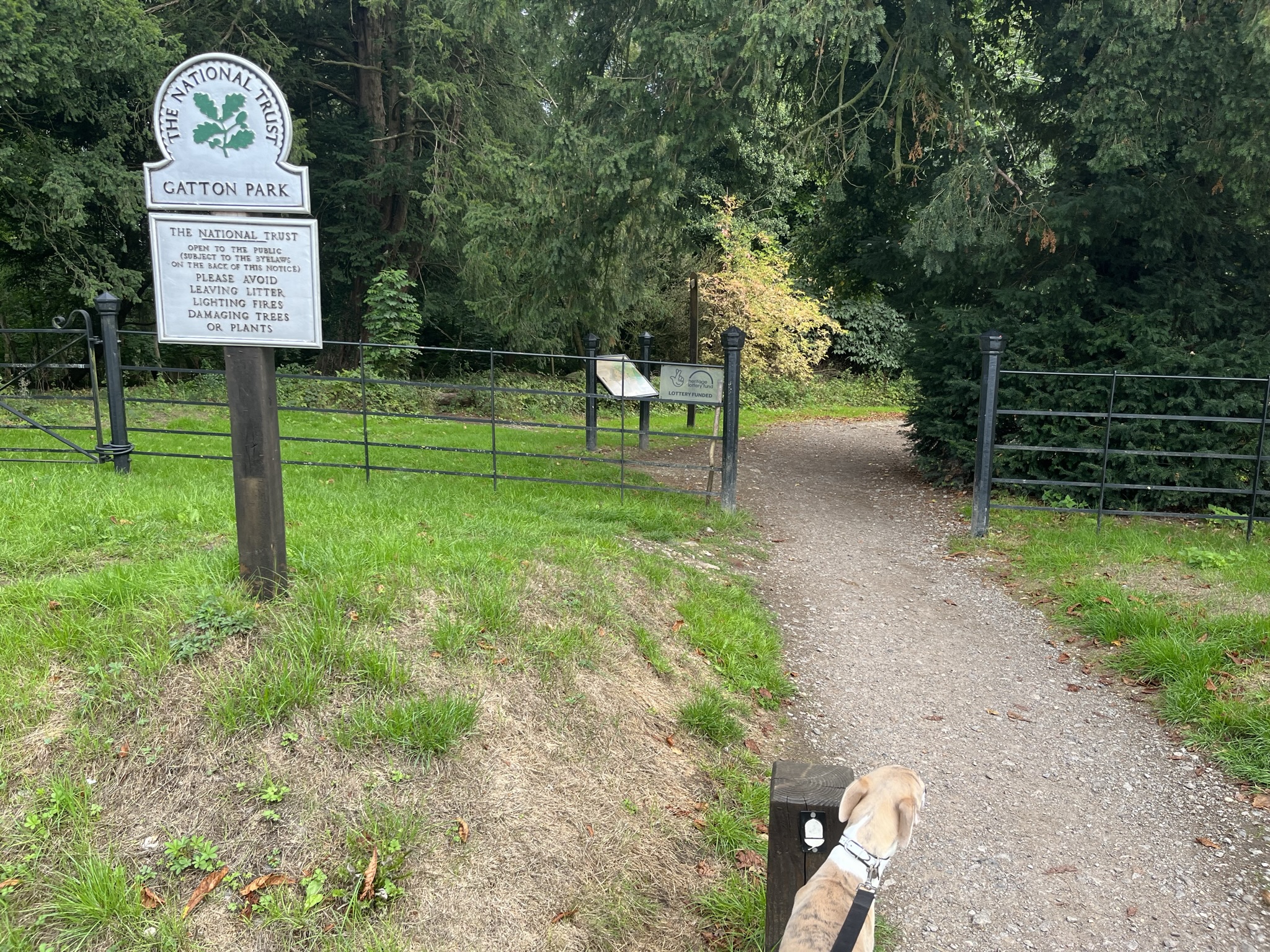
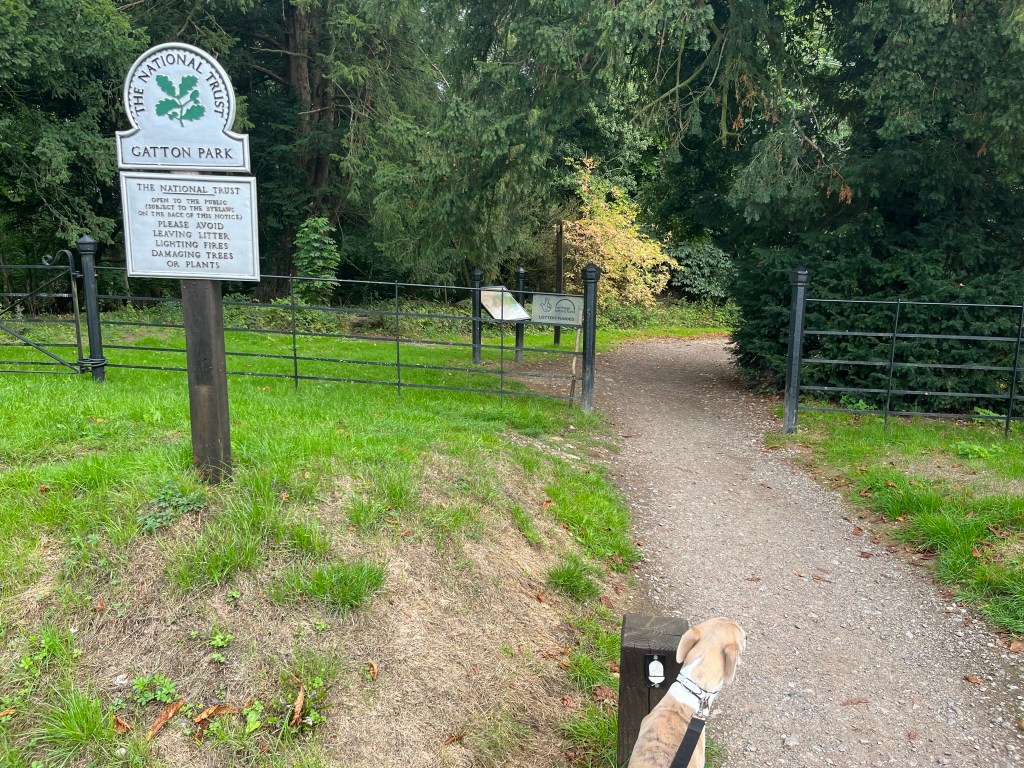
Leave the car park via the way you came in and cross Wray Lane carefully. Go through the gate ahead, passing an information board on the left, which tells you about the history of Gatton Park.
Follow the stony path ahead and ignore a path with a small black marker for the Millennium Trail on the left – instead, continue straight down the slope.
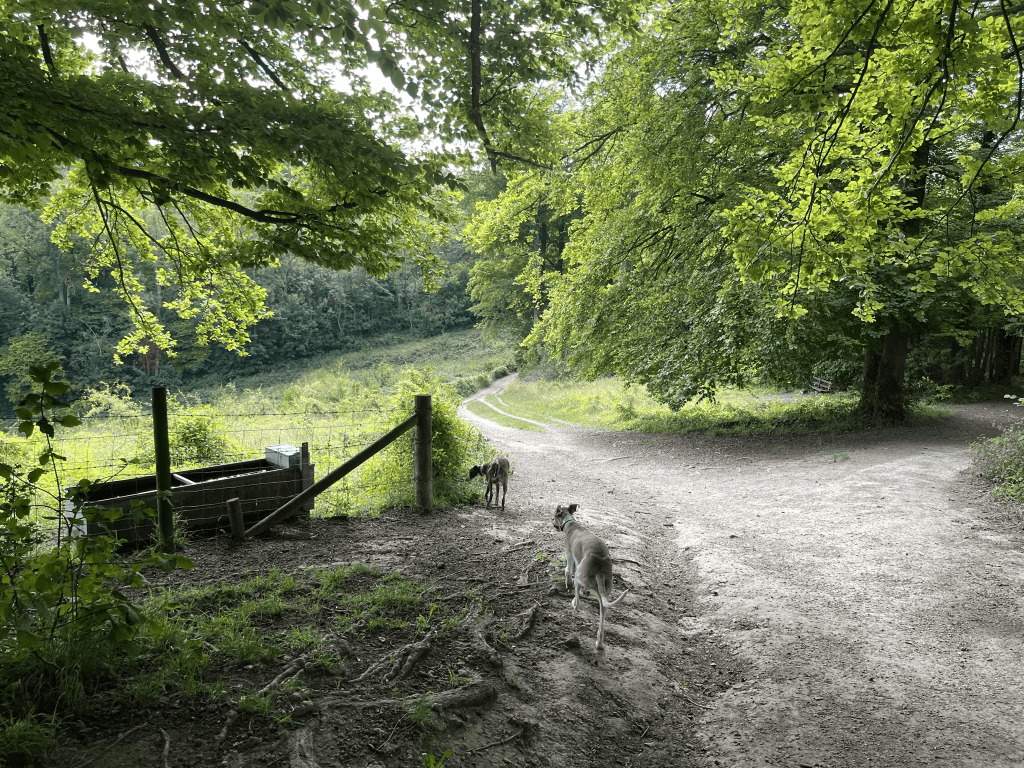
At the fork by the next Millennium Trail marker post, take the path on the right, which goes down the hill towards a metal cattle trough.

Continue straight over at the cross paths by the trough, walking along the side of the field to your left – there’s a nice view to the left.
The path continues down then starts to ascend again. Go through the five-bar gate and just after it, take the path off to the right. This is a main path with some gravel on its surface. It mostly bends gently round to the left.
Continue straight ahead on this main path at the cross paths where there is a fence with a gap to the left.
The path descends and bends quite sharply to the left before straightening and flattening out again.
At the small stubby marker post, where a path goes uphill to the left, continue straight.
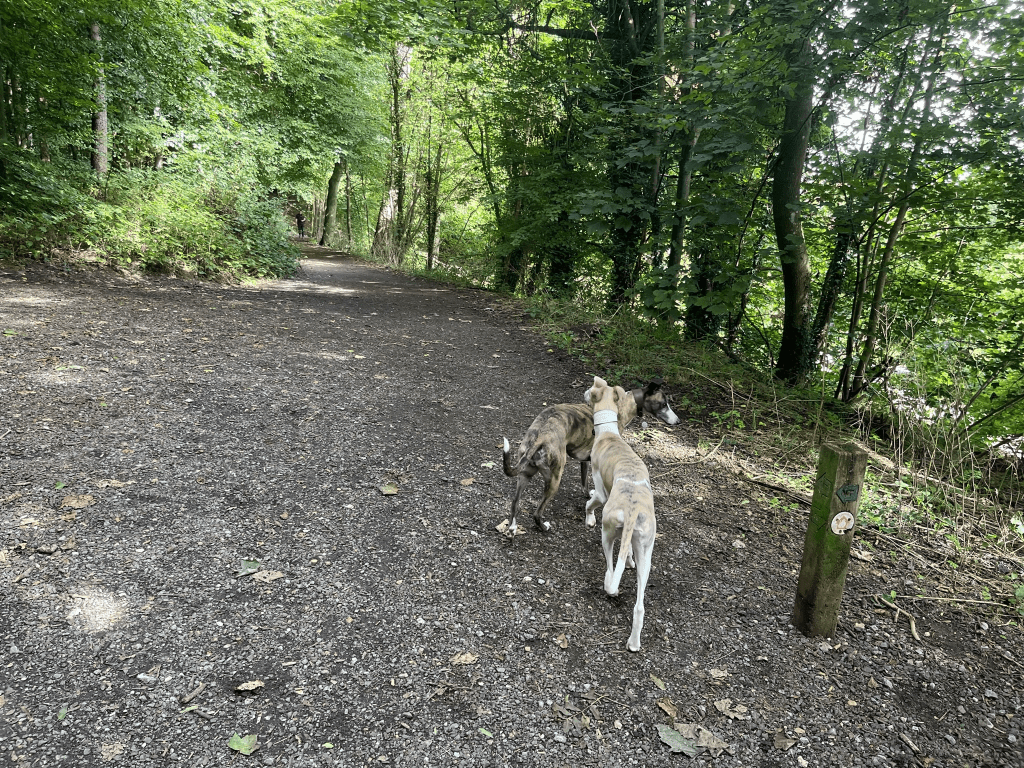
The path descends again and there are a few low rise buildings to the right.
Go straight ahead past another black Millennium Trail post and down through another five-bar gate to join another path coming in from the right.
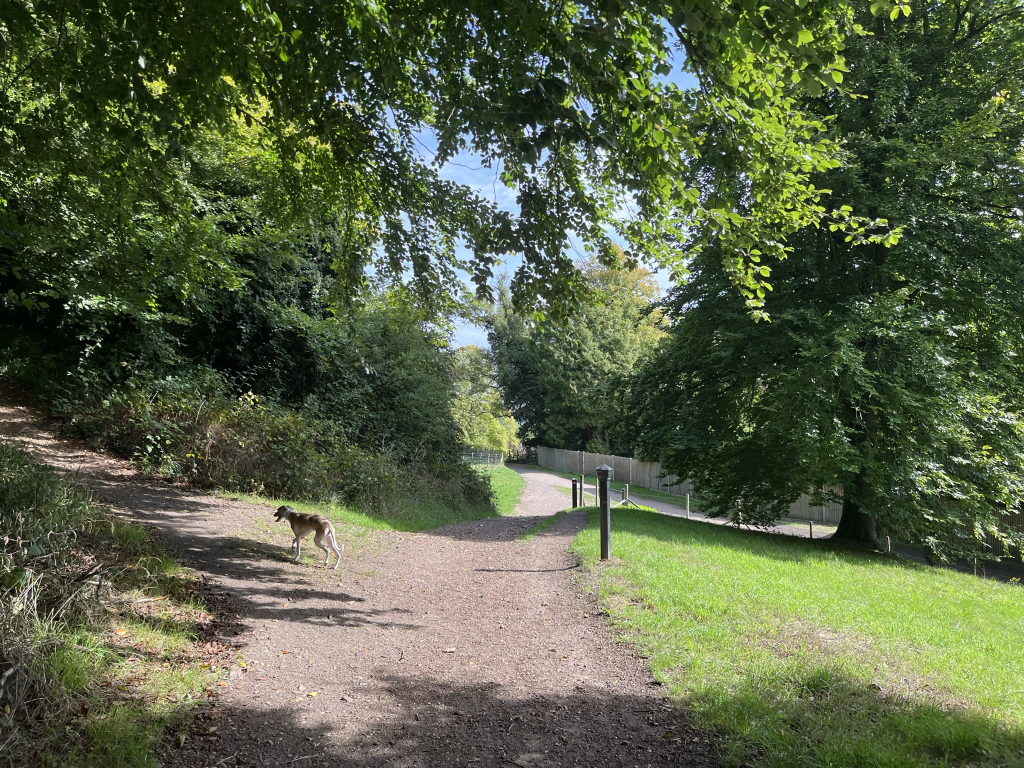
Continue straight ahead on the path between the wire fences. Go through the gap next to the black metal gate. To your right is Engine Pond and then an information board about Lancelot Brown.
Shortly after, with the pond still on your right, the ground to the left rises up and you will see the Millennium stone circle.
Turn left after the stone circle, where there is an information board headed “Discover Gatton”. Shortly after that, and next to an information board about the Millennium Stones, there is a gate in the fence, which allows you to go in and visit the stones.
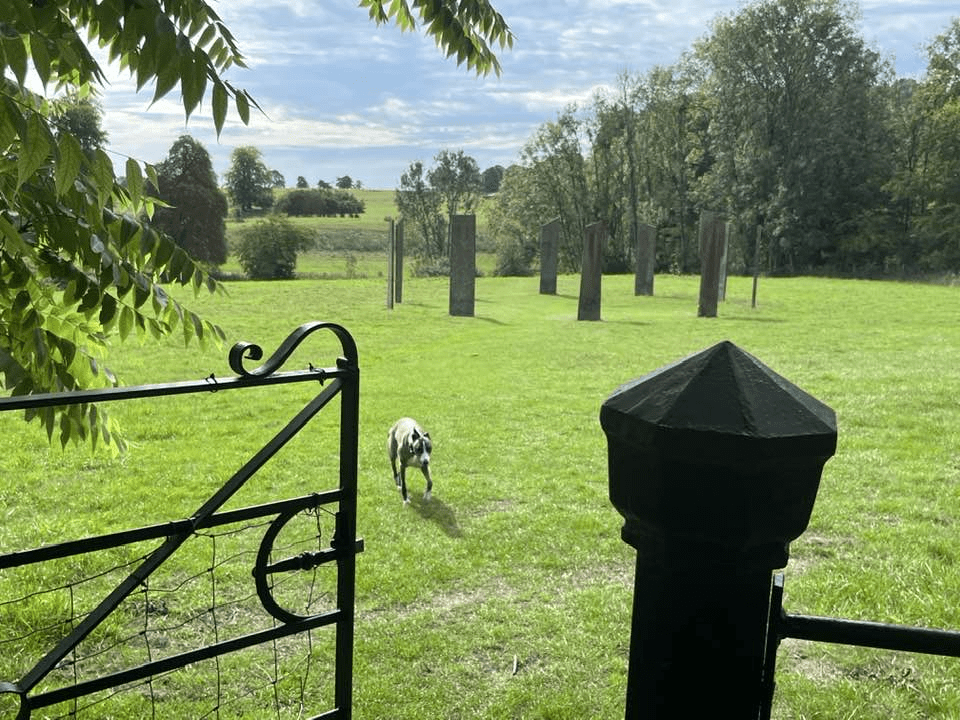
When you’re done, carry on up the tarmac lane. This is an access path to the school so technically vehicles may use it but I’ve never encountered any.
Pass a bench on the left that faces a pleasant view of the parkland.
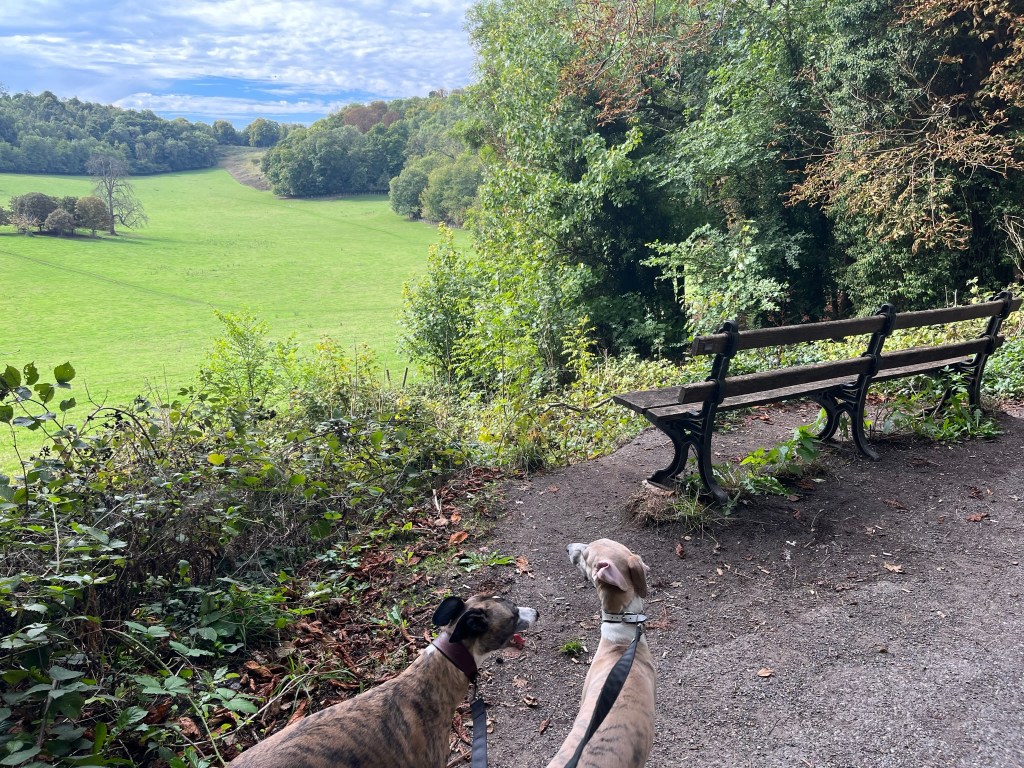
When you reach the house, turn left to head back into Gatton Park, passing a National Trust sign.
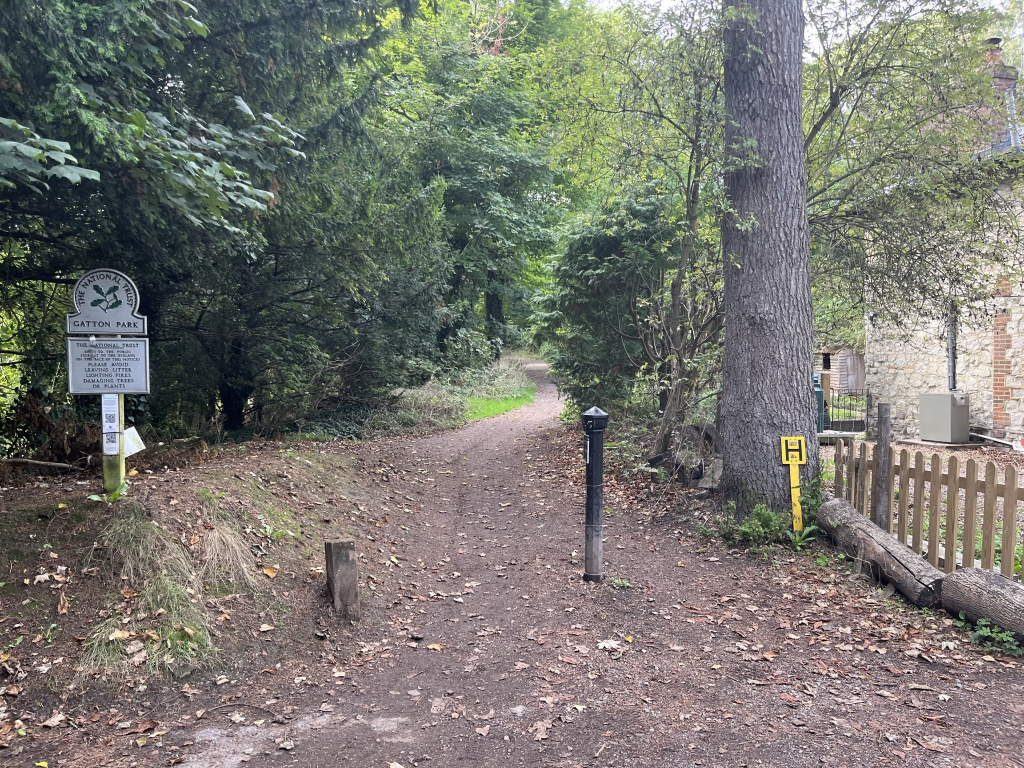
This stony path goes up a slope. It has a road running parallel with it to the right. At the first fork, keep right. This is a long steep slope.
At the second fork, where there is a black Millennium Trail post in the middle, take the right hand path. The long steep slope continues.

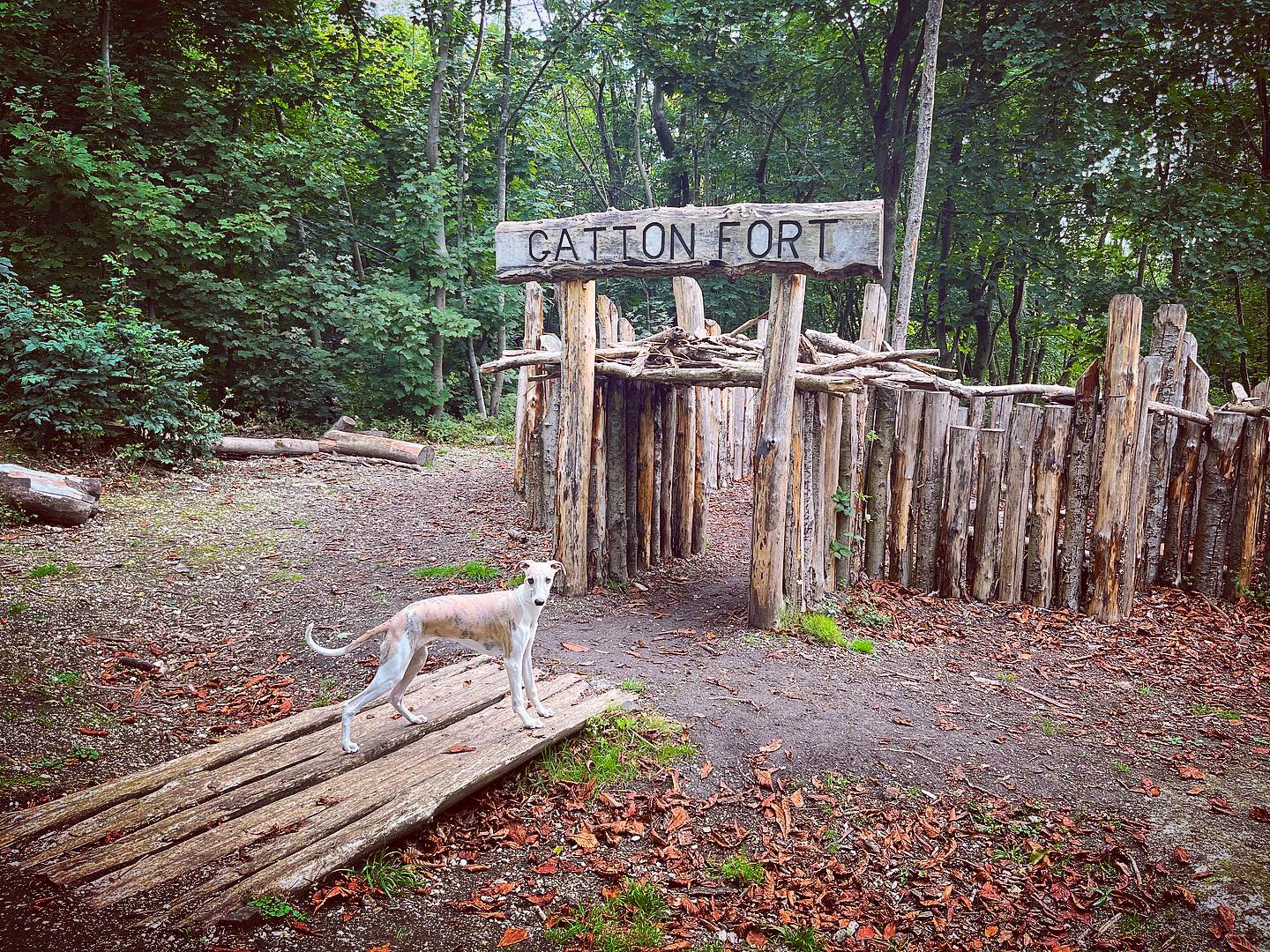
As you reach the brow of the hill, you’ll see “Gatton Fort” on your left. It is a wooden structure for kids to play around.

Just after this, at the T junction with the Millennium Trail post, turn right and go through the gate back to the car park.
Walk 2: Gatton Park – Nut Wood
Here is a Footpath app route for Gatton Park, which is slightly longer than the previous-described walk. It starts and ends in the same way but diverts off the main paths at the Nut Wood hill to wind through the woods on little tiny paths. It’s on AllTrails here.
Length: approximately 2.4 miles/3.7km
Terrain: Like the first route on this page there are wide paths, many of which have gravel/stones embedded in them. There are some fairly long and quite steep slopes however, the Nut Wood diversion is on very small paths with lots of ups and downs and tree roots to navigate – so not a route to opt for if you’re unsteady on your feet.
Stiles/kissing gates? No stiles, no kissing gates.
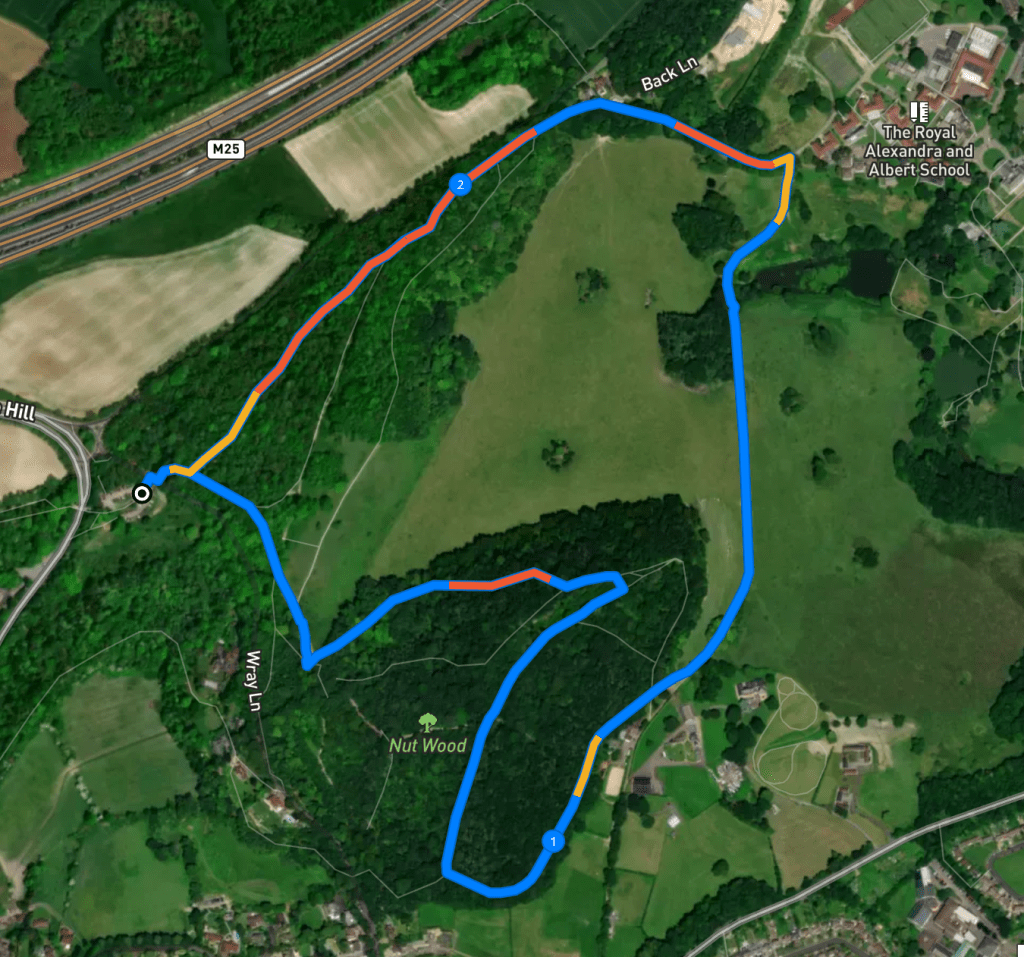
eave the car park via the way you came in and cross Wray Lane carefully. Go through the gate ahead, passing an information board on left, which tells you about the history of Gatton Park.
Follow the stony path ahead and ignore a path with a small black marker for the Millennium Trail on the left – instead, continue straight down the slope.
At the fork with the Millennium Trail marker post, take the path on the right, which goes down the hill towards the metal cattle water trough.
Continue straight over at the cross paths by the trough, walking along the side of the field to your left – there’s a nice view to the left.
The path continues down then starts to ascend again. Just after the end of the field boundary on the left and before a fence ahead up the slope with a five-bar gate (usually open), there is a little path to the left. Take this into the woods rather than continuing up the hill.

This is a cute little path but it is very up and down, goes over lots of tree roots and isn’t for anyone who is unsteady on their feet. After a sharp dip down, you come to a fork with an evergreen in the middle. You can take either path – the left is slightly less steep.
The path is quite narrow, sometimes going up and sometimes going down. You’ll wind around a number of fallen trees. When you reach the end of it at a path cutting across your way, turn left.

Keep a really beady eye out for a tiny fork in the path, bear to the right here, then go right again almost straight away.
Go through the gap in the fence to the left of the five-bar gate.
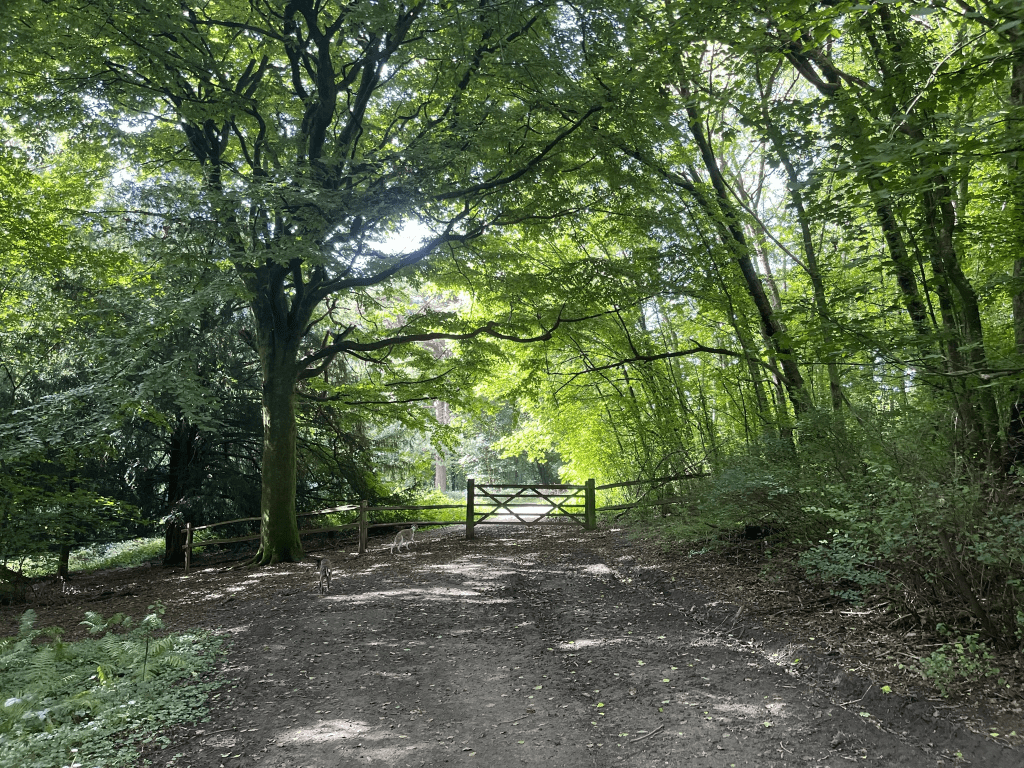
Then go straight over the cross paths and pass through the gap at a second fence. Keep going until you get to the third fence with a gap. Go through this and turn left.
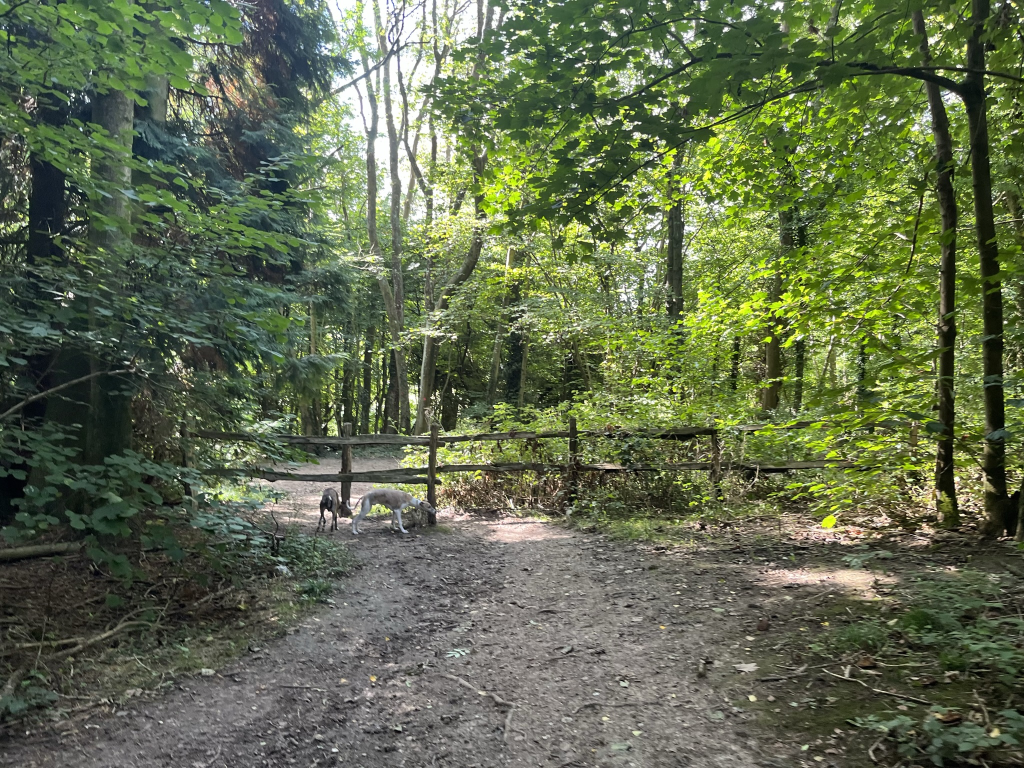
The path descends and bends quite sharply to the left before straightening and flattening out again.
At the small stubby marker post, where a path goes uphill to the left, continue straight.
The path descends again and there are a few low rise buildings to the right.
Go straight ahead past another black Millennium Trail post and down through another five-bar gate to join another path coming in from the right.
Continue straight ahead on the path between the wire fences. Go through the gap next to the black metal gate. To your right is Engine Pond and then an information board about Lancelot Brown.
Shortly after, with the pond still on your right, the ground to the left rises up and you will see the Millennium stone circle.
Turn left after the stone circle, where there is an information board headed “Discover Gatton”. Shortly after that, and next to an information board about the Millennium Stones, there is a gate in the fence, which allows you to go in and visit the stones.
When you’re done, carry on up the tarmac lane. This is an access path to the school so technically vehicles may use it but I’ve never encountered any.
Pass a bench on the left that faces a pleasant view of the parkland.
When you reach the house, turn left to head back into Gatton Park, passing a National Trust sign.
This stony path goes up a slope. It has a road running parallel with it to the right. At the first fork, keep right. This is a long steep slope.
At the second fork, where there is a black Millennium Trail post in the middle, take the right hand path. The long steep slope continues.
As you reach the brow of the hill, you’ll see “Gatton Fort” on your left. It is a wooden structure for kids to play around.
Just after this, at the T junction with the Millennium Trail post, turn right and go through the gate back to the car park.
 Walks with Rena
Leave a comment