
About
Gallery
Parking
Poo bins?
Self-guided walk
About
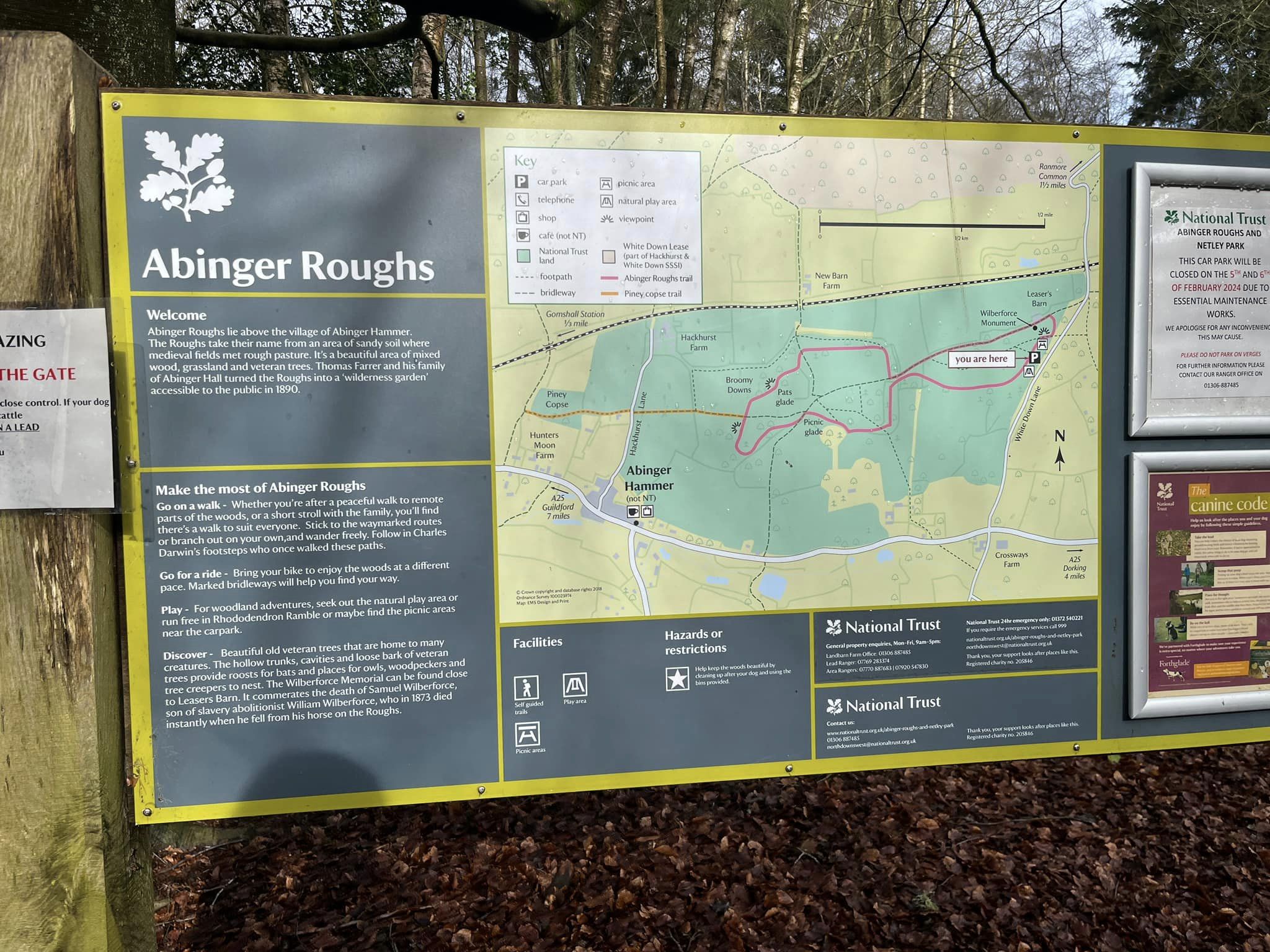
Abinger Roughs, above the village of Abinger Hammer, is a parcel of land that dates to ancient times and Domesday book records state it was woodland and pasture. The Roughs and surrounding fields contain burial mounds, pit dwellings, the remains of Roman villas and vineyards as well as Georgian and Victorian pathways, tree planting and shrubs. Stone Age tools have been found on this site from a time when people made use of the flints in the nearby chalk.
In the 1870s, Charles Darwin often used to walk around the Roughs when he was staying Abinger Hall, which was owned by his friend Thomas Farrer. This whole area was part of the Abinger Hall estate and it was the Farrer family that decided to turn the Roughs into a garden and open it to the public.
The National Trust took over the care of Abinger Roughs in the 1950s ensuring that it remains accessible to everyone. In 2017, it announced ambitious plans to create 25,000 hectares (62,000 acres) of new habitats by 2025, to reverse species loss and the effects of climate change across the UK. Abinger Roughs was selected as part of this plan. Today, it comprises grassland and mixed woodland, and is home to several veteran trees, with some of the oaks being over 300 years old.
Debates about how to pronounce Abinger can be settled by listening to this clip on YouTube (ah-bin-jer).
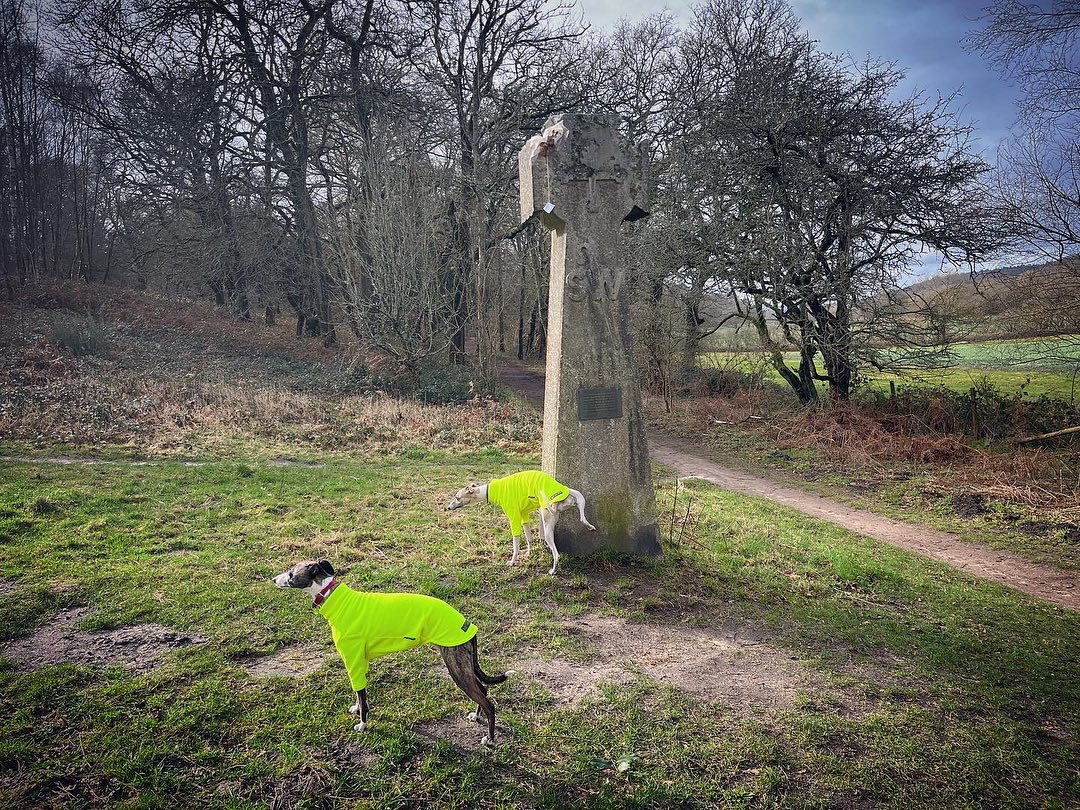
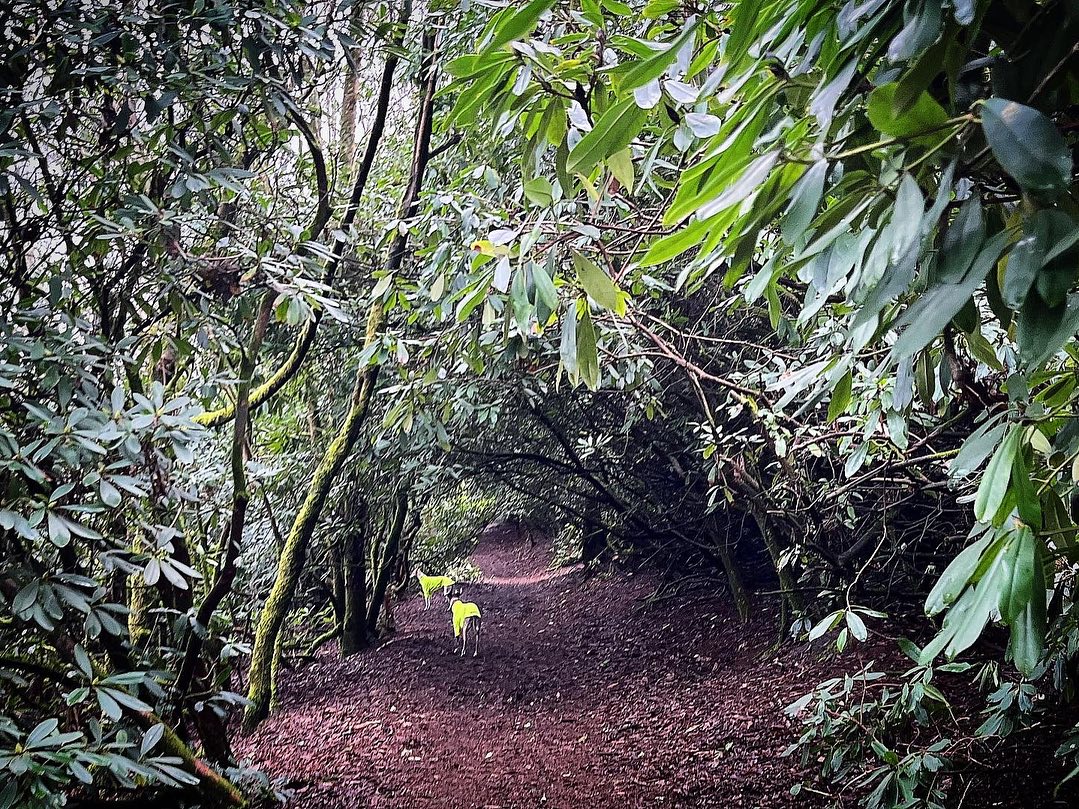
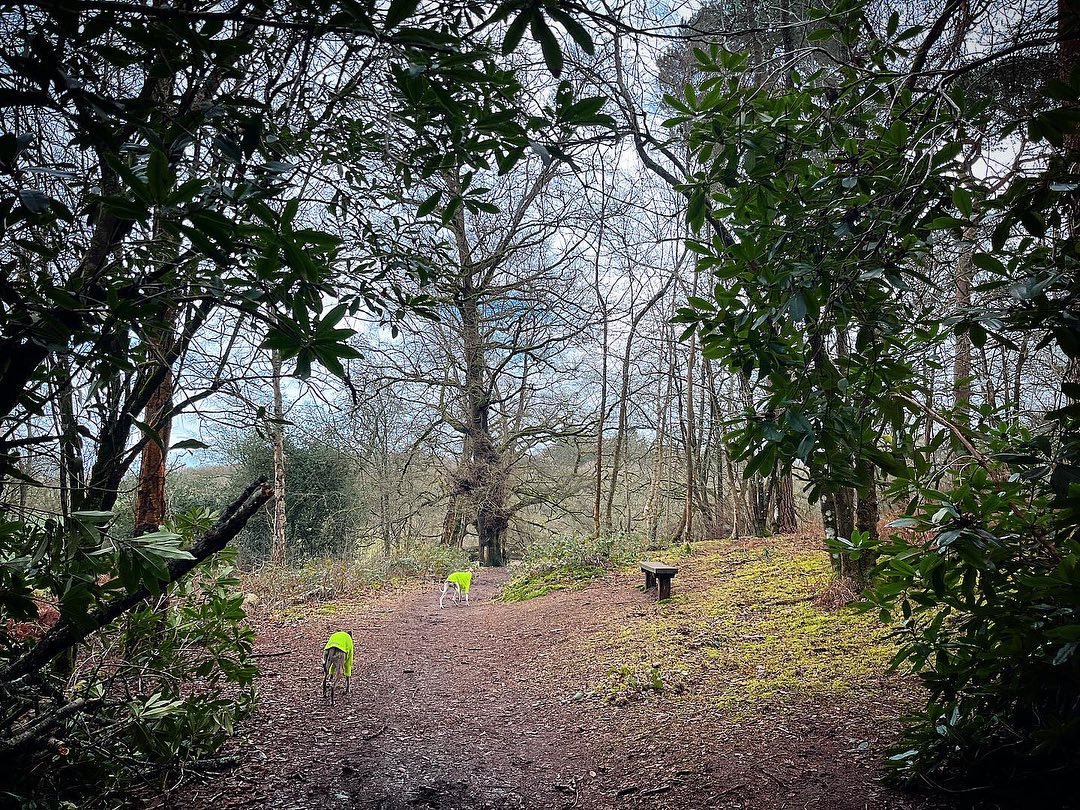
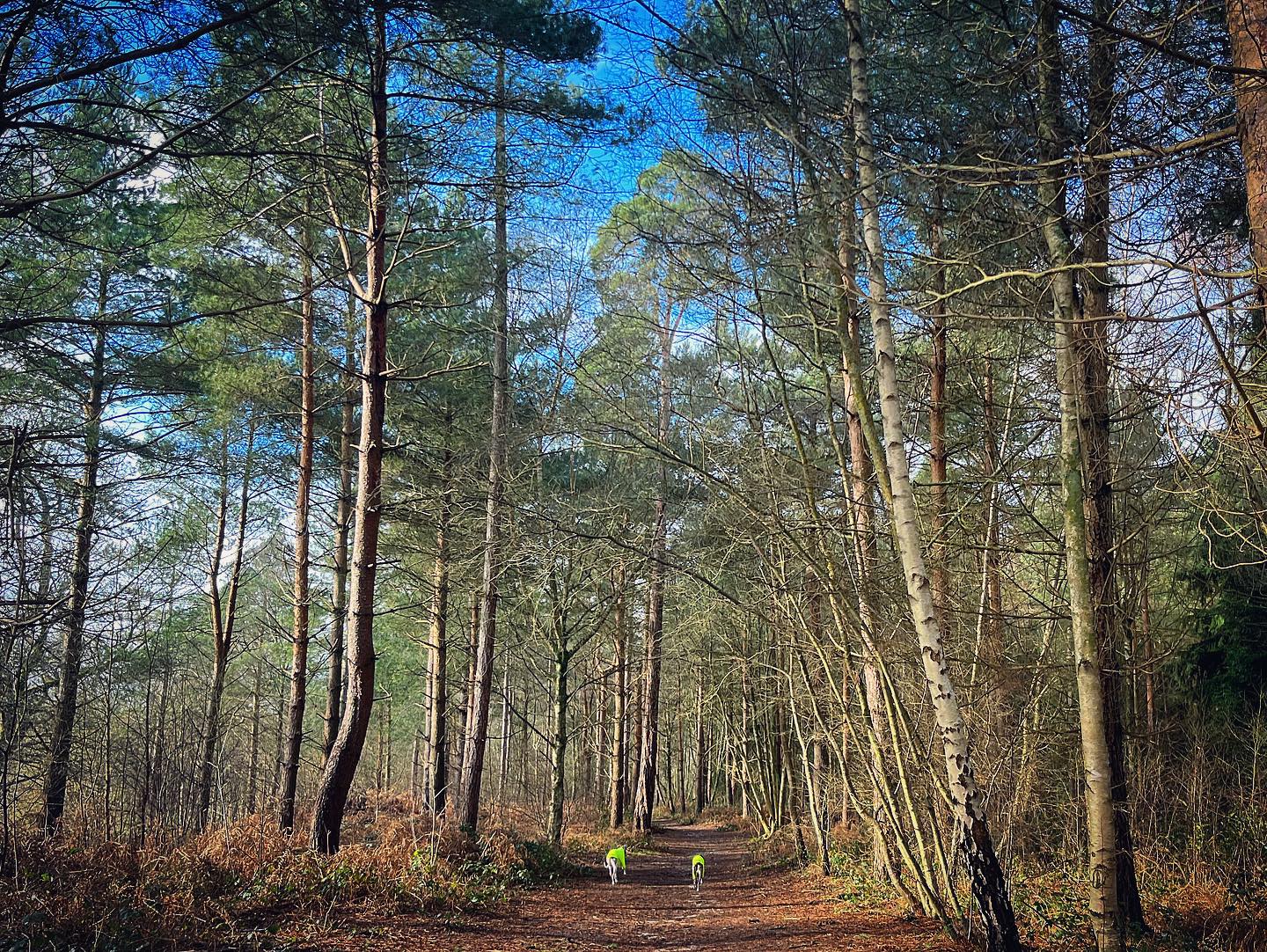
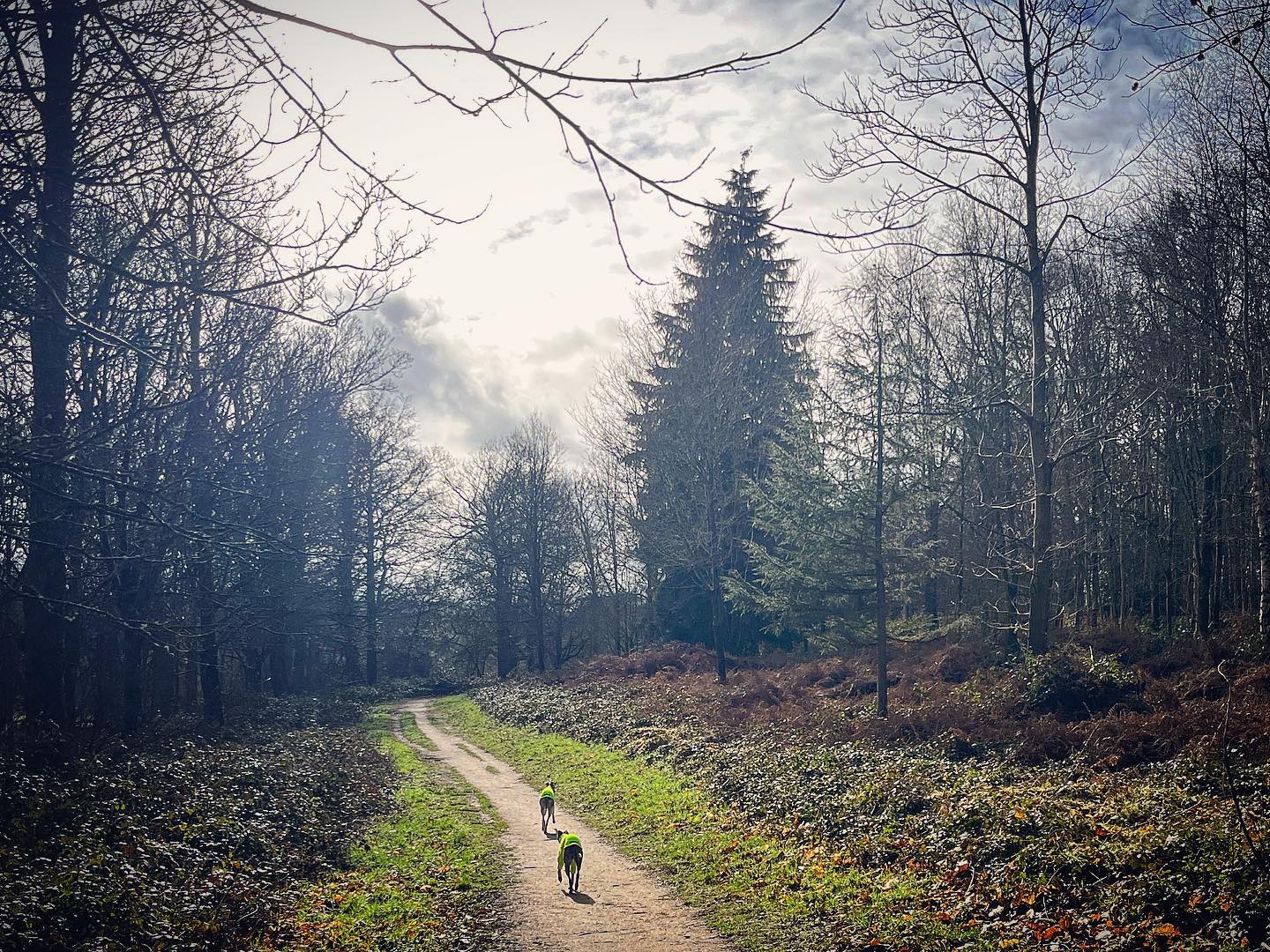
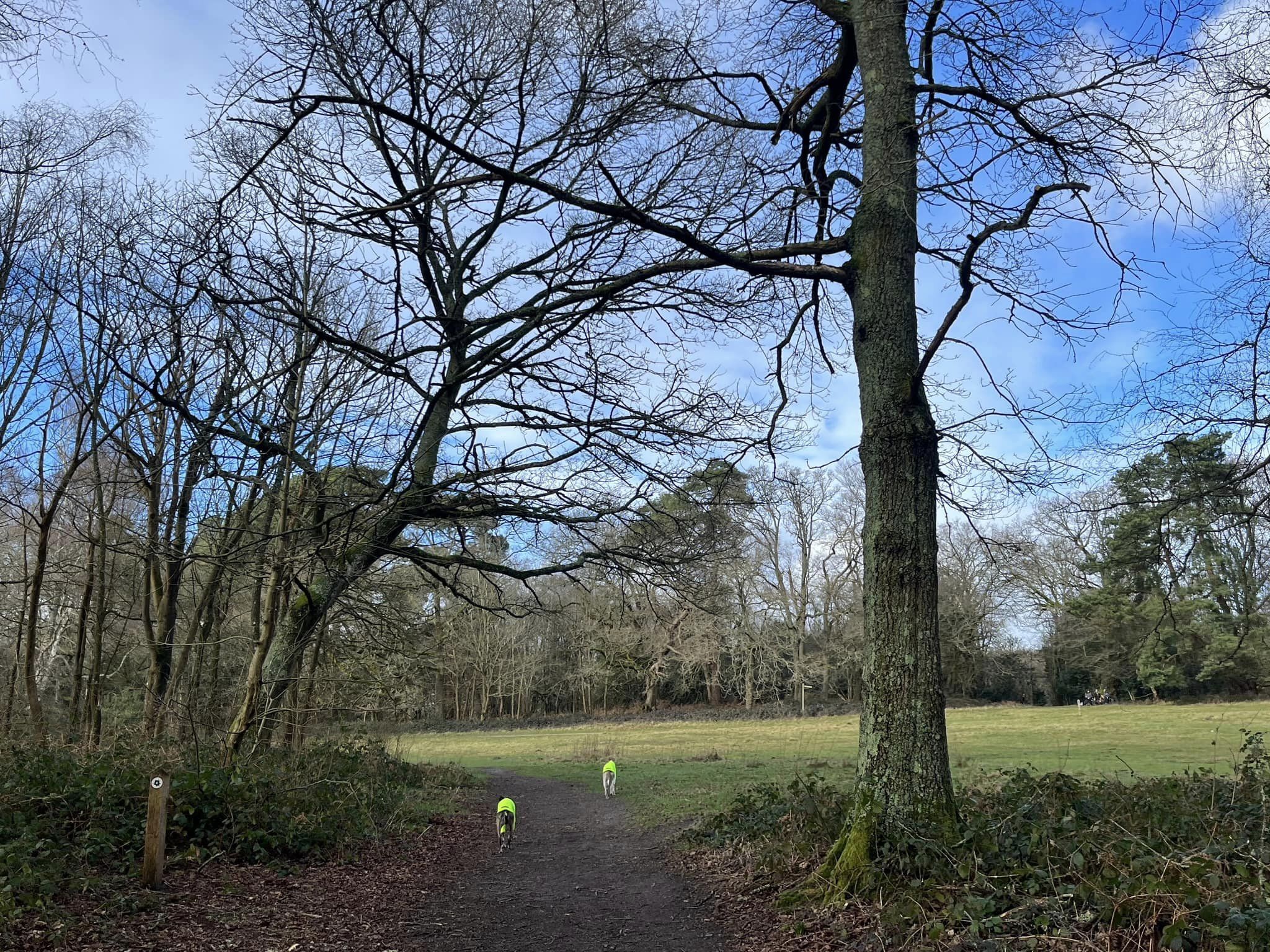
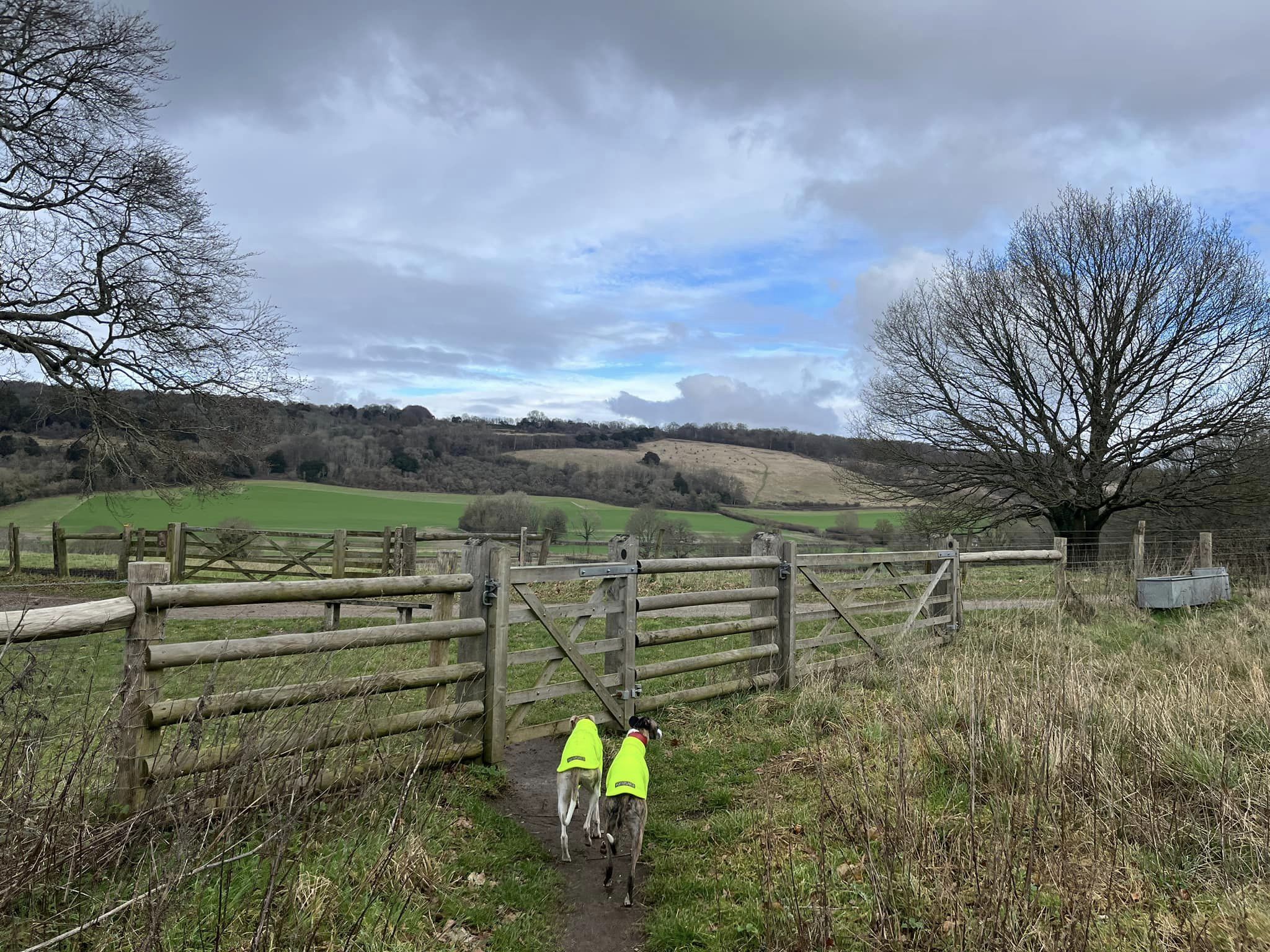
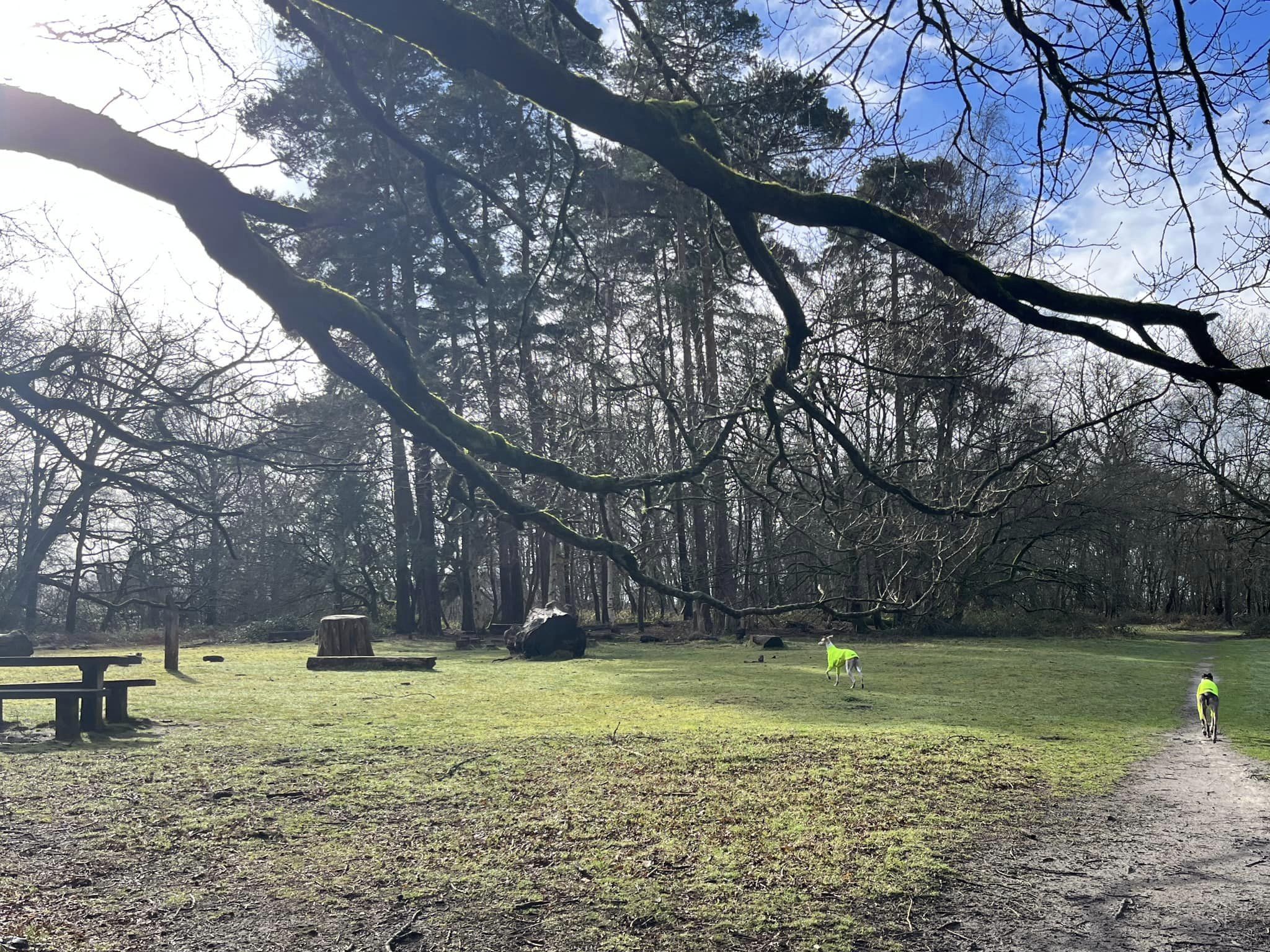
Gallery: What’s it like here?

Parking
There is a free car park on White Down Lane, which is owned and maintained by the National Trust.
WHAT3WORDS: https://w3w.co/plank.smooth.front
GOOGLEMAPS LINK: https://maps.app.goo.gl/RXTbpaYxsU6Bw6Nd9
NEAREST POSTCODE: RH5 6QS but slightly out
Poo bins?
One at the rear of the car park behind the gate.
Self-guided walk
Here is a Footpath app route from the free National Trust car park on White Down Lane. It’s also on my AllTrails account.
Length: approximately 2.2 miles/3.5 km
Terrain: Mix of grassy and woodland paths and a section along a quiet track/lane. Some can get muddy in the colder/wetter months. A few ups and downs and one short, sharp incline up from the Samuel Wilberforce memorial at the end (if you take that detour). Some of the woodland paths can be rocky and uneven underfoot.
Stiles/kissing gates? No stiles or kissing gates but loads of normal gates

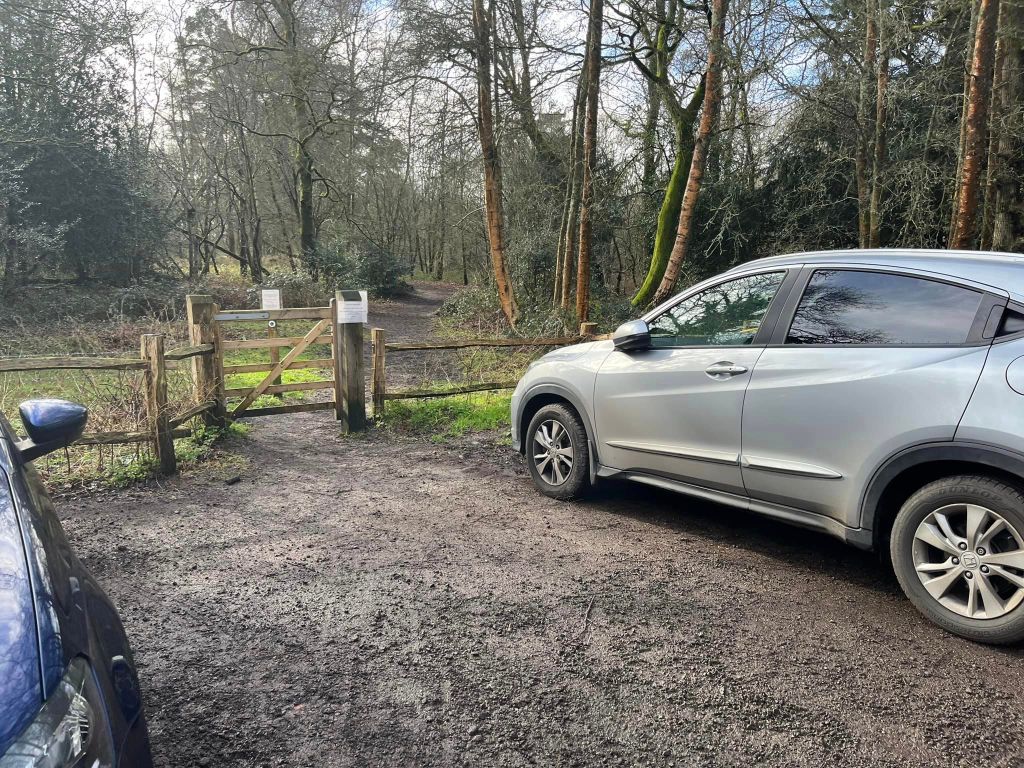
Park in the National Trust car park. With your back to the road and the information board to your right, head to the rear far left of the car park and go through the little single gate.
Pass through trees and a picnic and play area then back into trees. The tall trees here are Scots pines and around 200 years old. They can grow up to 36 metres tall and 1.5 metres around the trunk. Young trees have grey/green bark but as they grow older the bark turns orange.
Pass a bench on the right just before a wooden post where the path forks. Take the path to the left of the post and descend down to the gate – it’s quite a rugged path so be careful.

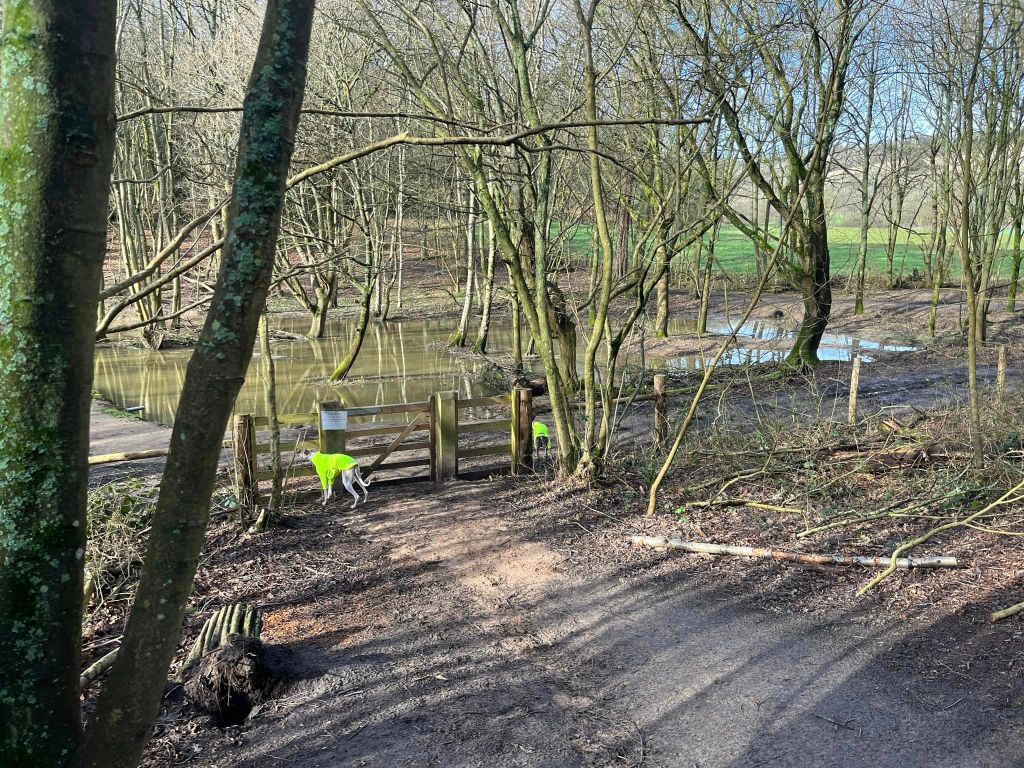
Go through the gate and into what’s known as ‘the neck of Abinger Roughs’ and continue straight ahead on the flat, then upslope again through another gate. Stay on the main path ahead, which is fairly open and passes to the left of another post.
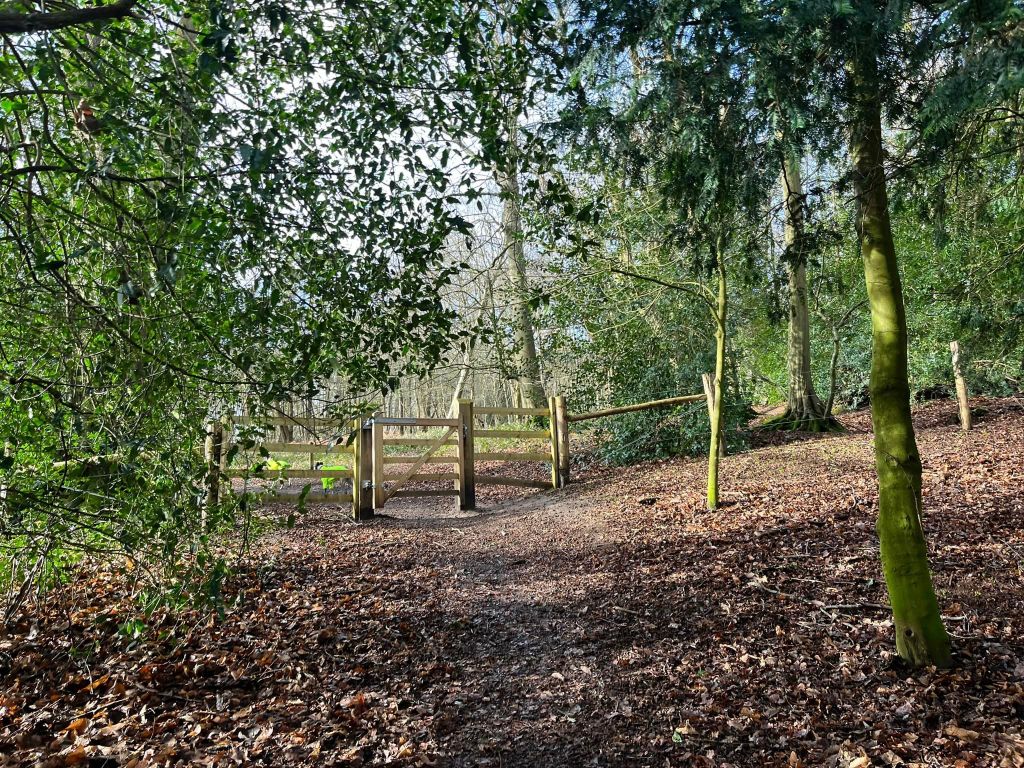
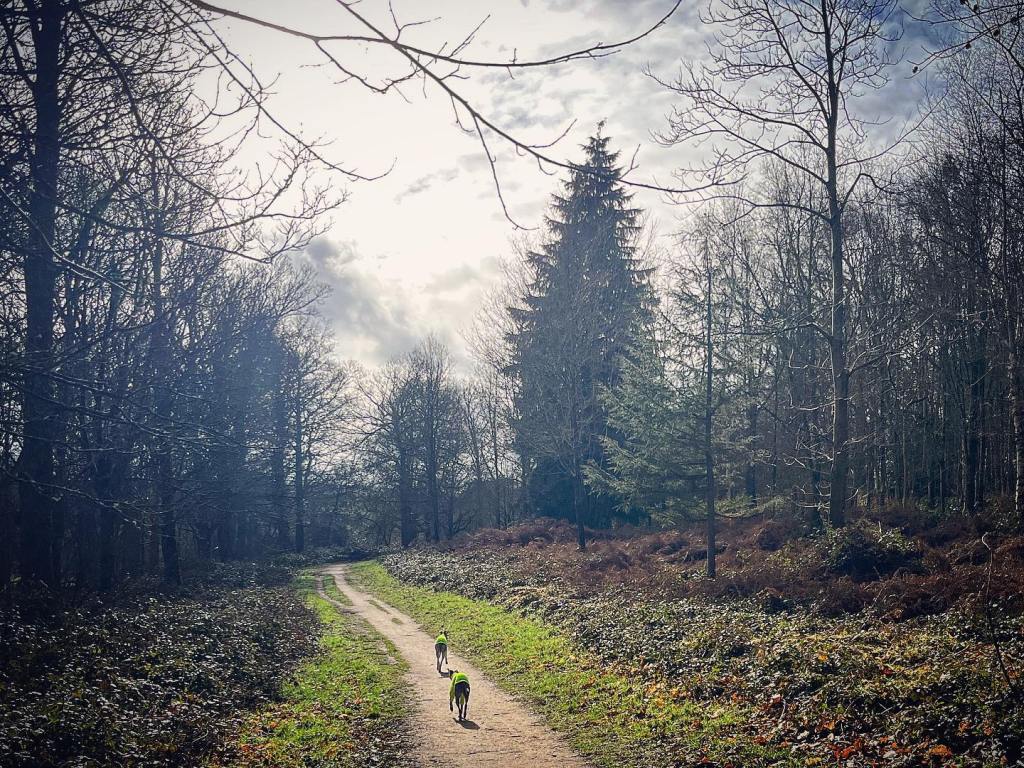
At the little cross paths with the post that has a green arrow pointing ahead and two yellow arrows pointing left and right, continue ahead. Stay on the path and ignore the vehicle gate on the left.
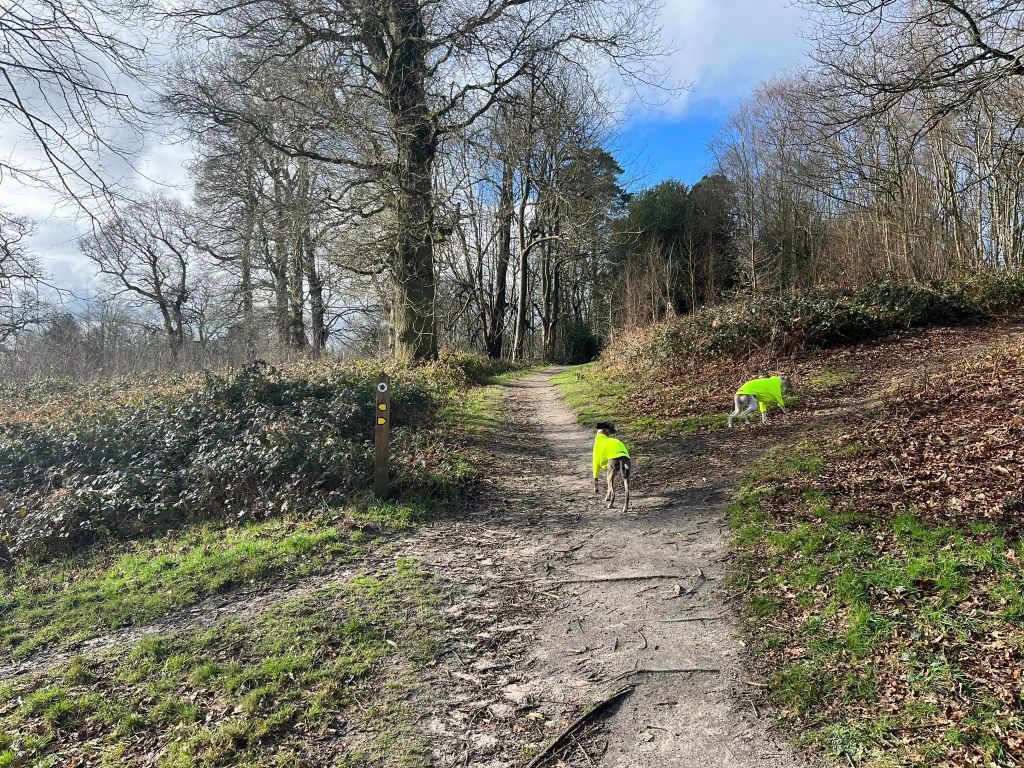
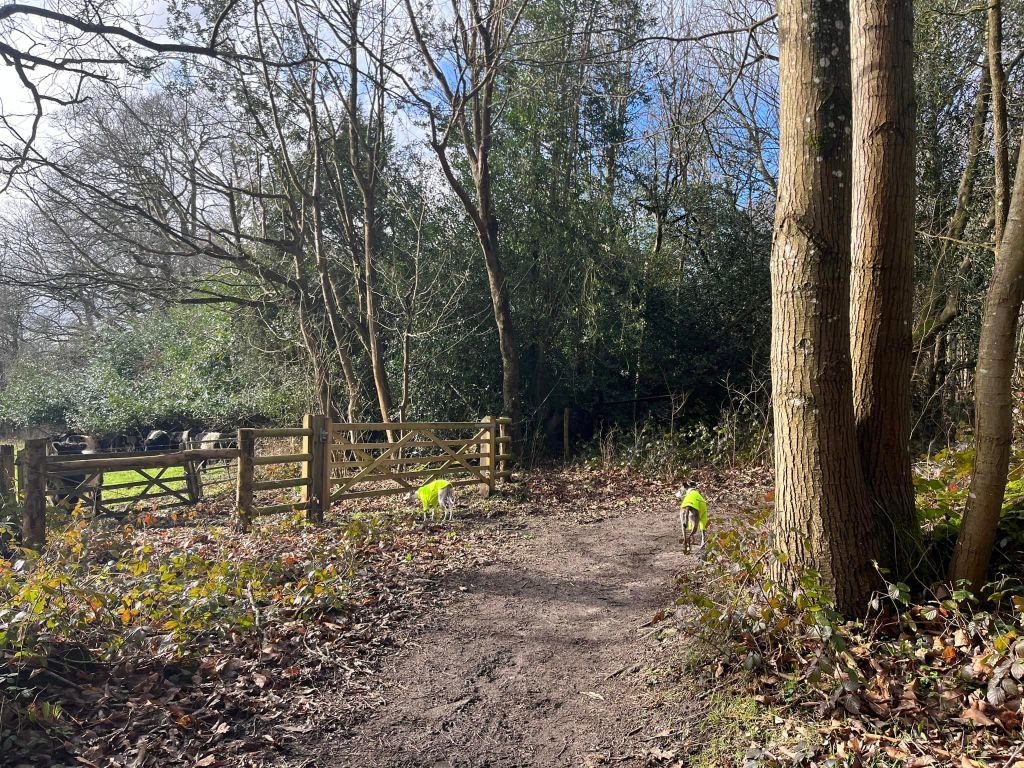
Just after another small post, this path will arrive at a grassy area – keep on ahead along the edge of the grassy area and you’ll join the main path.
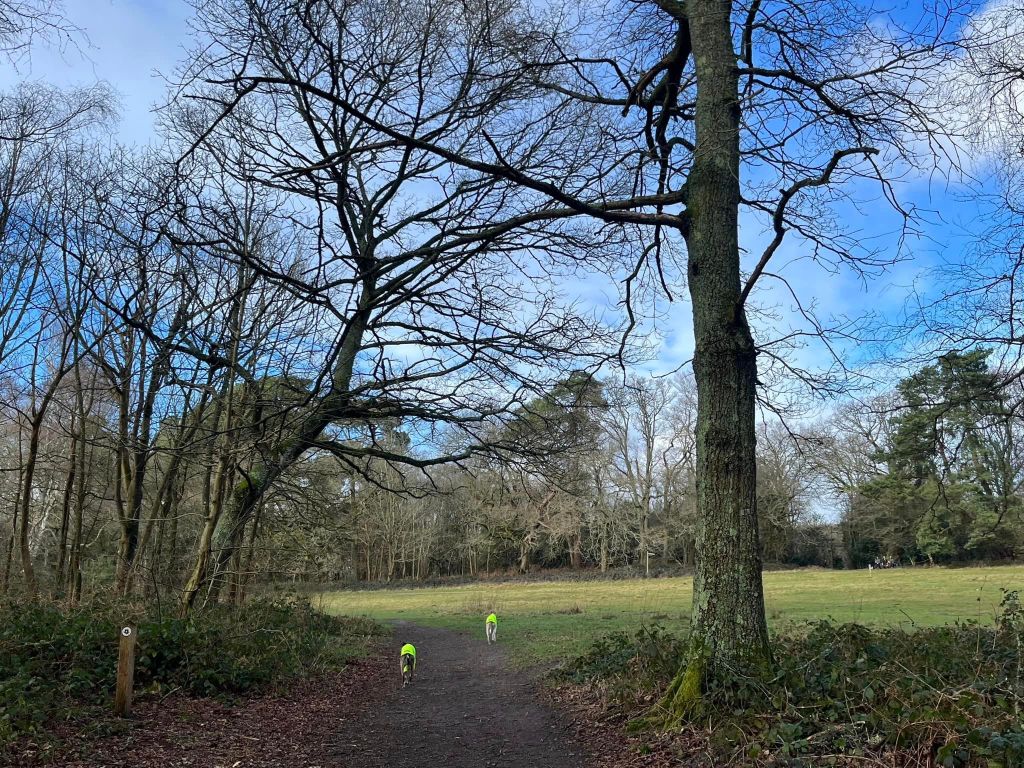

Ignore the first path off to the left, which passes a post with a blue marker on it. Keep going a few paces more to the next small marker post, which has a green and a blue arrow on it and turn left onto the little path that heads off the main route here.
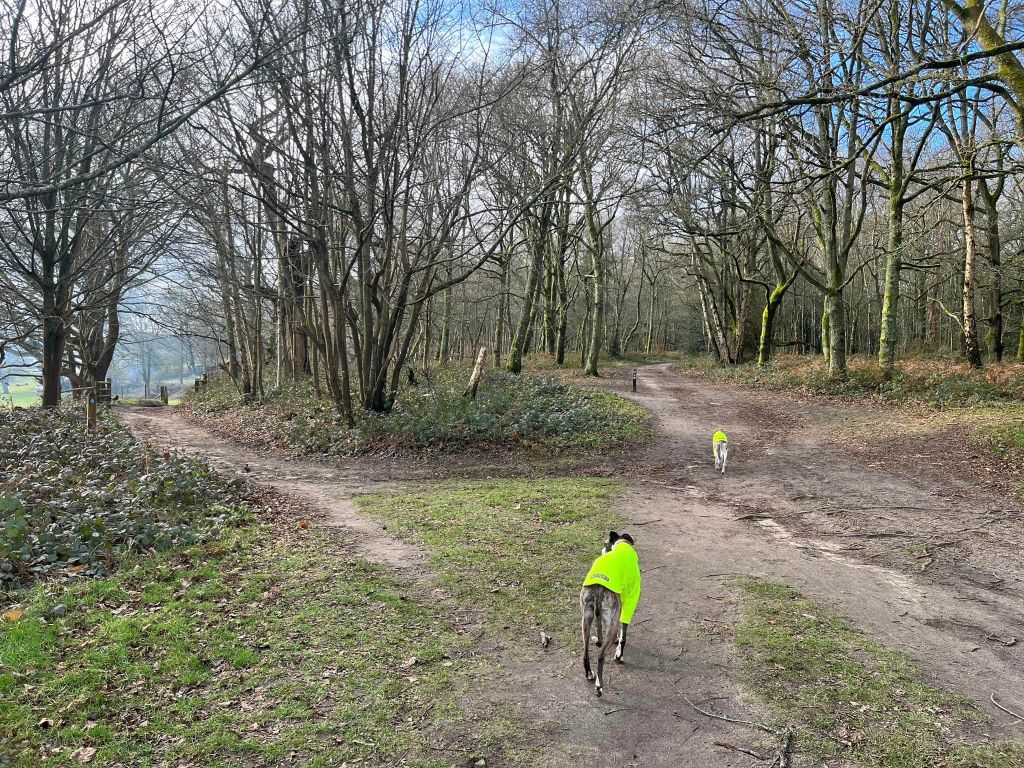
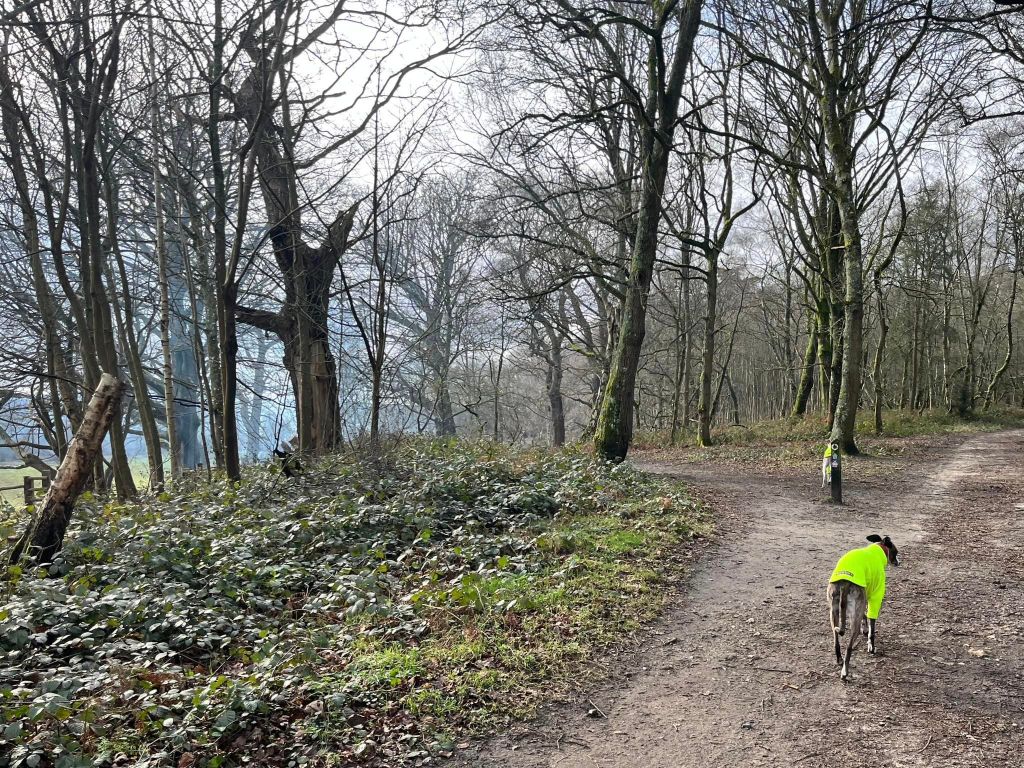
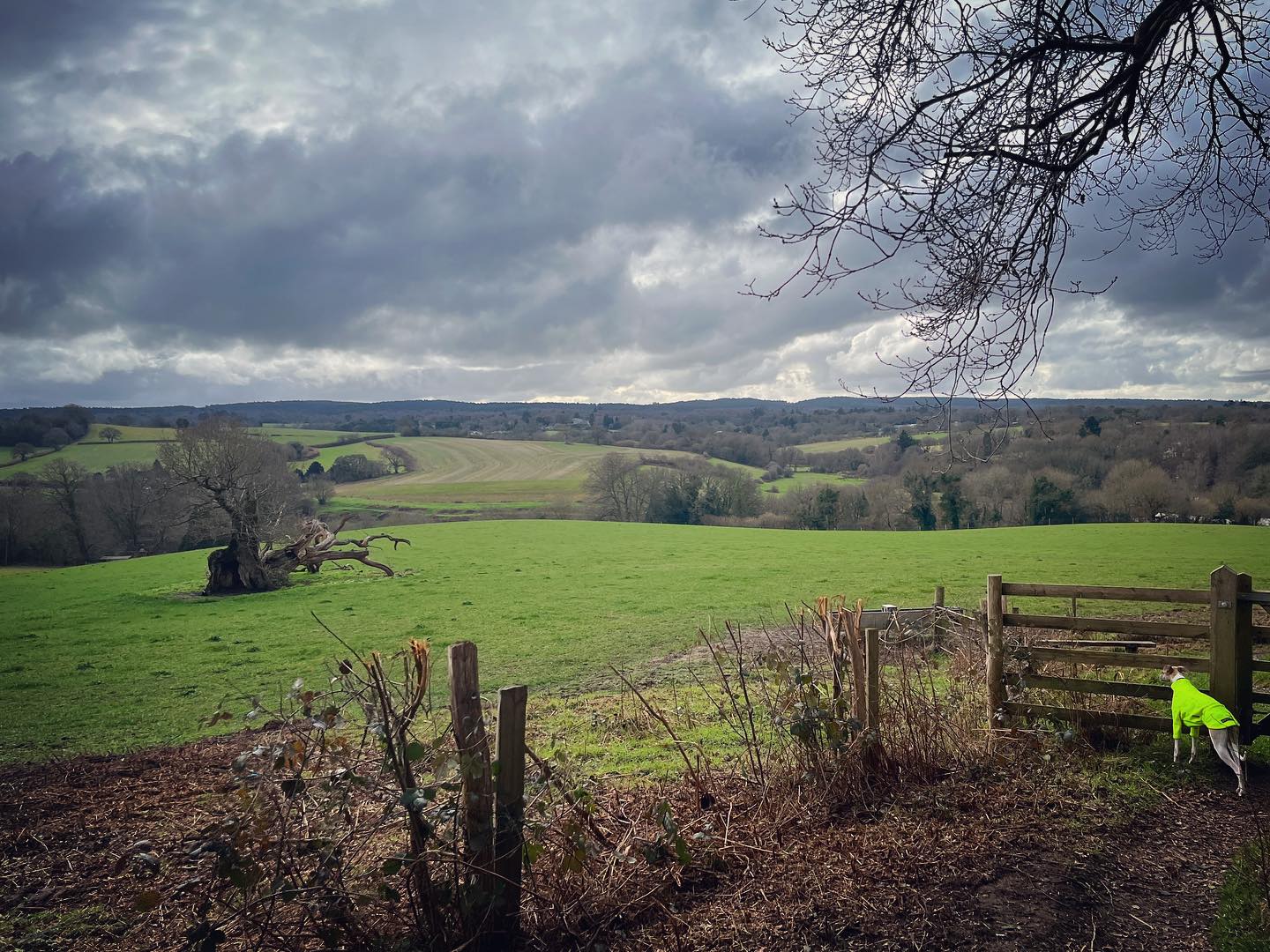
This is one of the most wooded areas of the Roughs. Some of the oak trees here are over 300 years old. The path passes along the edge of the woods, just inside the treeline with fields stretching down to your left. The large white house you can see is Abinger Hall, although not the original by any means. This one was built in 2019, but a succession of grand and increasingly large houses have been built on this site since the 16th century.
When you get to the “Snowdrop path” post, go left and down the slope. Pass through the two gates and follow the path sharply round to the right.
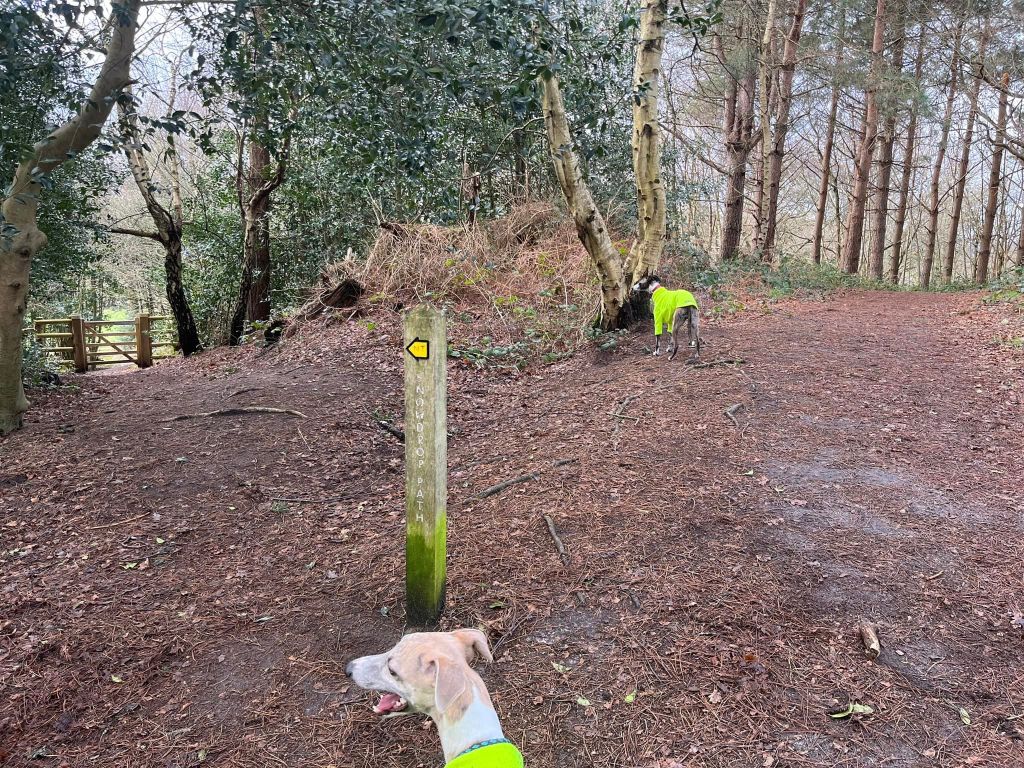
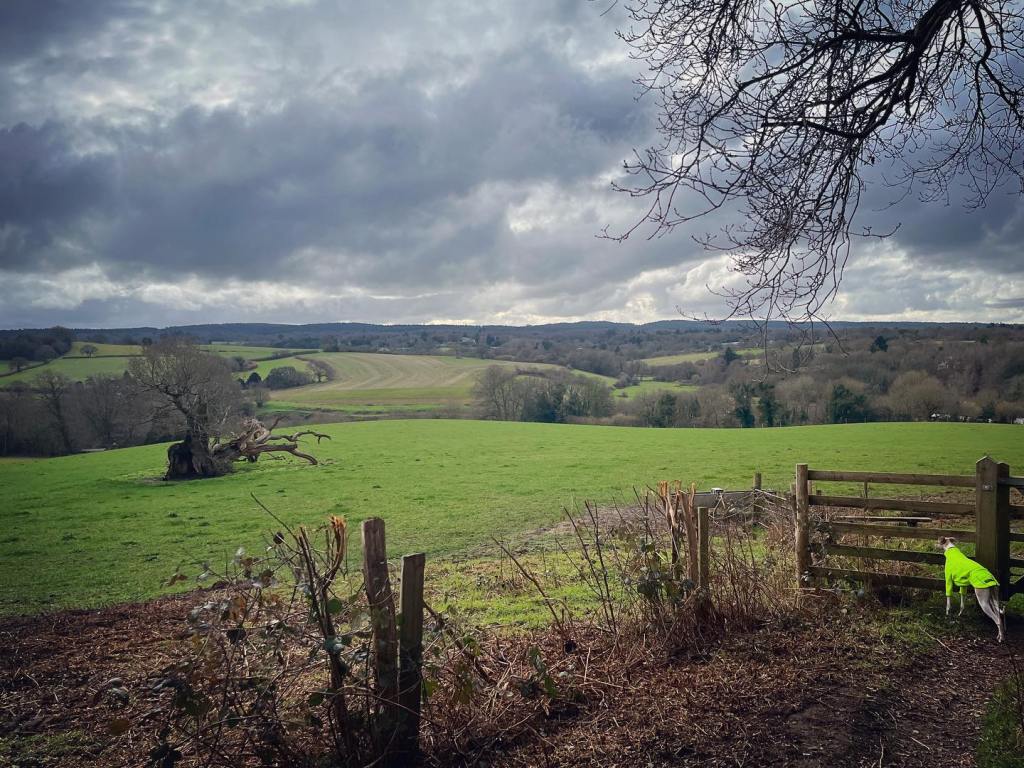
Walk along the edge of the field and then go through the next gate and pass a fallen tree trunk. Continue winding along through the glade. Wild snowdrops grow here usually between January and March but it depends on the weather. They are protected, so don’t pick them.
Go through the next gate (with the water trough to the right) and cross straight ahead, passing a bench, and walk along the track edged on the left by a hedge and the right by a wire fence.
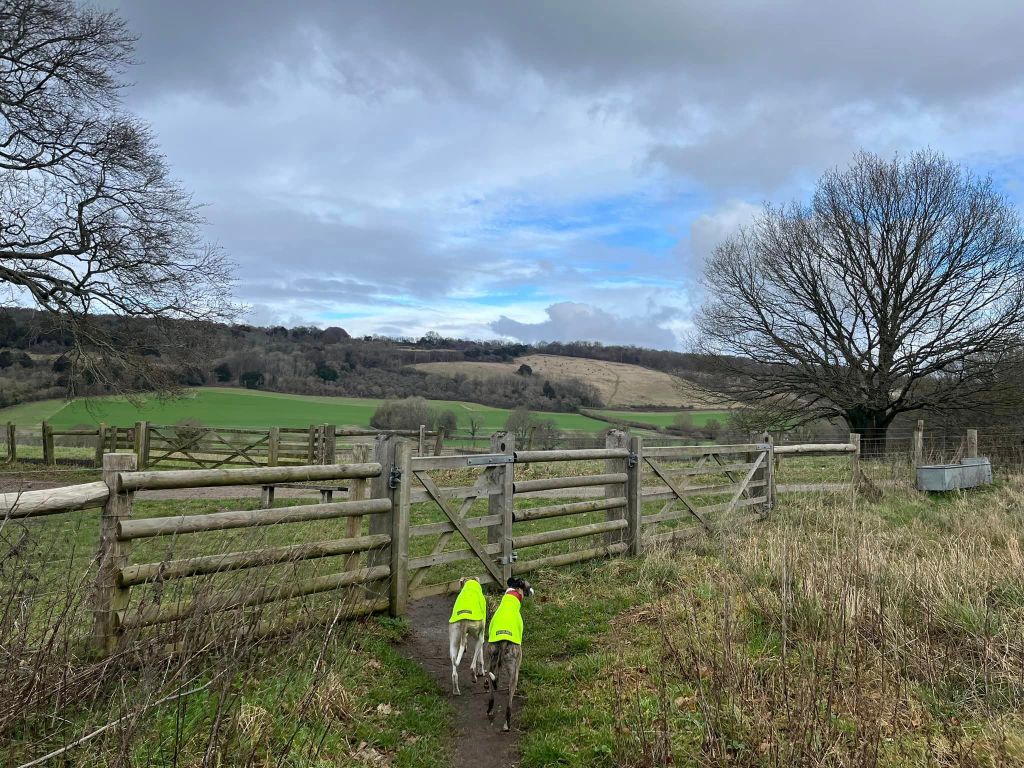
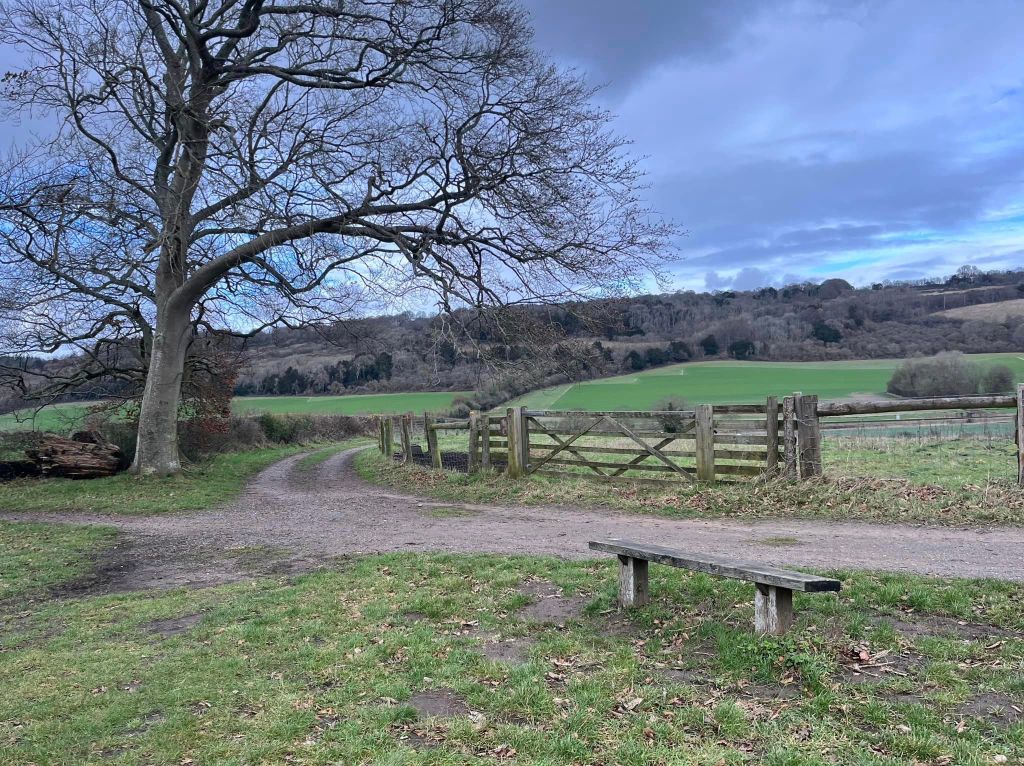
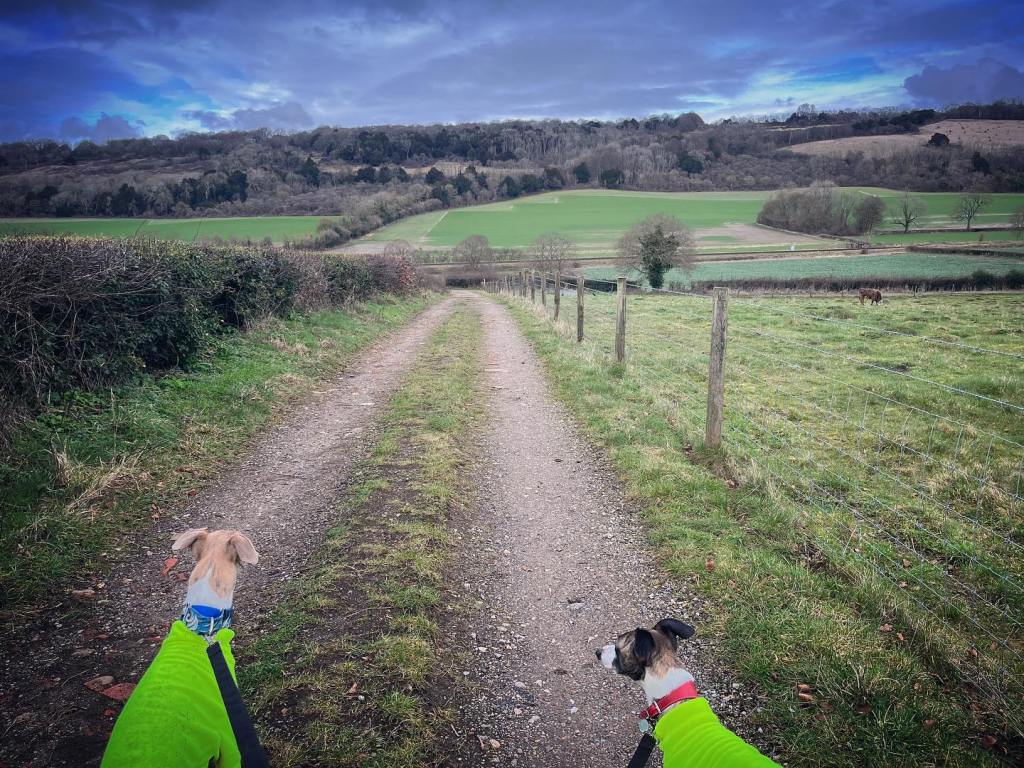
Ahead of you behind the railway line, rises Hackhurst Downs and Blatchford Down with White Down woods behind. At the junction at the end of the field, turn right.
Walk along this track keeping your eyes peeled for a gate set back on the right. Turn off the track here and go through the gate.
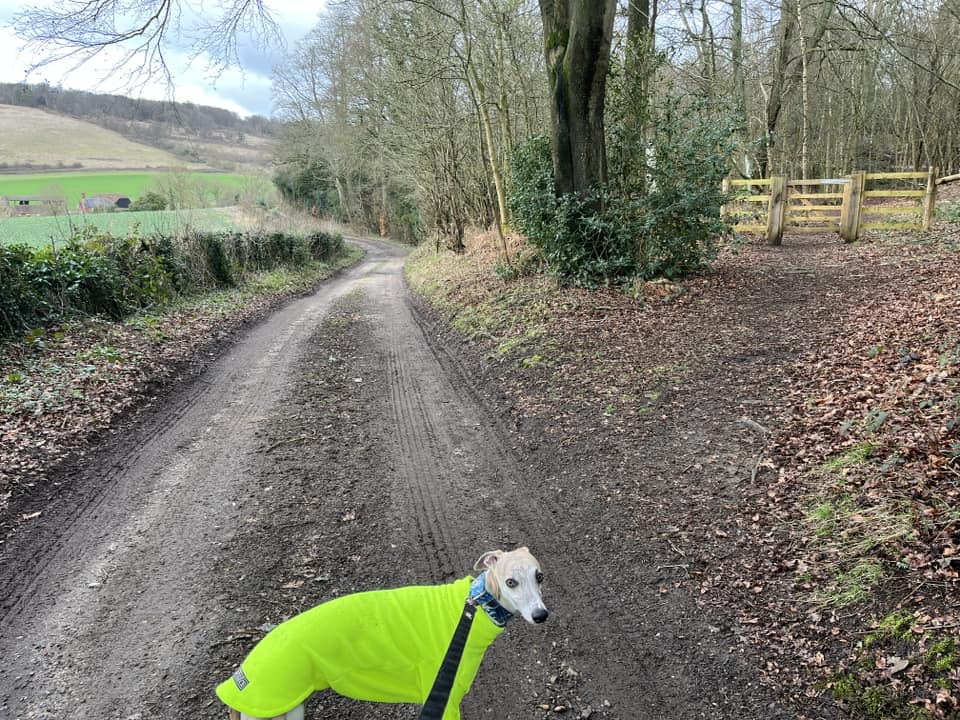
Walk between the trees and up to the little T junction by a tall dead tree. Turn left and follow this little path round to the right.
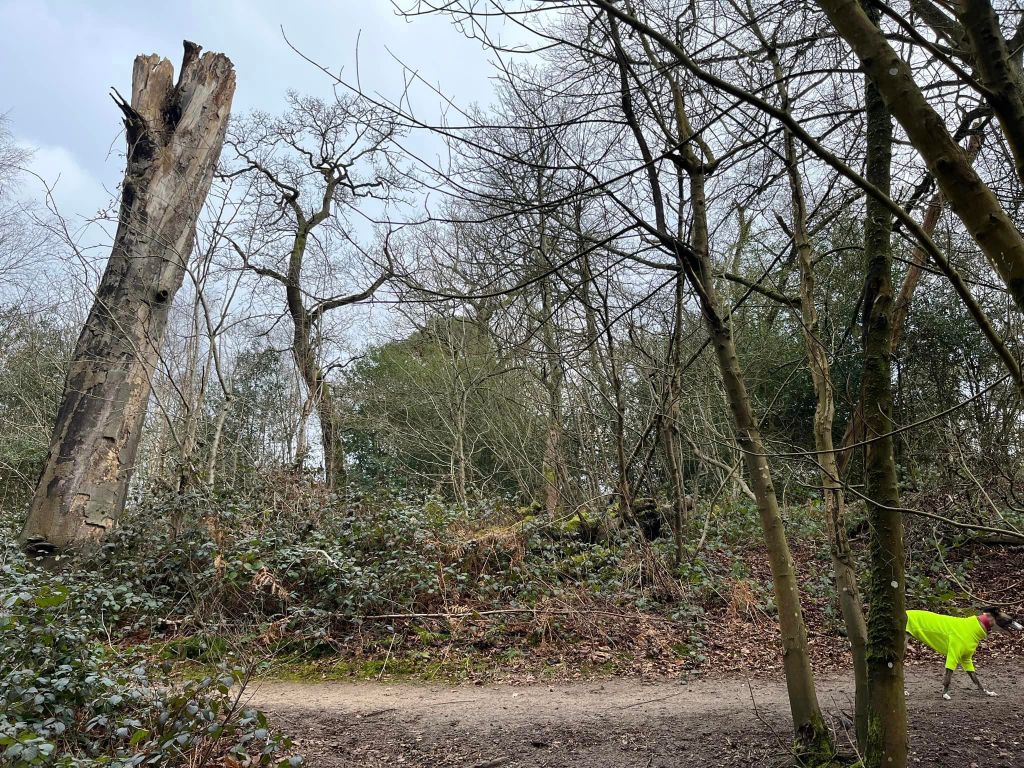
At the cross paths by the post with two yellow arrow and a blue one, continue straight over.
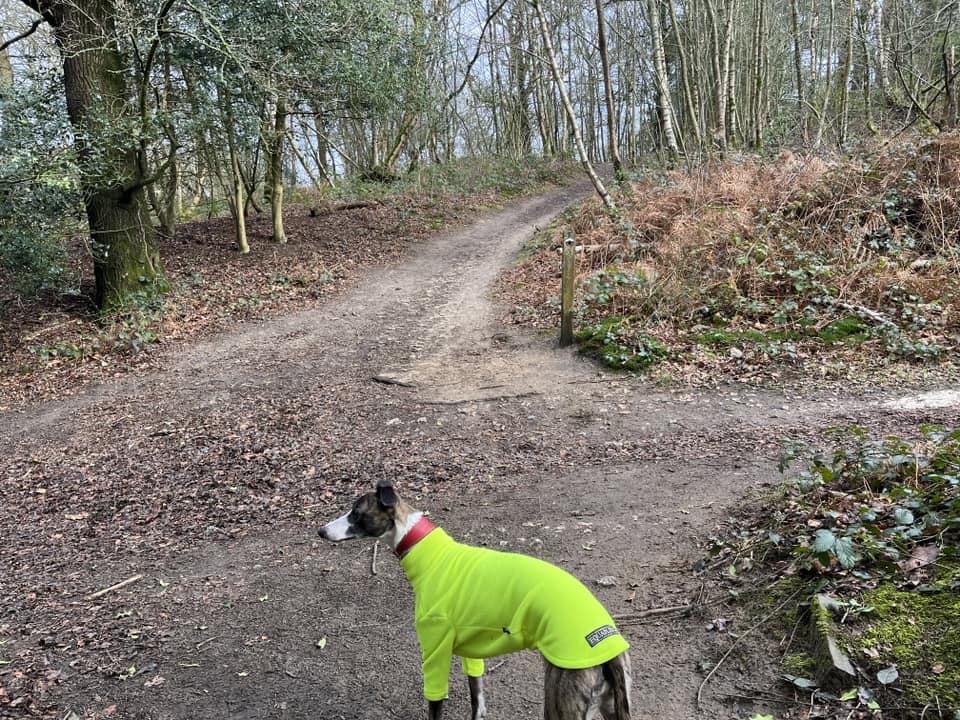
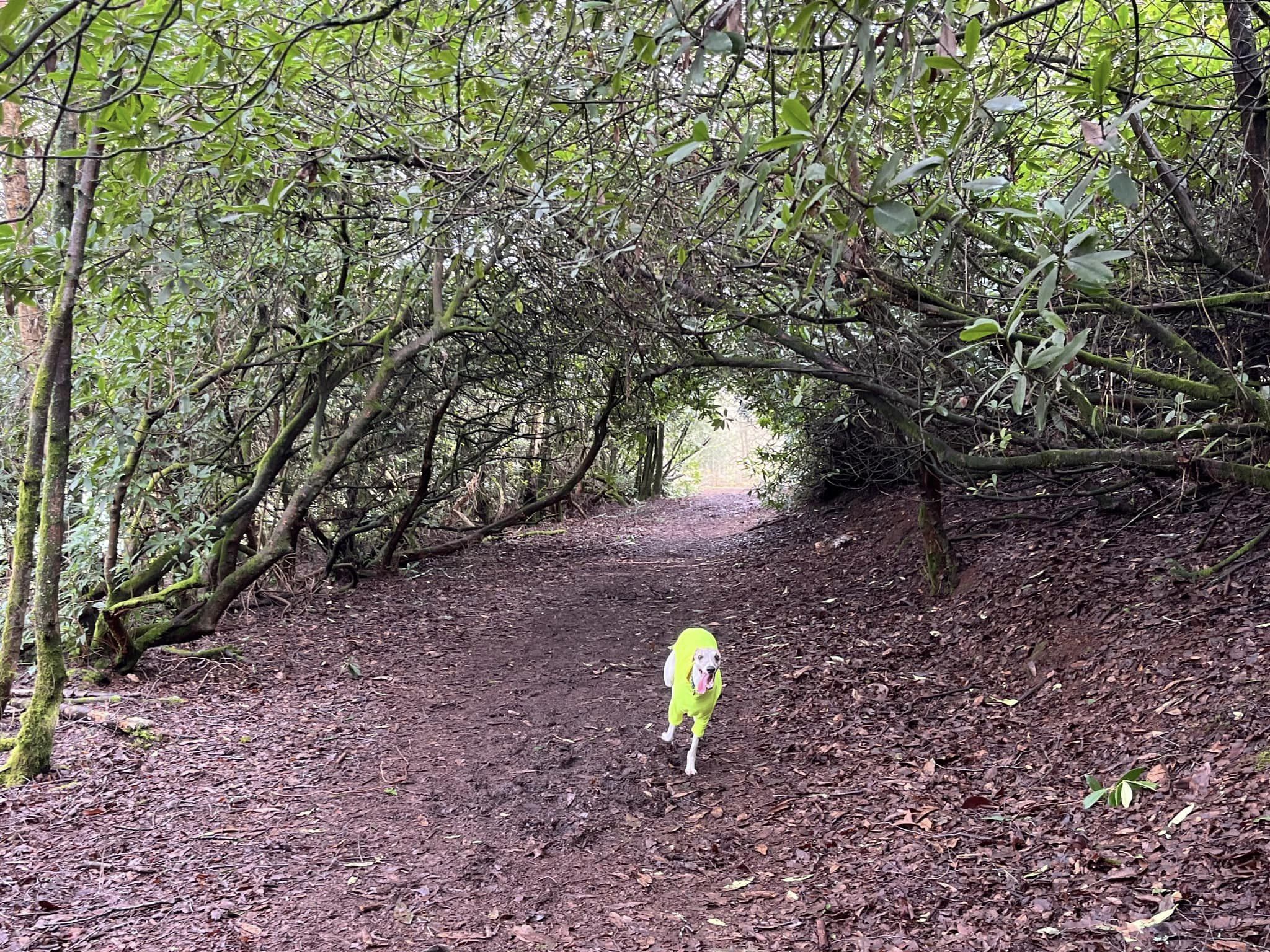
This path, which is known as the “Mayor’s Path”, was named in honour of Charles Darwin’s son, Horace. He was Mayor of Cambridge between 1896 and 1897 and married to Thomas Farrer’s daughter, Emma. The path ascends sharply then gently descends through rhododendrons, which were planted years ago by Farrer to form a wilderness garden.
Emerge from the bushes, pass a bench on the right and follow the path round to the right past another little marker post and then another bench.
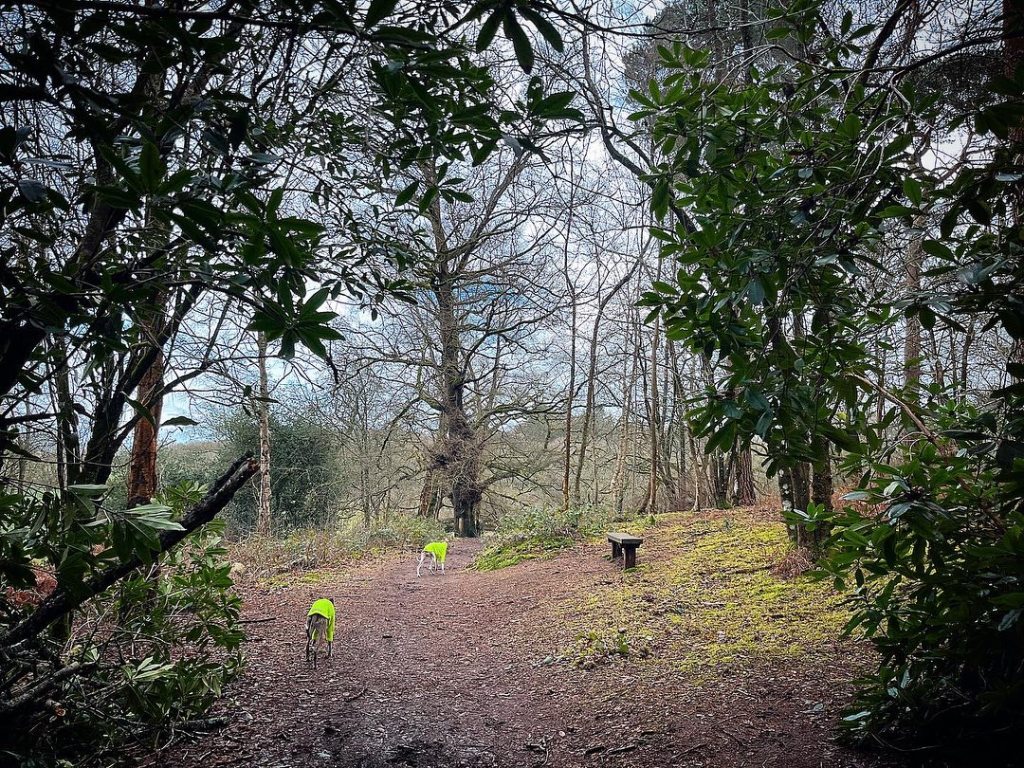
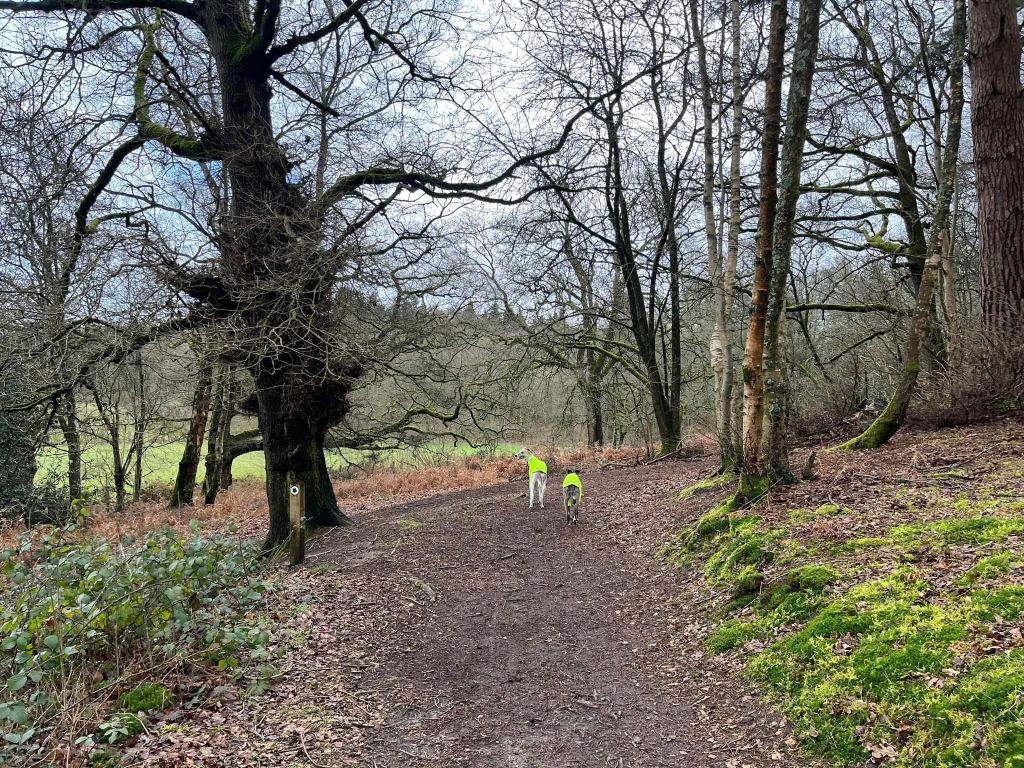
At the next cross paths – next to another post with multiple arrows – turn left and go through the gate back into the ‘neck of Abinger Roughs’ and down the slope. Continue ahead and go through the next gate to exit the ‘neck’ area.
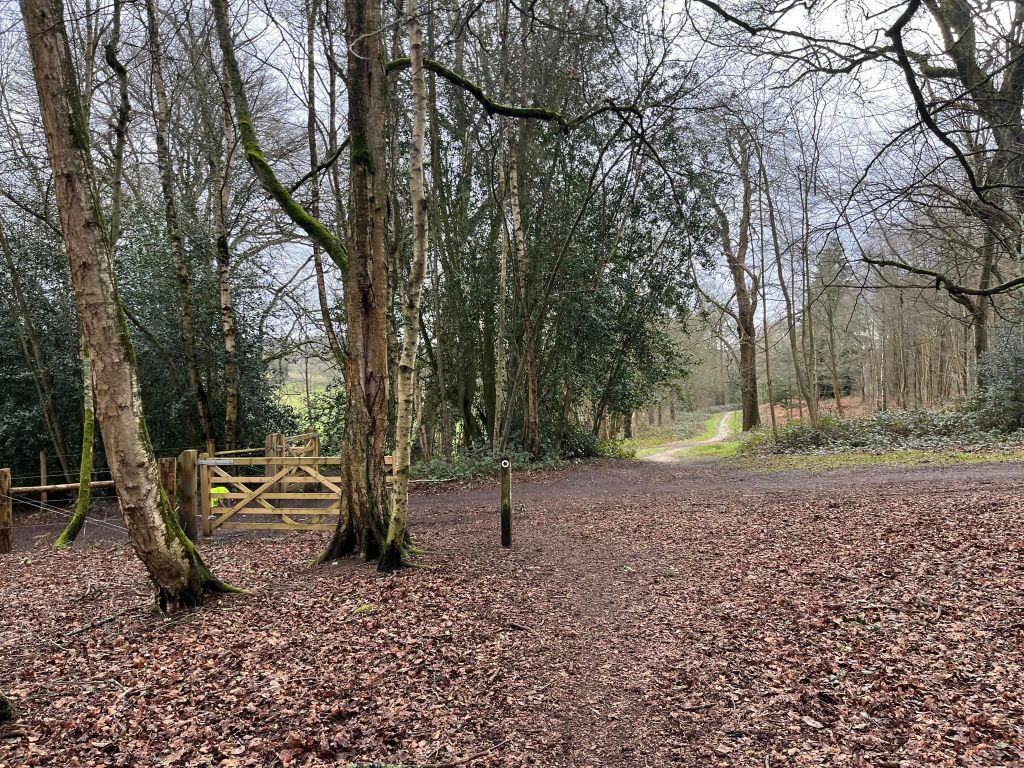
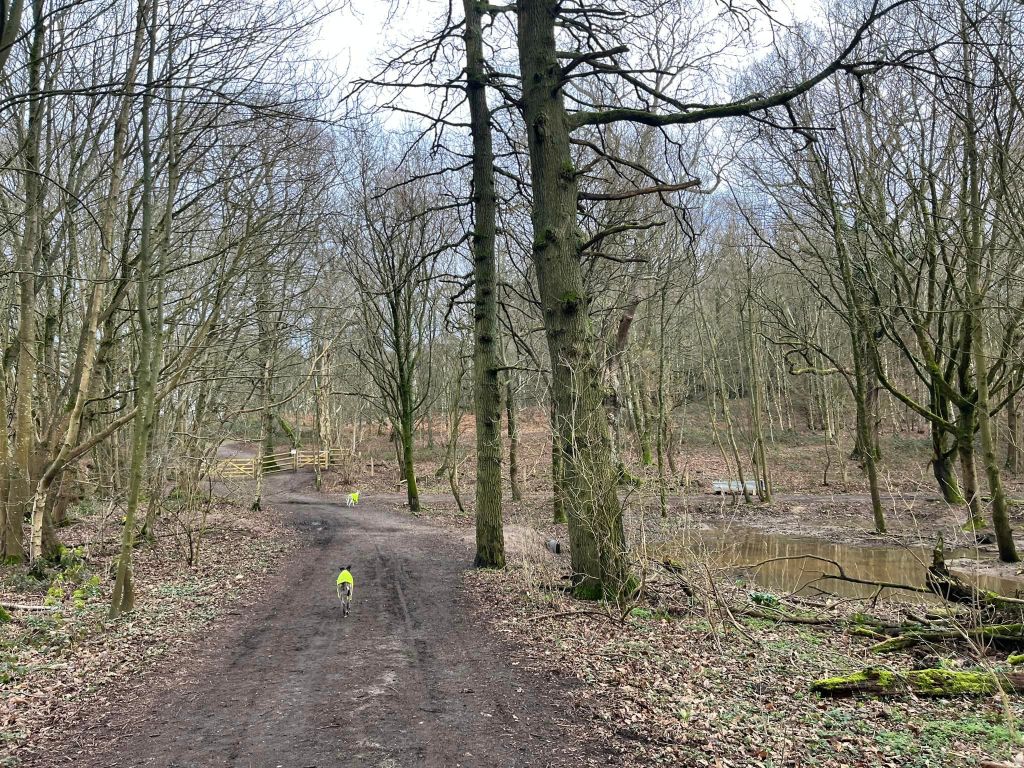
Keep straight on at the little post immediately after the gate, ignoring the small path to the right…

…then go right at the next fork, which is by yet another post. This path rises up a slight incline towards a massive tree (on the right).

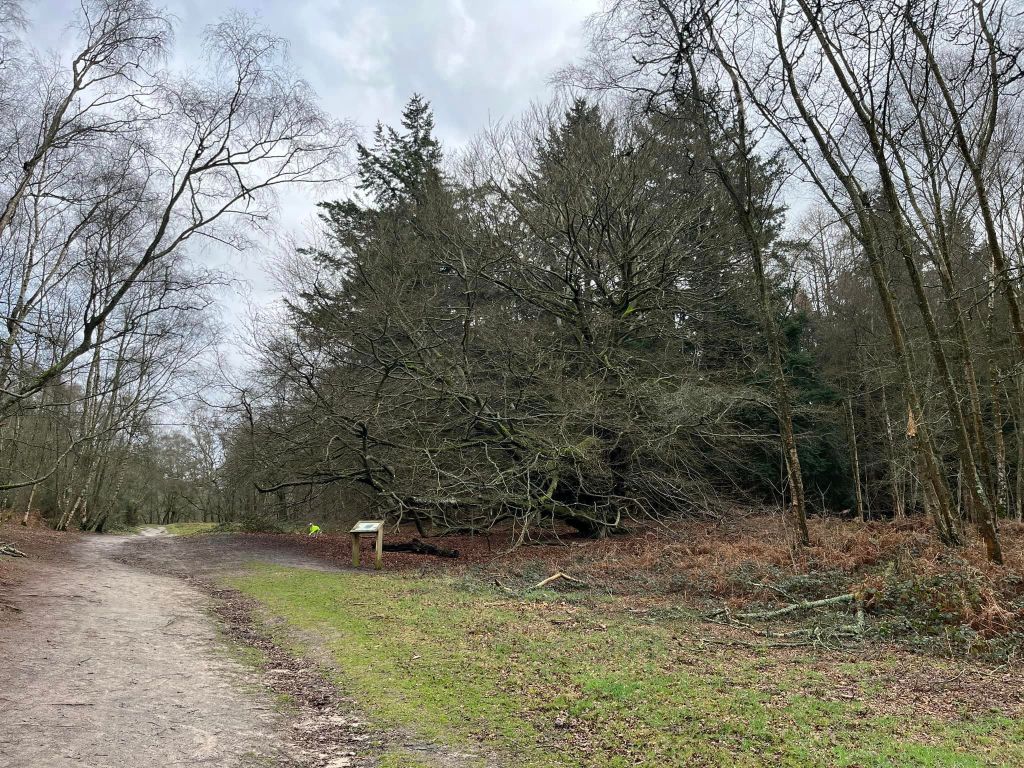
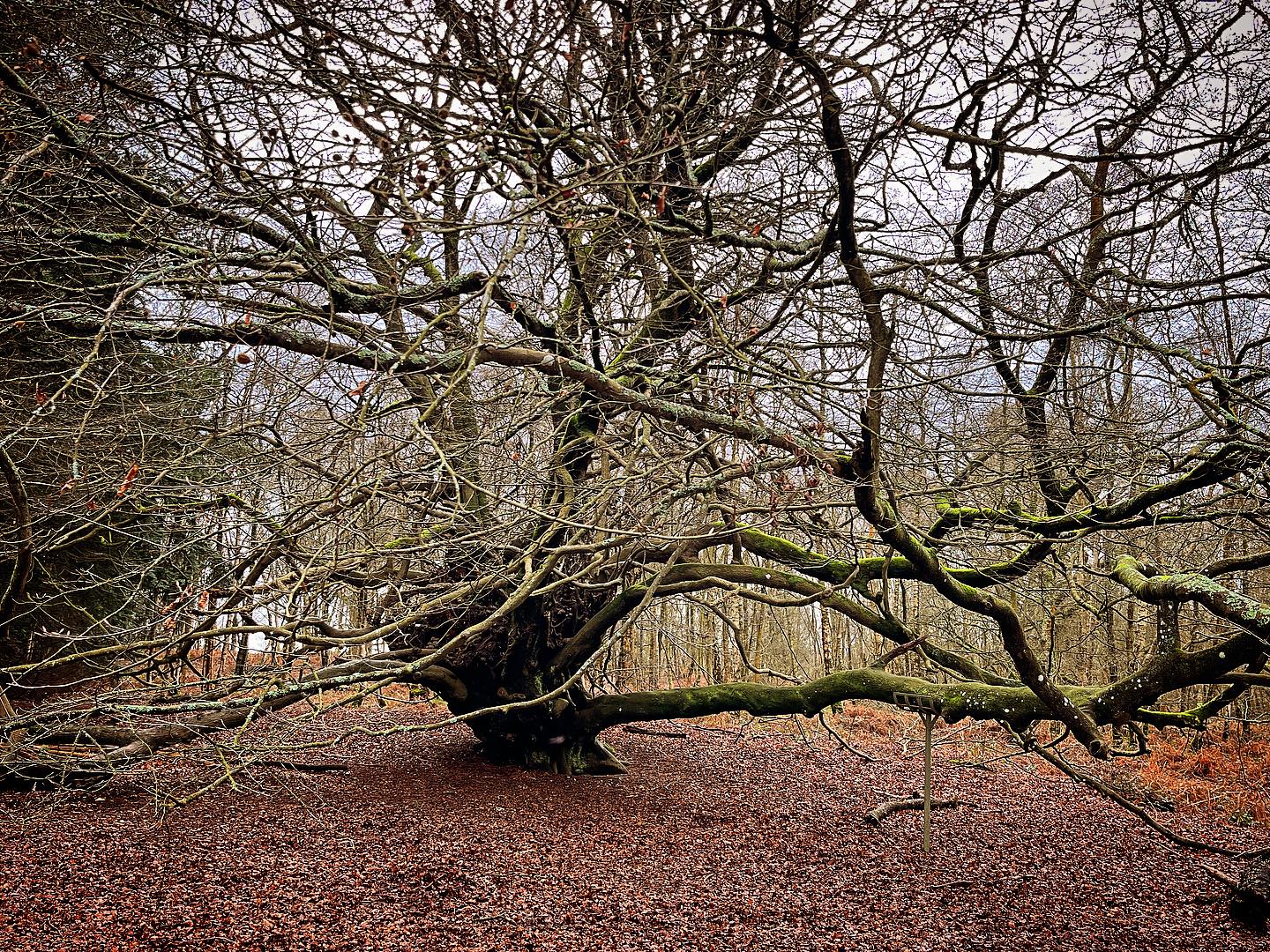
Supported by a metal post and known as “The Witch’s Broom”, this huge old beech tree is estimated to be some 200-300 years old and measures almost nine metres around its trunk.
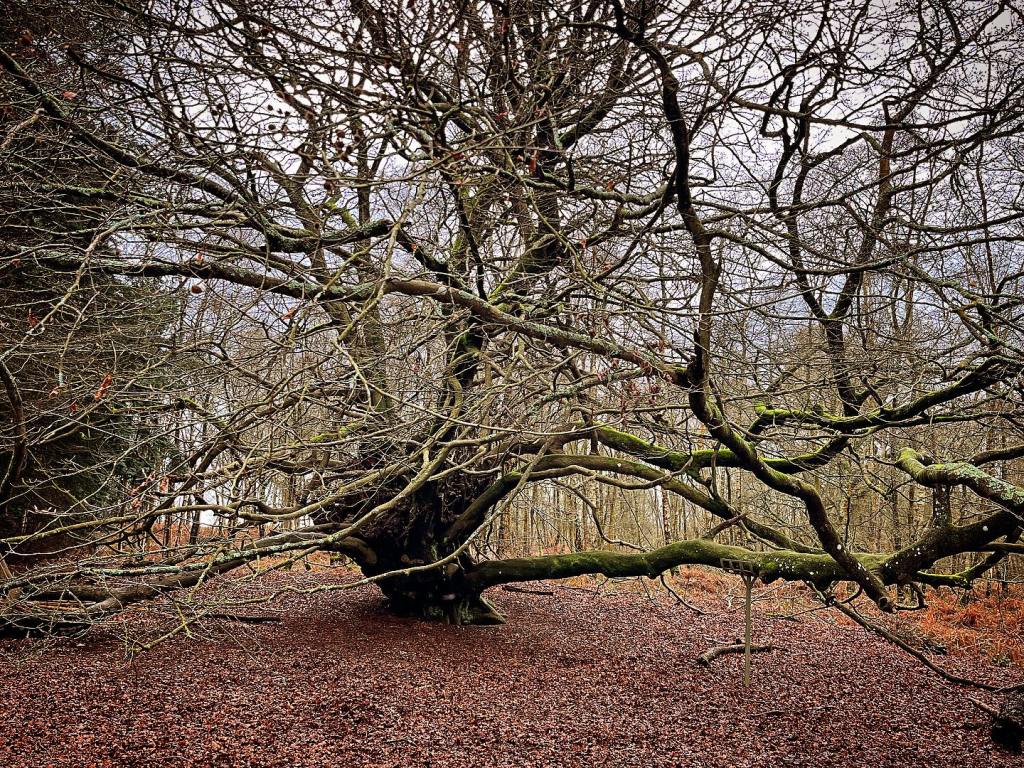
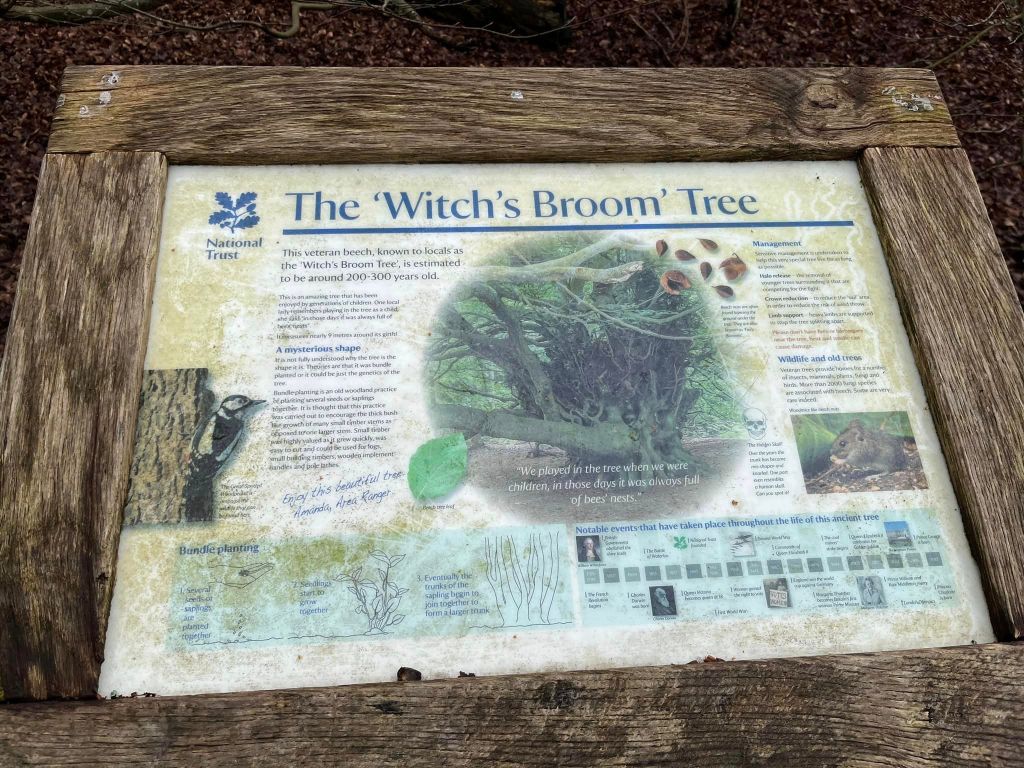
Pass the tree and the path goes through an area that is a little more open.
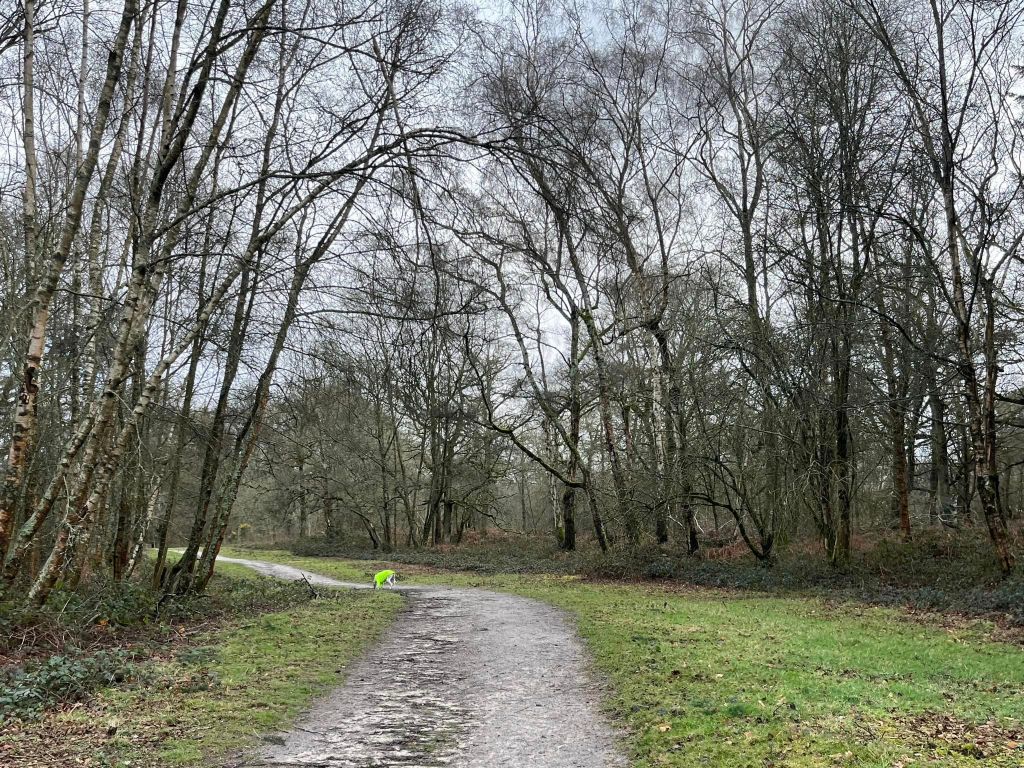
Immediately after this open area, as the path heads back into trees, keep your eyes peeled for a little path off to the left, which goes diagonally back behind you.
You have a choice here to either continue ahead on the main path, which will take you straight back to the car park, or divert left down this small path to see the Samuel Wilberforce memorial.
For the Wilberforce memorial, as mentioned, turn left and follow the little path past some lovely knarly trees and down to a T junction.
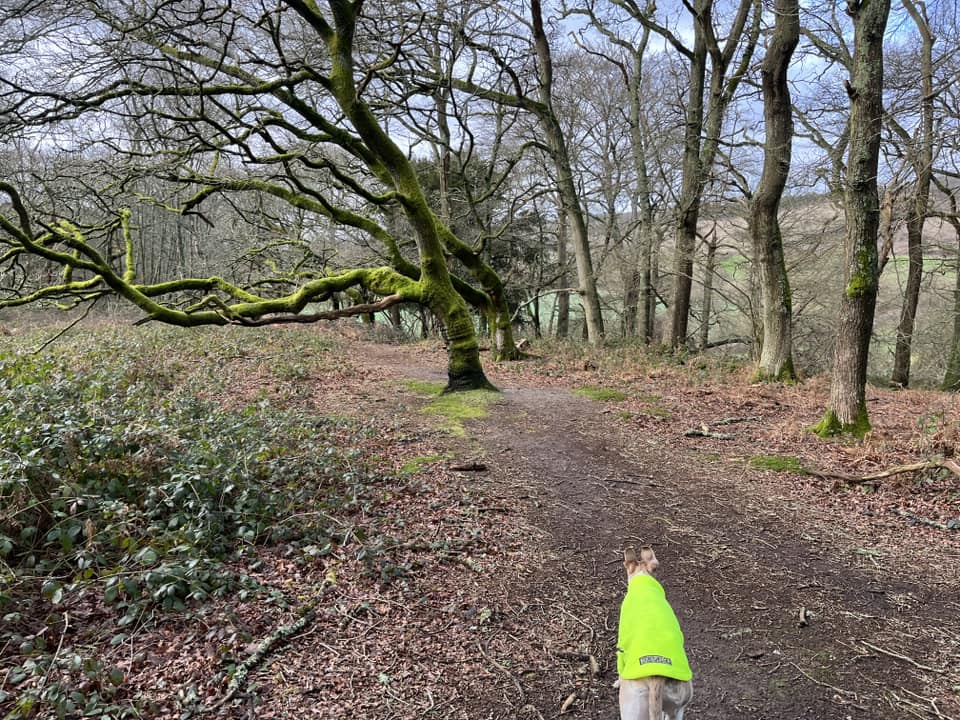
Turn right here and walk along with the fields over to your left. You’ll be able to see an old barn coming into view up ahead to the left of the path. This is called Leaser’s Barn and it dates back to the 16th century. The Wilberforce memorial is opposite it on the right-hand side of the path.
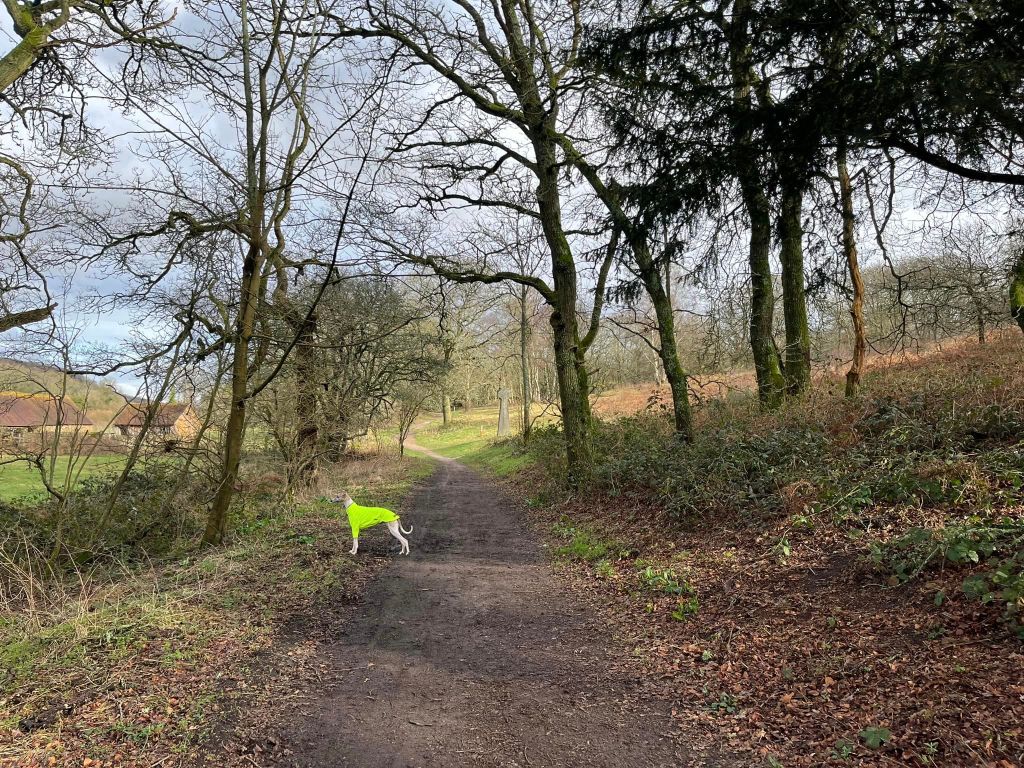
It’s dedicated to Samuel Wilberforce, the son of anti-slavery campaigner William Wilberforce. “Soapy Sam” was, according to Wikipedia, one of the greatest public speakers of his day and best known for opposing Darwin’s Theory of Evolution at a debate in 1860. He died on the spot where the memorial is located in 1873 after falling off his horse.
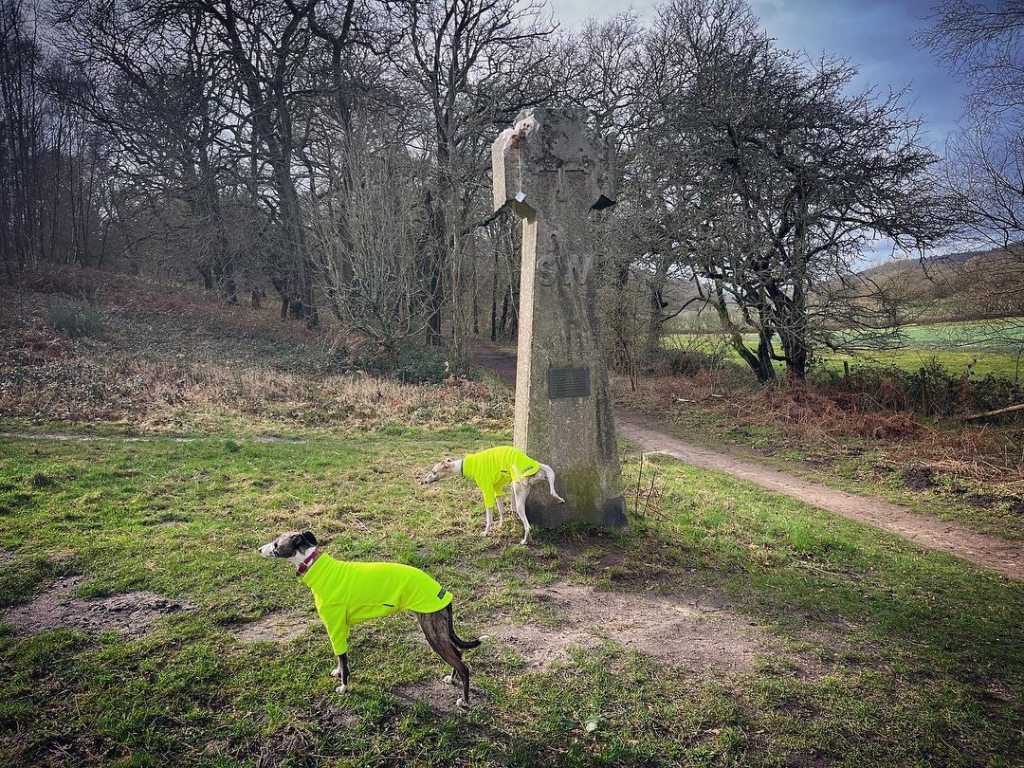
Take the path to the right at the memorial and go up the steep – but mercifully short – slope. At the top, continue straight ahead to the car park.
 Walks with Rena
Leave a comment