Waggoner’s Wells

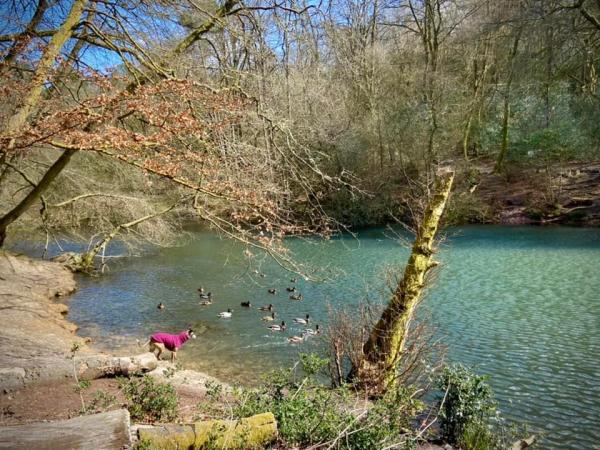
Waggoner's Wells in Hampshire consists of three man-made ponds/lakes, which were created in the 17th century by the Hooke family of Bramshott. With evidence of ironmaking in the area, it's believed they were originally intended as hammer ponds, which would have provided water to power machinery used to produce iron, but they appear never to have been used. It's been suggested that they instead served as fish ponds.

Papercourt Lock and the Wey Navigation

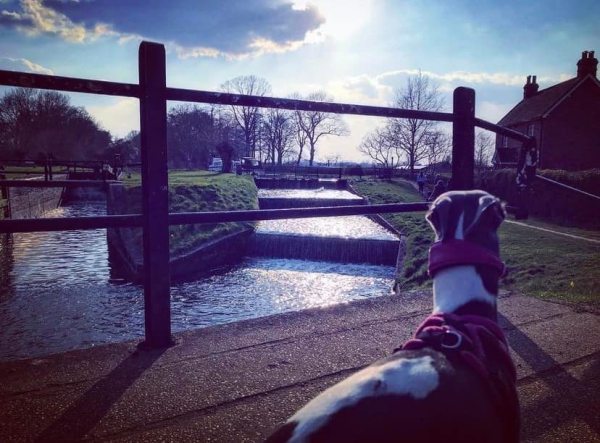
Papercourt Lock is a lock on the River Wey Navigation, now owned and maintained by the National Trust. The Wey was one of the first British rivers to be made navigable, and opened to barge traffic in 1653. It is a 15-mile waterway linking Guildford to the Thames at Weybridge.

Devil’s Punch Bowl

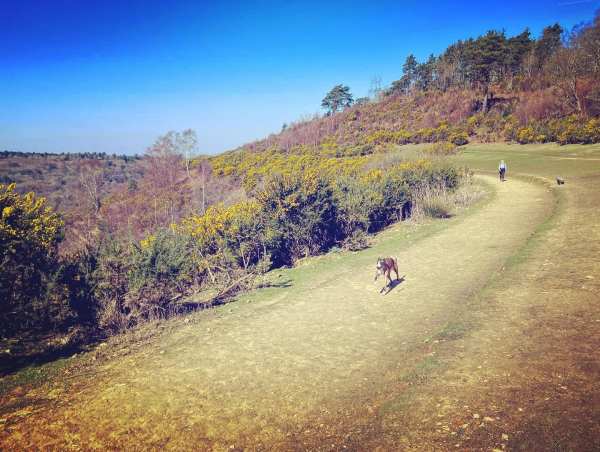
The Devil’s Punch Bowl, part of the Hindhead Commons, is a large natural amphitheatre near Thursley and Hindhead, which is a Site of Special Scientific Interest and managed by the National Trust.

Frensham Little Pond

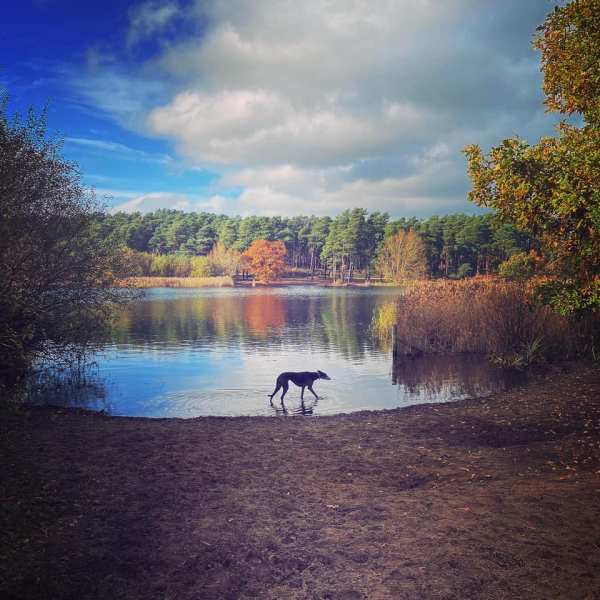
The village of Frensham and its Little and Great ponds can be found near the town of Farnham. The name Frensham comes from “Frena’s ham”. Frensham Little Pond, once called Crowsfoot, was built in 1246 by order of the Bishop of Winchester, William de Raleigh.

Headley Heath

The name Headley, ‘Hallega’ in old English, means a clearing with heather. Headley, to the south of Box Hill, can trace its origins back to the Saxon age, when it was part of the Copthorne Hundred and used by commoners for grazing animals and collecting furze, bracken and firewood.

Website Powered by WordPress.com.

Up ↑