The historic village of Ripley has existed since Norman times and was first recorded in documents of around 1200. It developed with the establishment of Newark Priory and, during the Tudor period, became very prosperous as a place to stop on the (now A3) road between London and the rapidly growing naval town of Portsmouth.
Netley Heath (Francis Corner)
Netley Heath on the North Downs scarp slope above Gomshall is an area of woods and heathland and part of Shere Woodlands. This area once formed part of the Bray Estate of Shere.
Chantry Wood
Chantry Wood, just to the east of Guildford town centre, sits on the same greensand ridge that forms part of the North Downs as neighbouring St Martha’s Hill (Walks with Rena post here) and comprises 80 hectares of woodland and grassland.
Newark Priory
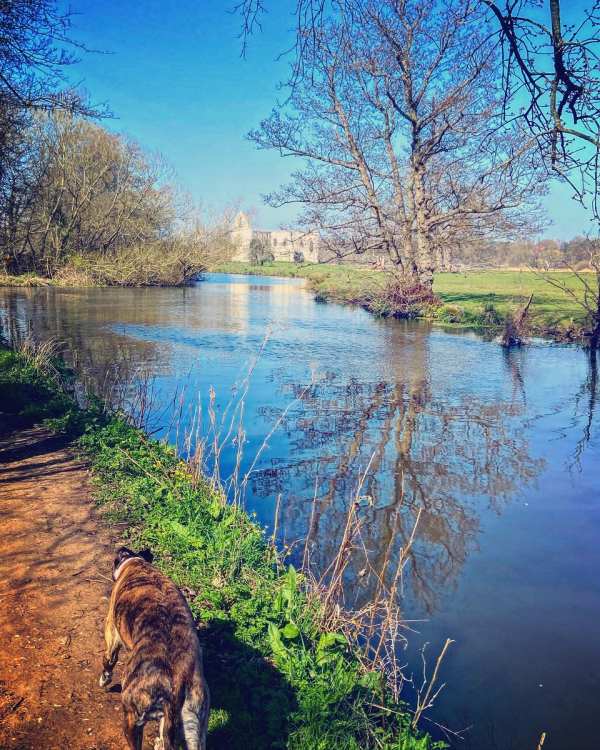
Newark Priory is a ruined priory next to the River Wey at Newark Lock between Ripley, Send and Pyrford and to the east of Woking Palace. It is a Grade I listed building and protected Scheduled Monument, meaning it should forever remain in ruins just like it is today.
Ashtead Common
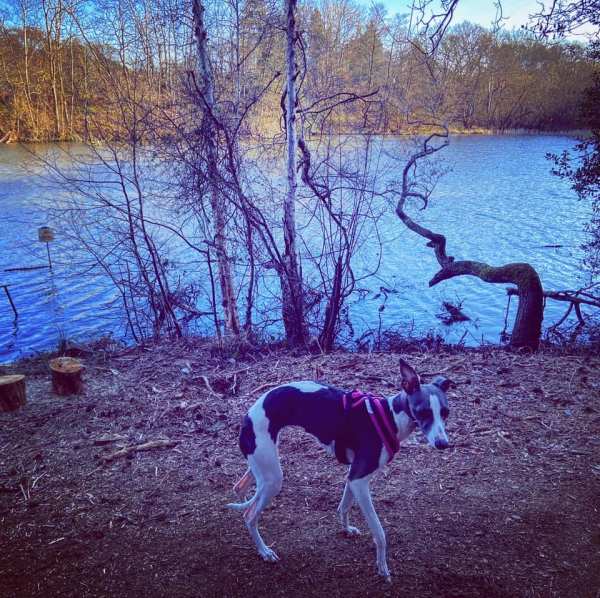
Ashtead Common, owned by the City of London Corporation, is regarded as a prime example of relic wood pasture, valued for its historic landscape and important habitat. Its 495 acres are a mosaic of woodland, grassland, scrub and various wetland habitats including ponds, streams, ditches and springs.
Shalford Water Meadows
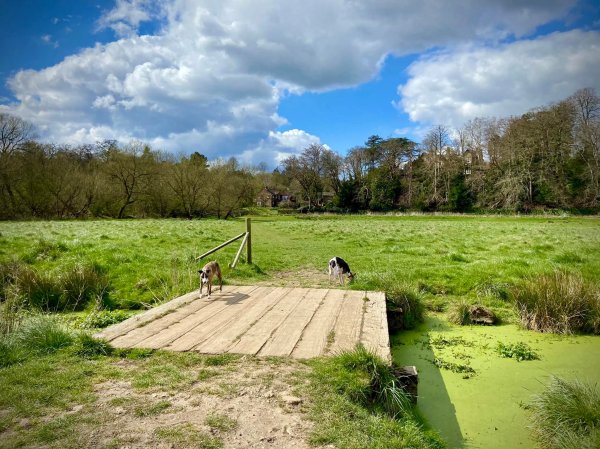
Shalford's water meadows were once farmland used for growing hay and grazing cattle. They are a reminder of the area's once "intensive" farming history (although clearly not intensive by today's farming standards). In the Middle Ages, ditches and channels were created in natural riverside meadows and then deliberately flooded to turn them into water meadows, a practice imported from Europe. How very international.
Waggoner’s Wells
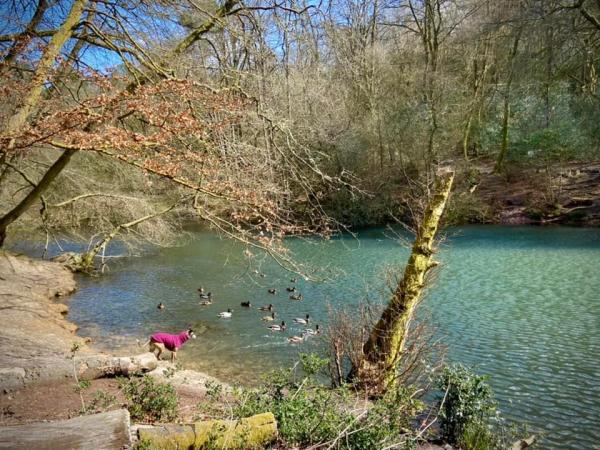
Waggoner's Wells in Hampshire consists of three man-made ponds/lakes, which were created in the 17th century by the Hooke family of Bramshott. With evidence of ironmaking in the area, it's believed they were originally intended as hammer ponds, which would have provided water to power machinery used to produce iron, but they appear never to have been used. It's been suggested that they instead served as fish ponds.
Outwood – Hornecourt Wood
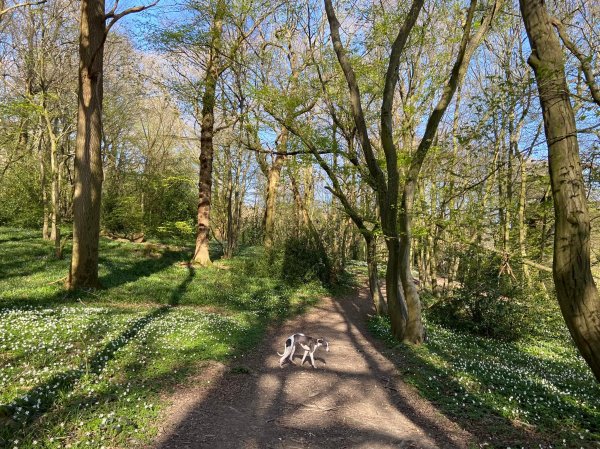
Hornecourt Wood is an ancient Wealden beech woodland on the National Trust's Harewoods Estate in Outwood.
Royal Common, Forked Pond and Thursley Nature Reserve fringes
Royal Common, just outside Elstead, is part of the Longmoor Training Area owned by the Defence Estates, which also covers large parts of Hankley, Elstead and Ockley commons. Public access is allowed across the Defence Training Estate provided you adhere to the Surrey Commons Military Lands Byelaws 1978. Army training here (when it takes place) revolves around logistics and minor infantry manoeuvre exercises and you're unlikely to come to any harm, but make sure you follow the instructions of troops if you do encounter any.
Papercourt Lock and the Wey Navigation
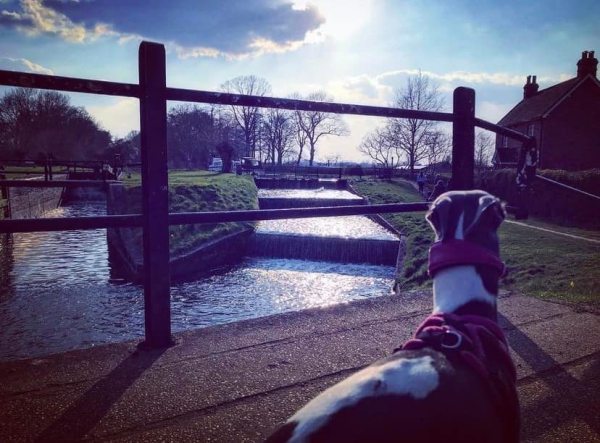
Papercourt Lock is a lock on the River Wey Navigation, now owned and maintained by the National Trust. The Wey was one of the first British rivers to be made navigable, and opened to barge traffic in 1653. It is a 15-mile waterway linking Guildford to the Thames at Weybridge.