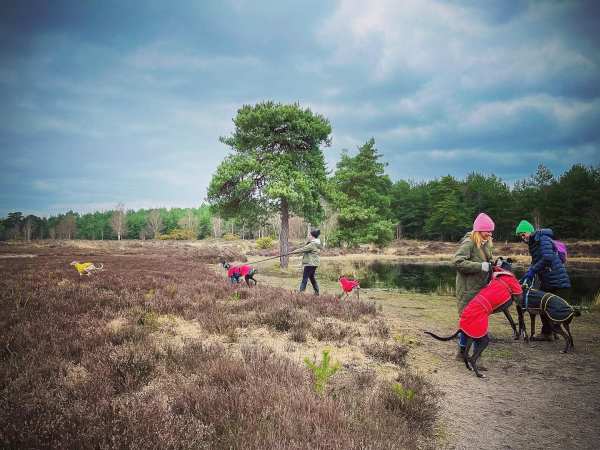
Brookwood Heath is a small open landscape of lowland heathland tucked away behind the village of Pirbright in the borough of Guildford.
Brookwood Heath from Pirbright
Greyhound approved walks in and around Surrey
Brookwood Heath is a small open landscape of lowland heathland tucked away behind the village of Pirbright in the borough of Guildford.

Roosthole (some say Roost Hole and others say RoostHole*) is an area of St Leonard's Forest, an ancient woodland between Horsham and Crawley in West Sussex, which forms part of the High Weald Area of Outstanding Natural Beauty and consists of just over 700 acres of mixed deciduous and conifer woodland, as well as some areas of open, wooded heath.
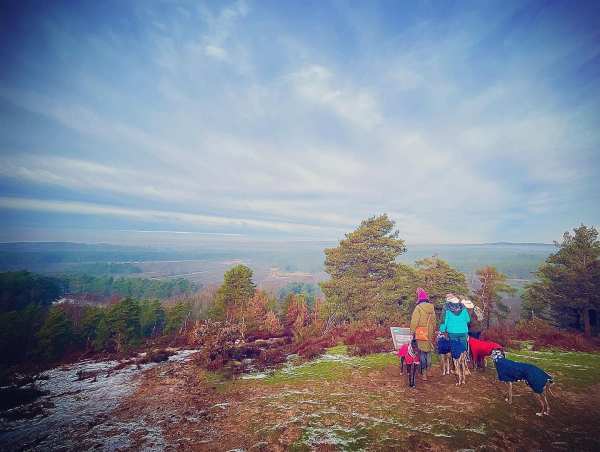
Churt Common, known locally as The Flashes, comprises 106 hectares of heathland and bog to the south-east of Frensham Common.
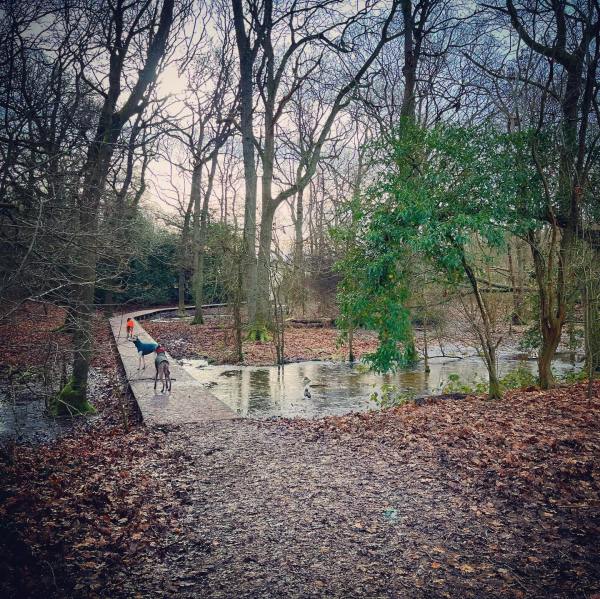
Rena and I visited Bedelands Nature Reserve for the first time in late May 2016, less than one month after I adopted her for a group walk organised by the West Sussex Greyhound Walking Group.
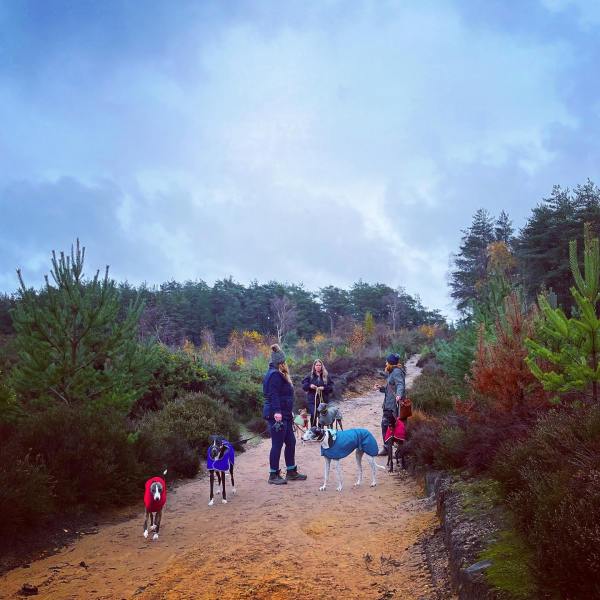
Hankley Common is a 560-hectare nature reserve near the village of Elstead in Surrey comprising lowland heath and woodland. The site is part of the Thursley, Hankley and Frensham Commons Special Area of Conservation and a Site of Special Scientific Interest.
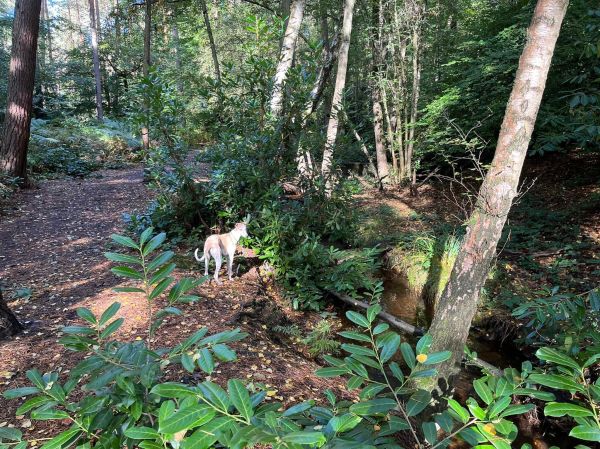
Swinley Forest comprises 2,600 acres of Crown Estate land straddling the Surrey-Berkshire county boundary. It boasts woodlands, streams, grasslands and ponds.
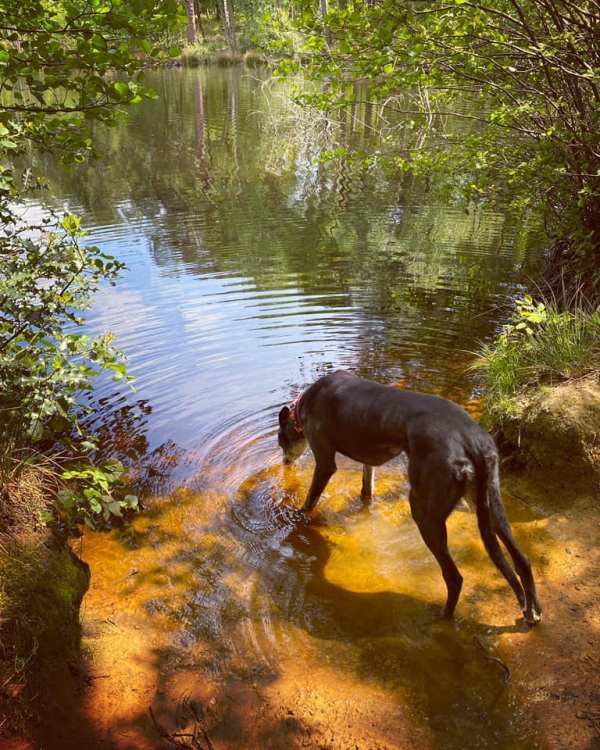
Puttenham Common is a private estate of woodland, heathland, grassland, wetlands and ponds managed by the Surrey Wildlife Trust.
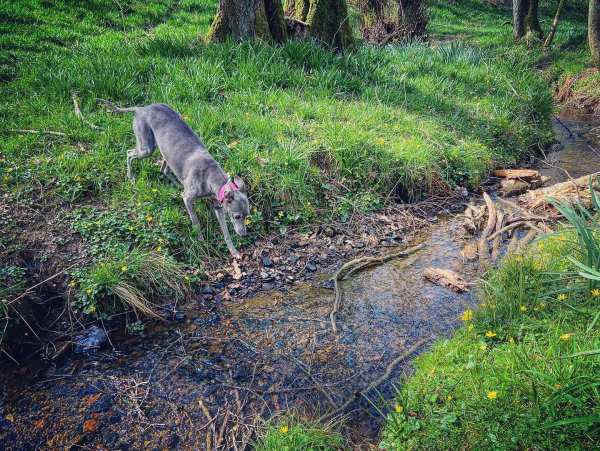
Cowdray Forest is part of the Paddockhurst Estate, a privately-owned woodland which allows some access to the public. Here, you'll find a grid plantation of different types of trees so there's quite a lot of variety to be had on any walk as you pass from section to section. Cowdray Forest adjoins Worth Forest, although there's nothing to tell you when you pass from one into the other.
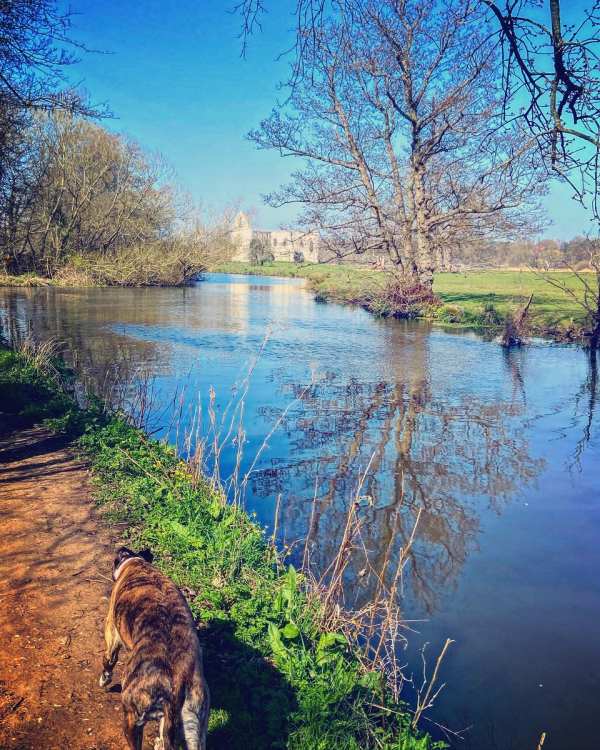
Newark Priory is a ruined priory next to the River Wey at Newark Lock between Ripley, Send and Pyrford and to the east of Woking Palace. It is a Grade I listed building and protected Scheduled Monument, meaning it should forever remain in ruins just like it is today.
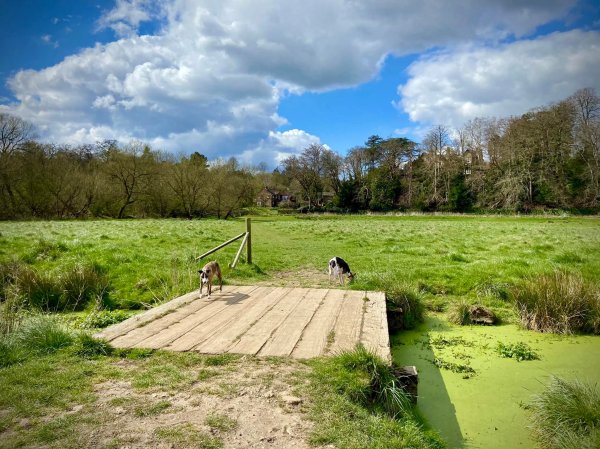
Shalford's water meadows were once farmland used for growing hay and grazing cattle. They are a reminder of the area's once "intensive" farming history (although clearly not intensive by today's farming standards). In the Middle Ages, ditches and channels were created in natural riverside meadows and then deliberately flooded to turn them into water meadows, a practice imported from Europe. How very international.
 Walks with Rena